There is an old Chinese saying: “Beneath heaven, Mt. Emei is the most sublime; Mt. Qingcheng is the most secluded.” After spending weeks exploring the dramatic, snow-capped peaks and roaring rivers of Sichuan, I found myself craving something different. I needed silence. I needed green. So, I boarded the high-speed train from Chengdu and, in less than an hour, arrived at the foot of Qingcheng Mountain.
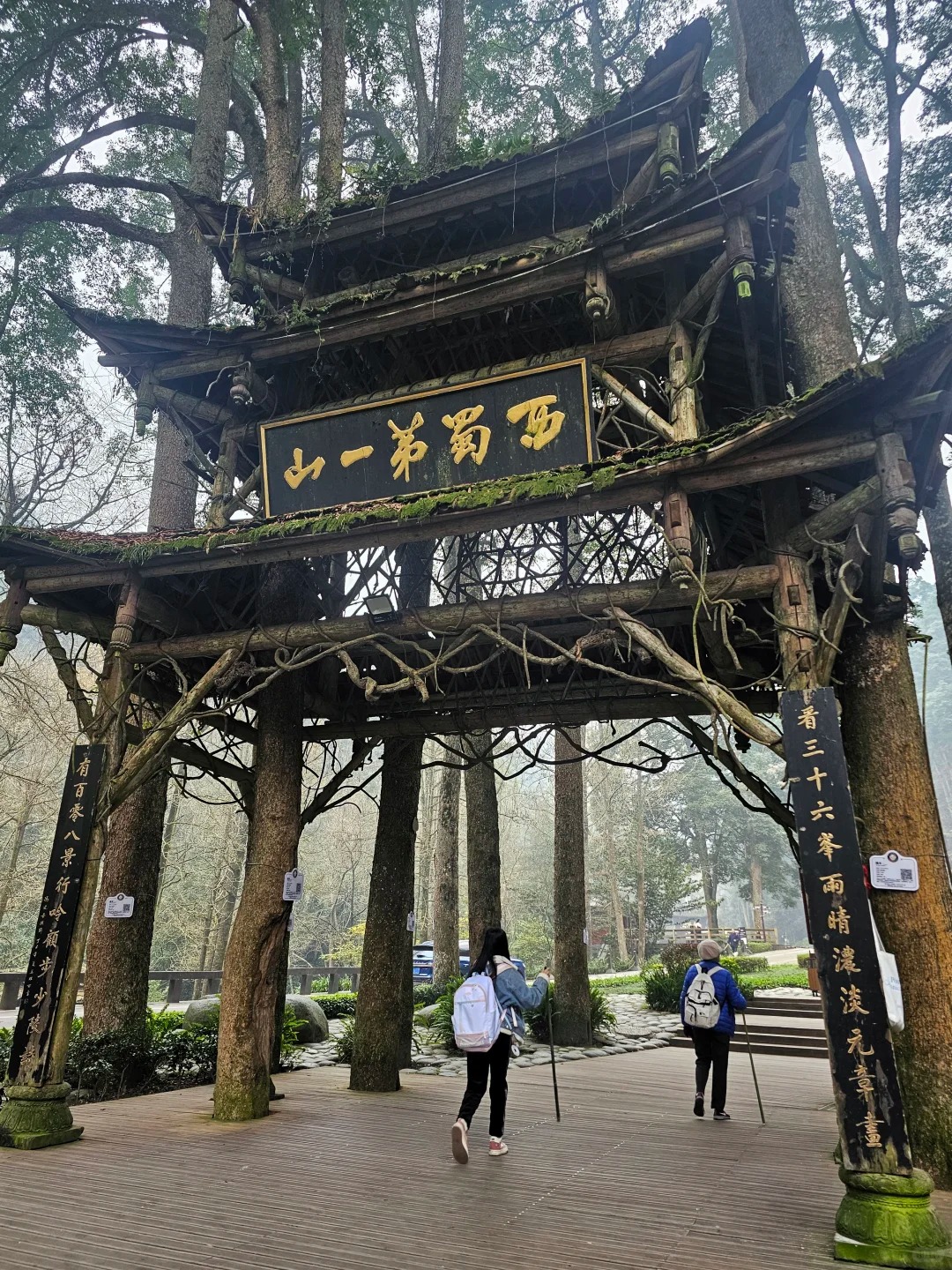
I didn’t come here for adrenaline or to conquer a giant statue. I came here to understand the heart of Taoism. Qingcheng Mountain is where Zhang Daoling, the “Celestial Master,” founded the Way of the Celestial Masters nearly 2,000 years ago. Walking through the entrance gate, the noise of the modern world seemed to evaporate instantly. The air here is different—it’s humid, thick with the scent of moss, ferns, and ancient cypress trees.
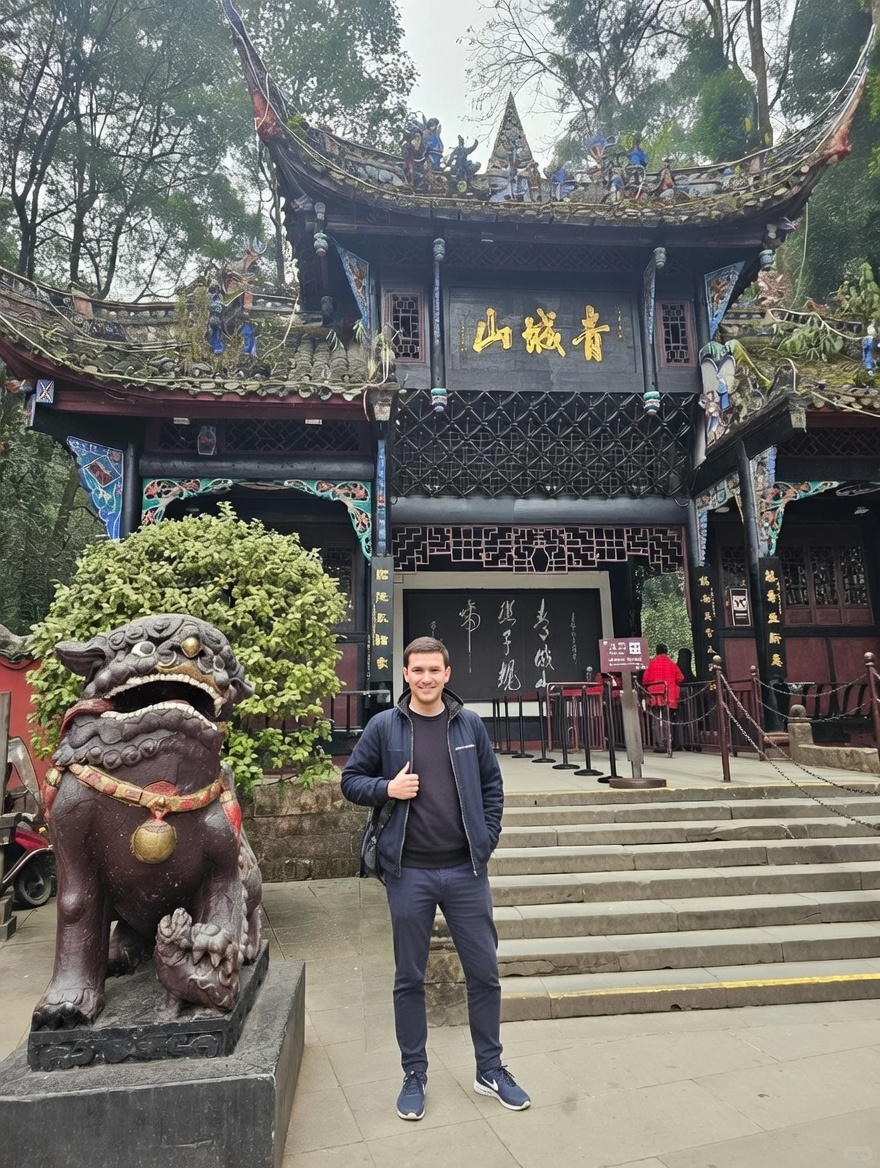
The climb to the summit is a lesson in patience. While many mountains in China now have cable cars that whisk you to the top, I chose to walk the “Front Mountain.” I wanted to follow in the footsteps of the ancient hermits. The path is a series of endless stone steps, polished smooth by millions of feet over centuries. But you don’t mind the steps because of the forest. It is incredibly lush. The canopy is so thick that even on a sunny day, the light on the ground is diffused and soft, painting everything in shades of emerald and jade.
As I climbed, I passed under stone archways carved with ancient calligraphy. I stopped at the Natural Pavilion (Tianran Xiawu). The name itself speaks to the Taoist philosophy: following the natural order. I sat there for a while, sipping water from a bamboo cup sold by a local vendor. An old man walked past me, carrying a heavy load of firewood on his back. He wasn’t wearing high-tech hiking gear, just simple cloth shoes and a straw hat. He moved with a rhythmic, fluid grace, barely making a sound. It was a living example of “Wu Wei”—effortless action. He wasn’t fighting the mountain; he was flowing with it.
Higher up, I reached the Celestial Master Cave (Tianshi Cave). This is the spiritual heart of the mountain. The architecture here is distinctively Taoist—dark wood, intricate carvings, and a sense of humble elegance rather than the overwhelming grandeur of some Buddhist temples. Inside the cave complex, the smell of sandalwood incense was heavy. I watched pilgrims kneeling before the altar, lighting candles and praying for health and longevity. What struck me was the atmosphere. It wasn’t somber; it was peaceful. There was a feeling of timelessness here. I met a young Taoist priest with a long ponytail, sweeping the fallen leaves from the courtyard. We chatted briefly. He told me that Taoism isn’t just about religion; it’s about living in harmony with nature. “Look at the trees,” he said, pointing to a twisted pine growing out of a rock. “They don’t try to be straight. They grow where they can. That is Tao.”
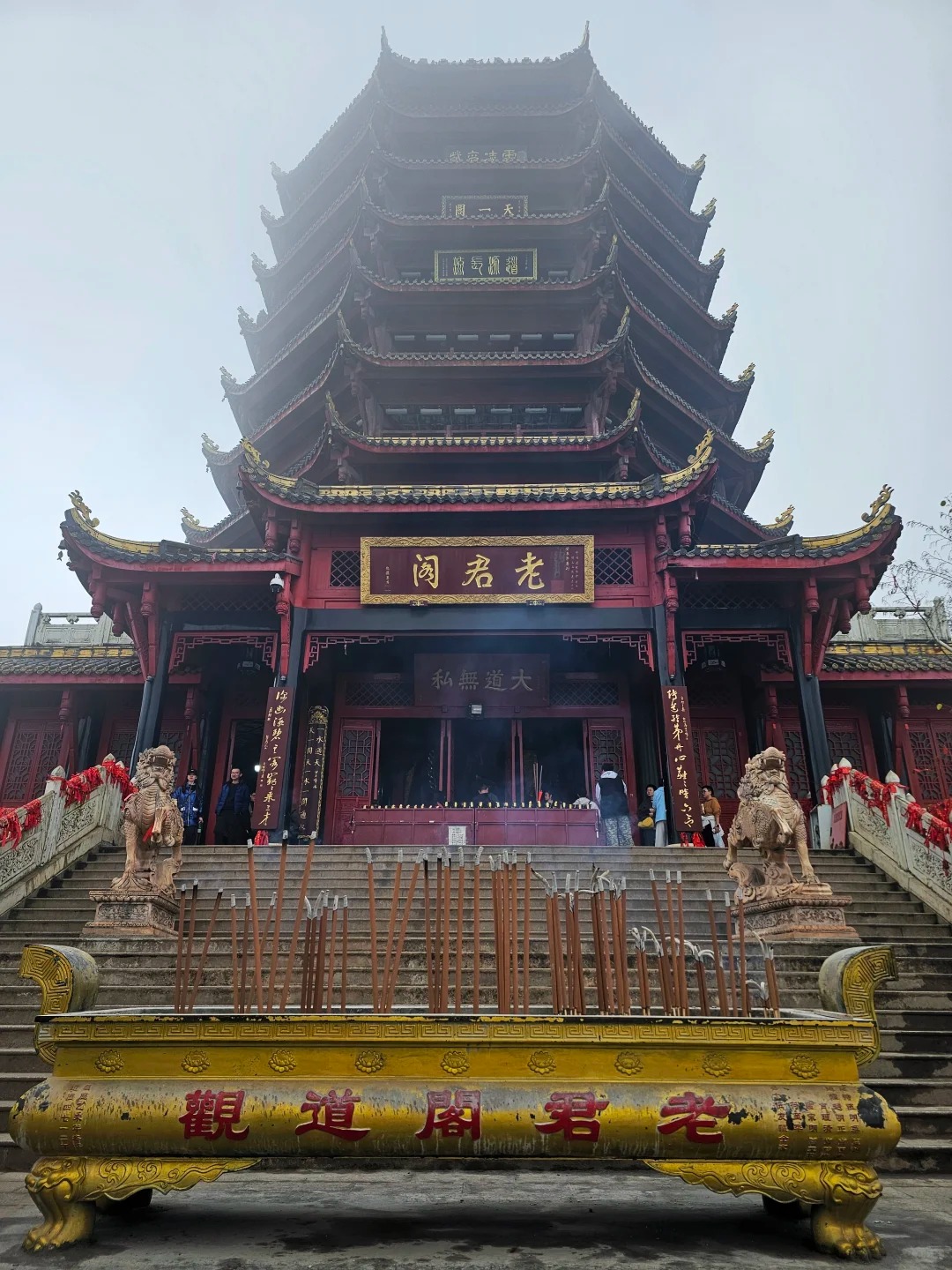
I continued my ascent toward the summit, the Laojun Pavilion. The stairs became steeper and more challenging. My legs were burning, and I was sweating profusely despite the cool mountain air. But the closer I got to the top, the more the noise of the crowd below faded away. I felt like I was climbing into the clouds.
Reaching the summit was a moment of pure clarity. The Laojun Pavilion sits on the highest peak, offering a panoramic view of the Sichuan Basin. Looking out, I could see the flat, fertile plains stretching to the horizon, a patchwork of green fields and tiny towns. It looked incredibly peaceful from above. The wind at the top was strong, whipping the prayer flags that hung from the pavilion. I felt a profound sense of accomplishment, not just because I had climbed the mountain, but because I had disconnected from the digital web for a day. My phone had no signal up there, and it felt liberating. For a few hours, I was just a human being, breathing air, walking on stone, and looking at the sky.
The way down was a journey through different sensations. My knees were grateful, but my mind was racing with thoughts inspired by the temples. I stopped at a small restaurant halfway down to try the famous Qingcheng Pickles and some Daocheng BBQ. The food here is simple but incredibly flavorful. The spicy, savory aroma of the grilled meat mixed with the cold mountain air was intoxicating. I sat at a wooden table, sharing a meal with a group of university students who were taking a break from their exams. We laughed about our tired legs and compared photos of the scenery. It was a reminder that even in a place of seclusion, human connection is still the most important spice of life.

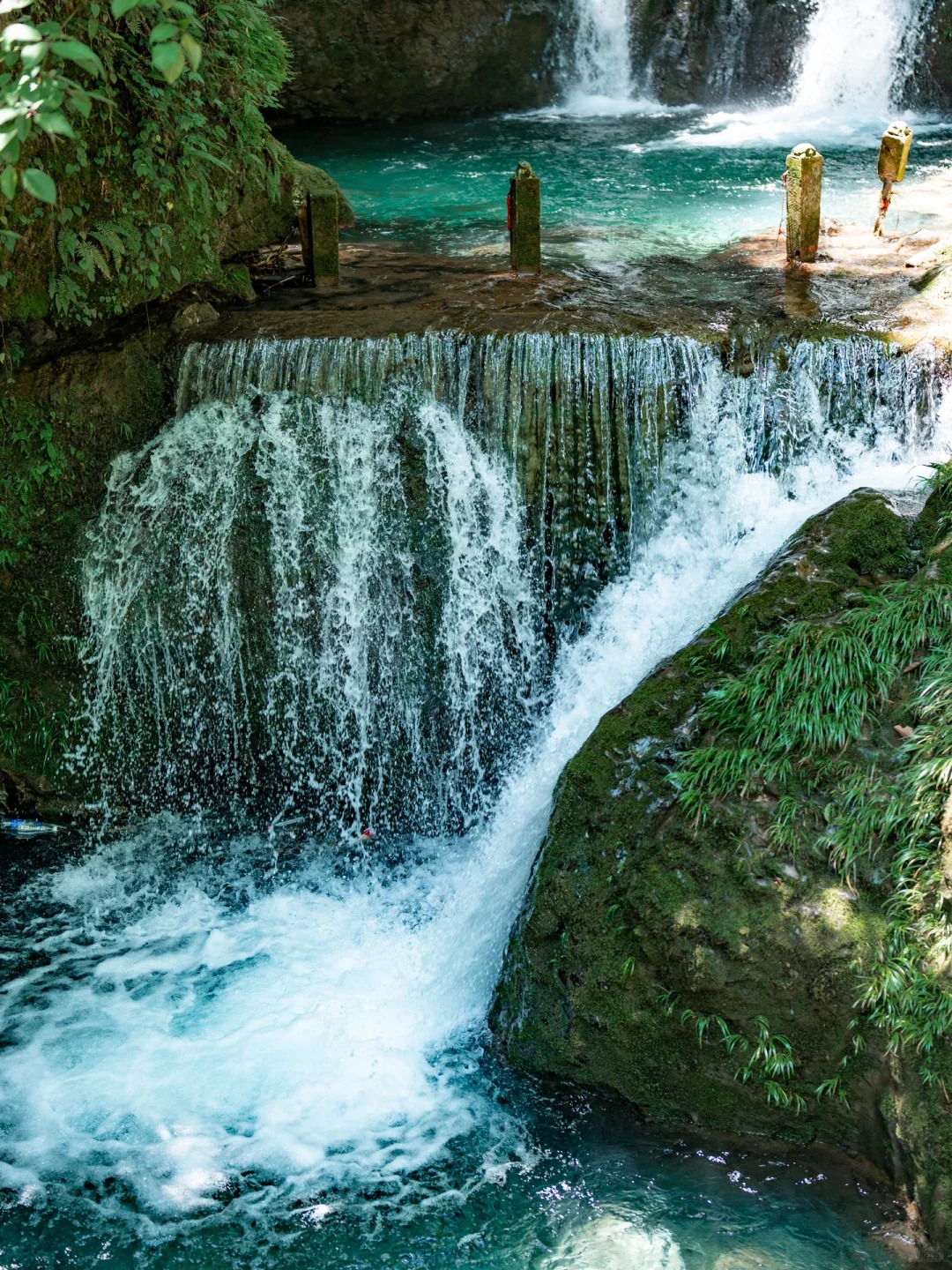
I also took a brief detour to explore the “Back Mountain” of Qingcheng. It is less developed and wilder than the Front Mountain. The trails here follow rushing streams and hidden waterfalls. It’s quieter, more rugged. If you want to feel like a hermit, this is where you go. I found a small rock in the middle of a stream, sat down, and took off my shoes to soak my feet in the freezing water. It was a shock to the system, but it woke up every nerve in my body.
Visiting Qingcheng Mountain is not about seeing the biggest statue or the highest waterfall. It’s about the vibe. It’s about realizing that in a world that is constantly shouting, the most powerful thing you can do is be quiet. It’s about learning that strength doesn’t always mean force; sometimes, strength is the flexibility of a bamboo branch bending in the wind.
If you go to Chengdu, take the day to come here. Don’t rush. Don’t treat it like a gym workout. Stop at the temples. Smell the incense. Touch the rough bark of the cypress trees that have seen a thousand years. And if you see the old man with the firewood, give him a nod of respect. He knows something that most of us have forgotten. Qingcheng Mountain is a gentle teacher, urging you to slow down, breathe, and simply be. It truly is the most secluded place under heaven, and it will leave a piece of its quiet wisdom in your heart long after you leave.