The first time I heard about the Yangtze River Cableway, a local taxi driver in Chongqing laughed at me. He was smoking a cigarette with the windows down, the humid July air rushing into the cab. "You want to go there?" he asked, looking at me in the rearview mirror. "It’s just a bus in the sky. Only tourists go there now to take pictures for the internet. Locals? We take the bridge. It’s faster."
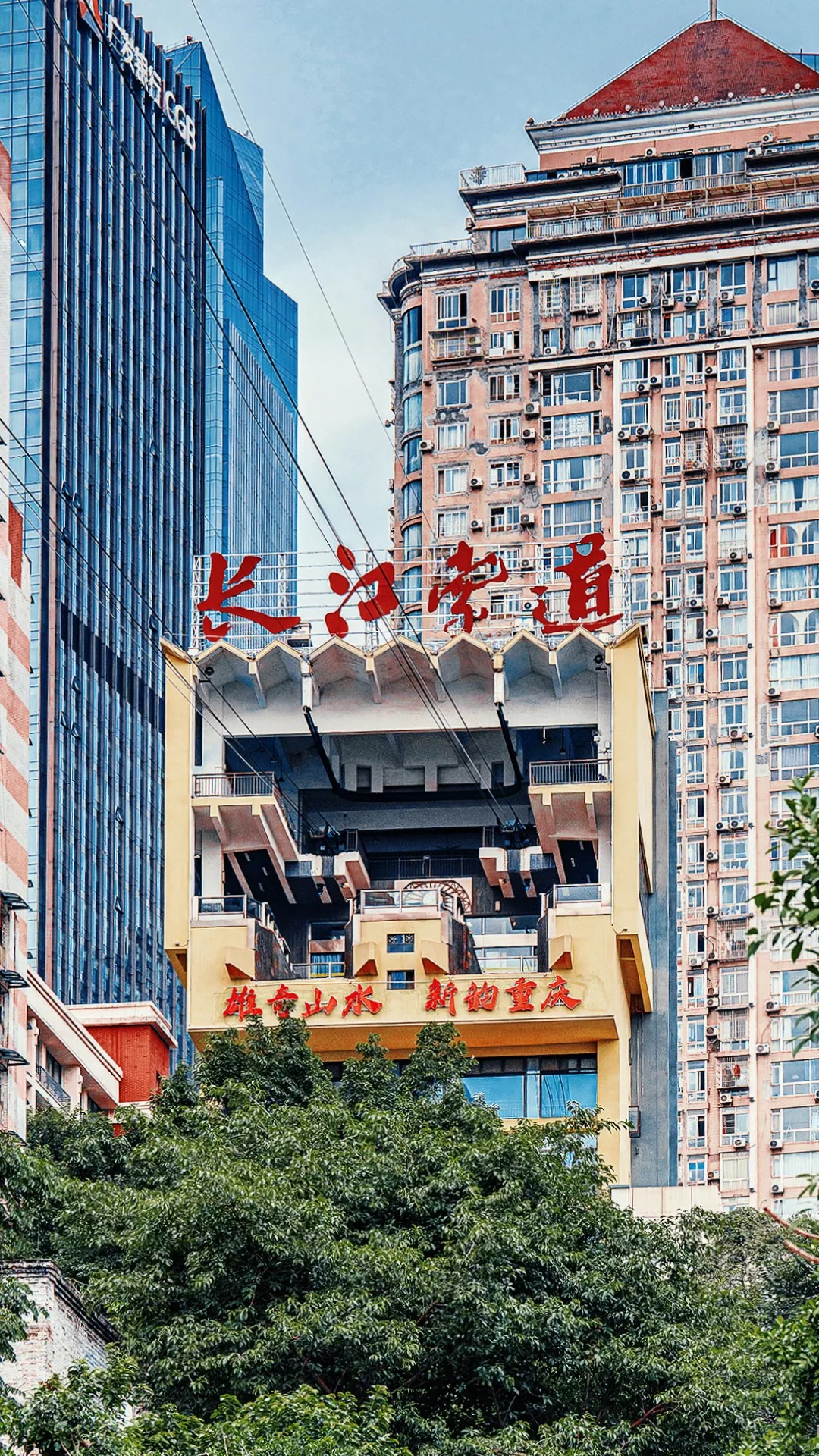
He wasn't wrong, technically. But as I would find out an hour later, he was missing the point entirely.
I arrived at the Xiaoshizi station in the late afternoon. The heat in Chongqing is a physical weight; it sits on your shoulders and presses down. The air smells different here—a heavy, savory mix of roasting chili peppers from the hotpot restaurants, diesel fumes, and the damp, earthy scent of the massive river that slices the city in half.
I queued up. The line was a serpent of humanity. Behind me, a young couple from Shanghai was complaining about the lack of air conditioning. In front of me, an old man with a woven basket on his back stood silently. His skin was the color of old leather, and he wasn't looking at his phone. He was just waiting to go home. That was my first clue that this wasn't just a Disney ride.
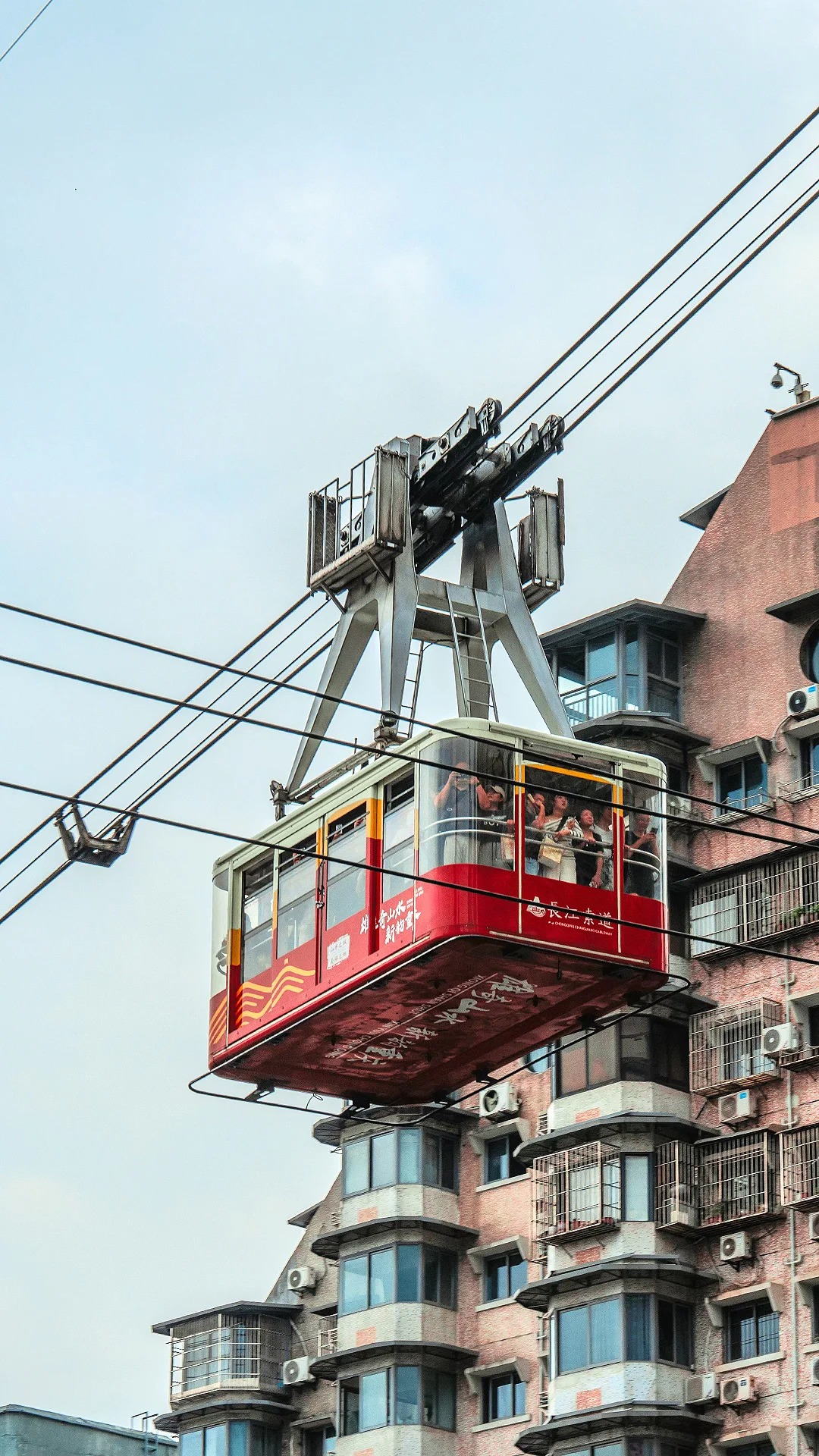
When the metal gates finally clattered open, there was a mad rush. Everyone wanted the window spot. I managed to squeeze into a corner on the right side, pressing my chest against the railing. The carriage itself—a beige, boxy relic that looked like it belonged in a 1980s sci-fi movie—shuddered. It didn't glide smoothly like a modern elevator; it groaned. You could feel the tension in the thick steel cables above.
Then, the bell rang, a sharp, piercing sound, and the floor dropped away.
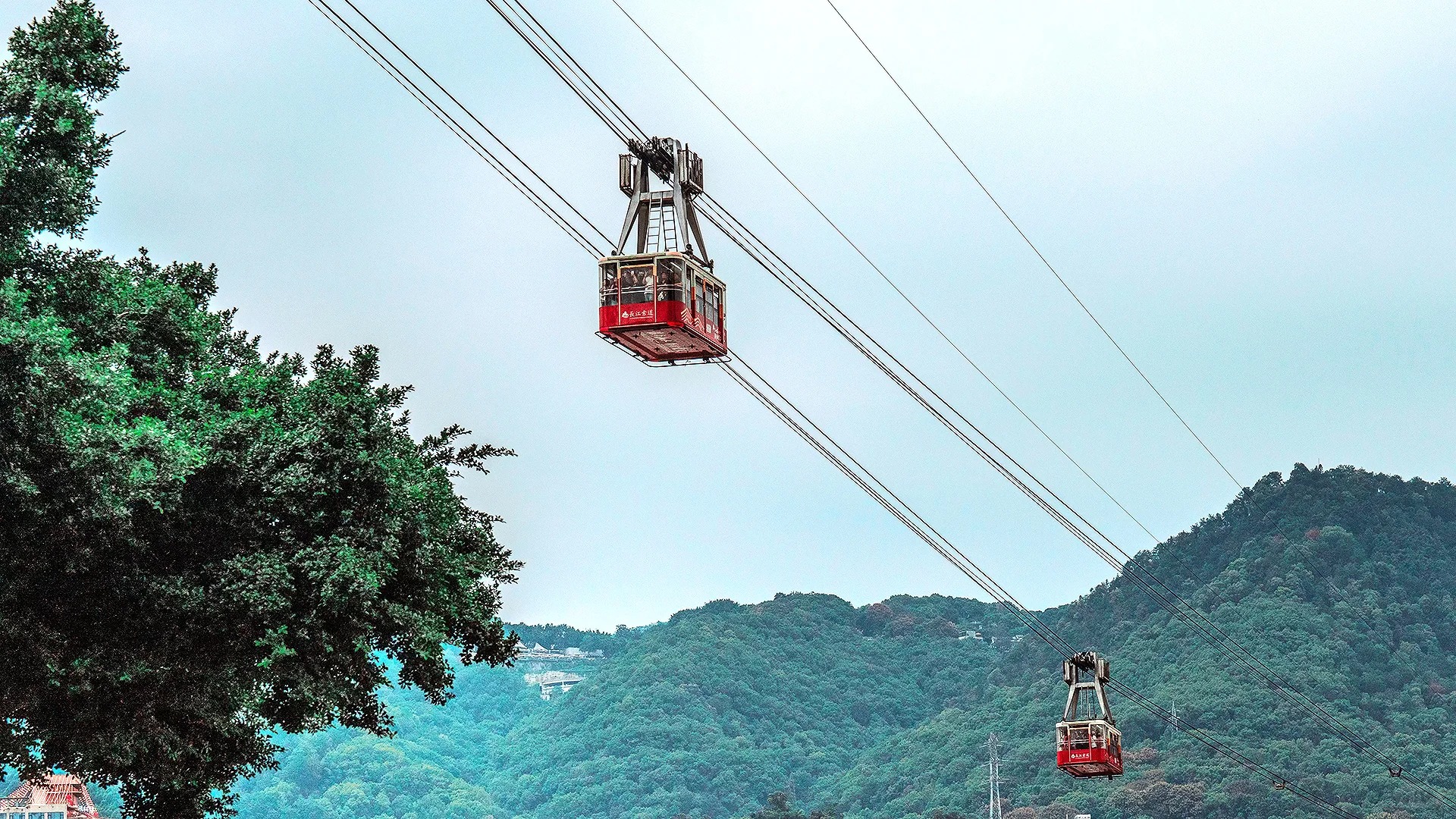
This is the moment that no photo can capture. It’s the feeling of suspension. One second, you are surrounded by the concrete jungle of the Yuzhong District—skyscrapers so dense they block out the sun—and the next, you are floating over a void.
Below me, the Yangtze River was not the blue ribbon you see on postcards. It was brown, muscular, and churning. It looked powerful, almost angry. Barges loaded with coal and sand fought against the current, their engines leaving white scars on the muddy water. From this height, they looked like toys, but the roar of their engines drifted up to us, a low, mechanical hum.
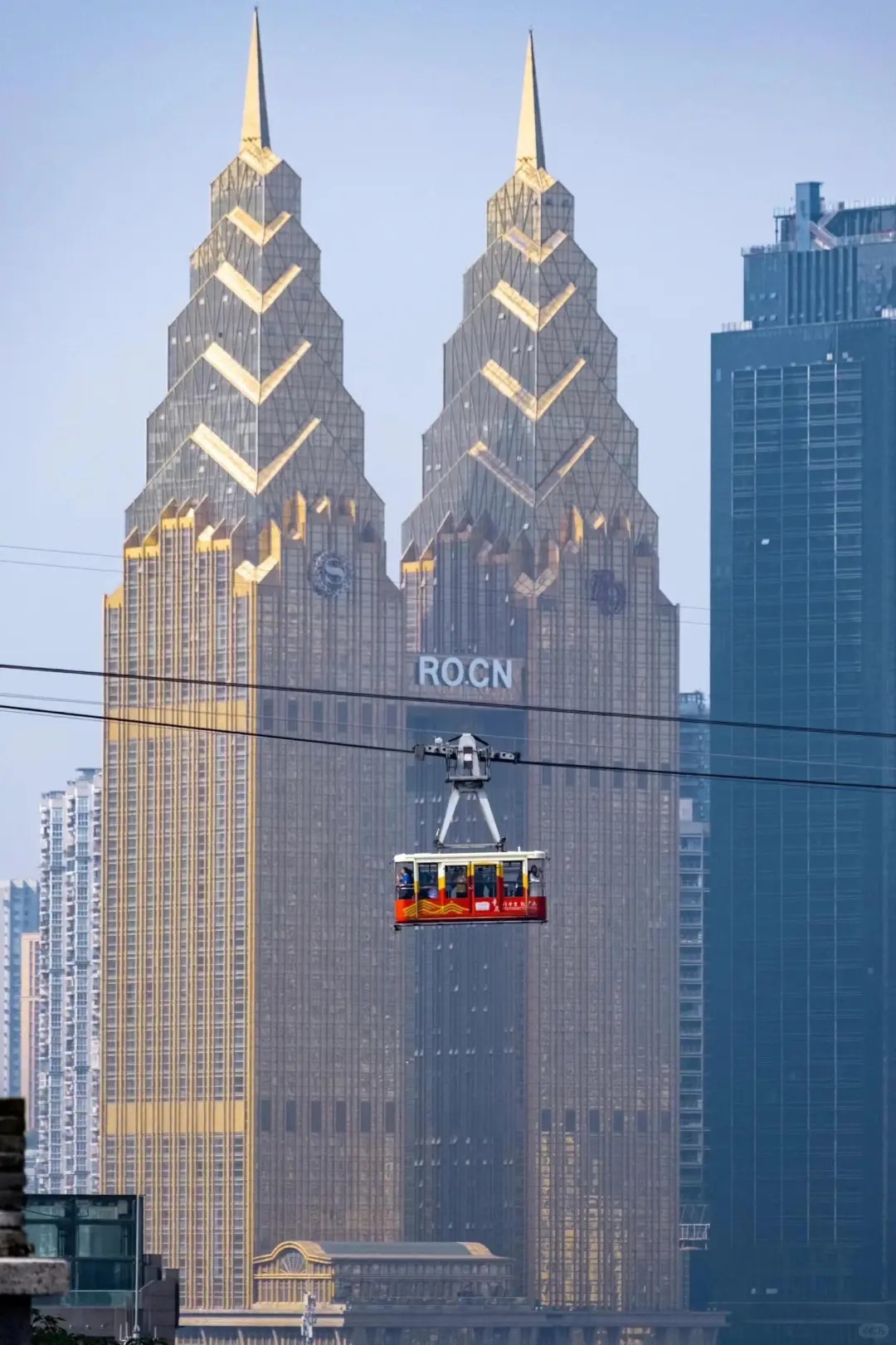
I looked back at the city I had just left. Chongqing from the air is a chaotic masterpiece. It doesn't make sense. Apartment blocks are stacked on top of hills, roads loop around buildings like tangled headphones, and the neon lights of Jiefangbei were just starting to flicker on as the twilight set in. It felt like Blade Runner meets a traditional Chinese painting. To my left, the twin golden towers of the Sheraton Hotel on the south bank stood like gaudy sentinels. To my right, the darkness of the river stretched out into the fog.
Midway across, the carriage slowed down. The wind picked up, whistling through the gaps in the window frames. I closed my eyes for a second. The swaying was rhythmic, almost hypnotic. I thought about the history of this cable. Before the grand bridges were built, this was the lifeline. It wasn't about sightseeing; it was about survival. It was about factory workers getting to their shifts, farmers bringing vegetables to the market, lovers crossing the divide to see each other. The rusty metal I was holding onto had absorbed millions of anxieties, hopes, and weary sighs over the decades.
A child next to me squealed, "Look, a boat!" snapping me back to reality. I opened my eyes. We were approaching the Nan'an district. The buildings here were older, grittier. I saw laundry hanging from balconies that seemed dangerously close to the cable line. I saw a man on a rooftop tending to his pigeon coop, completely indifferent to the metal box of tourists flying past his house.
When we docked, the thud was heavy. The doors opened, and the spell broke. The cool river breeze was replaced by the stagnant heat of the station. I walked out, but I didn't head straight for the exit to catch a cab back. I needed a moment.
I walked down to the Nanbin Road promenade and looked back up at the cableway. Against the darkening grey sky, the carriage looked tiny and fragile, a lonely speck sliding across a thin wire. It looked brave.
I sat on a stone bench and bought a bowl of Bingfen (ice jelly) from a street vendor. The sweetness of the brown sugar and the coolness of the jelly were a relief after the intense heat. I watched the cable car go back and forth, back and forth.
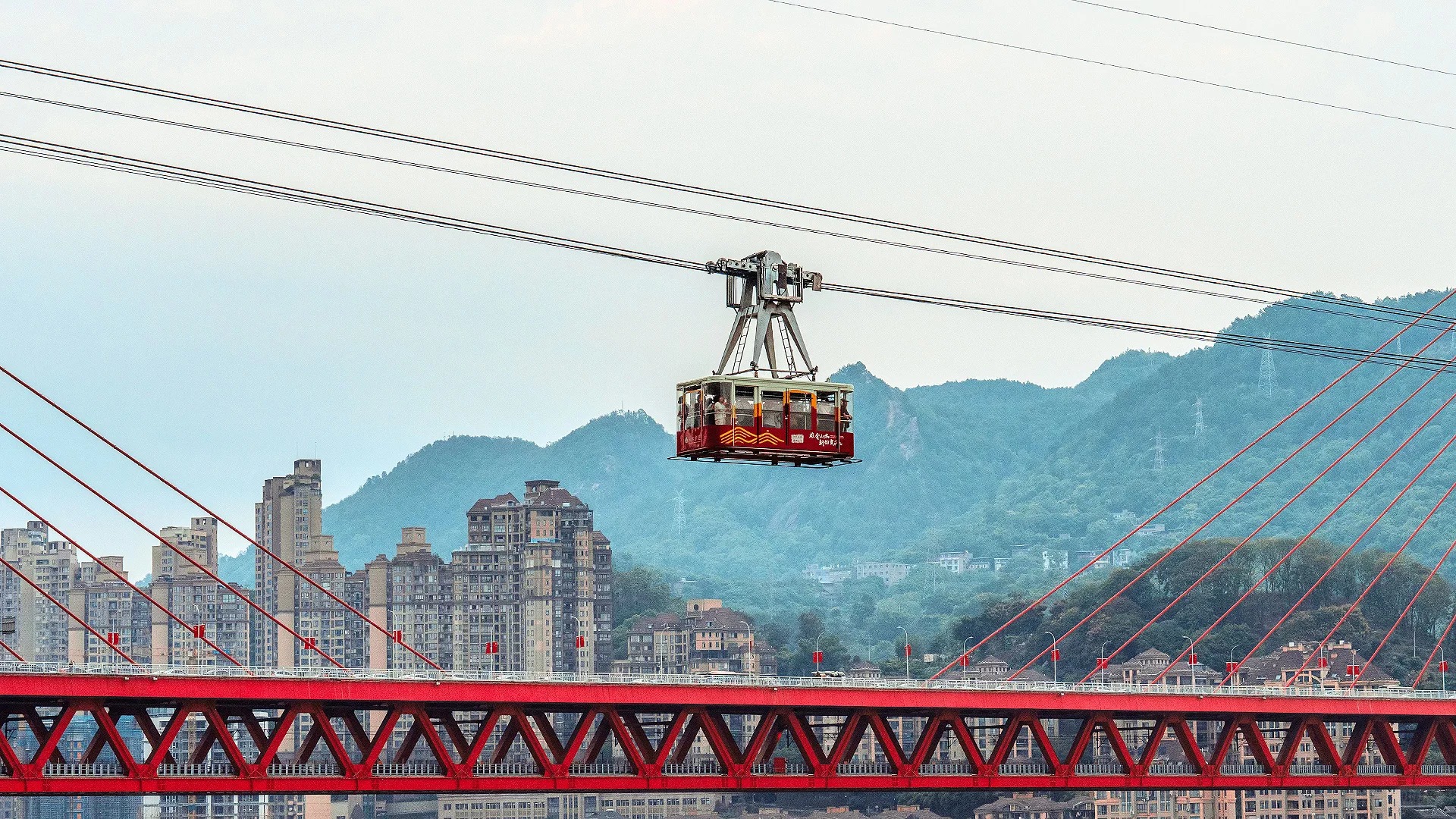
The taxi driver was right; it is slower than the bridge. It is crowded. It is old. But that’s exactly why you have to ride it. In a China that is racing toward the future at breakneck speed, building bullet trains and glass skyscrapers, the Yangtze River Cableway is a stubborn reminder of the industrial grit that built this city. It’s a handshake with the past.
As night fully descended, the city lit up. The river turned into a mirror of dancing neon colors. The cable car became a silhouette against the glowing skyline. I took a photo then, but I knew I wouldn't post it immediately. I wanted to keep the feeling of that sway, that smell of river water and rust, to myself for just a little longer.
If you come to Chongqing, don't just ride it to say you did. Ride it, press your face to the glass, and look down at the muddy water. That’s where the soul of the city is—flowing relentlessly, carrying the weight of history, beneath your feet.