Wandering Through Time: My Journey in Lijiang Old Town
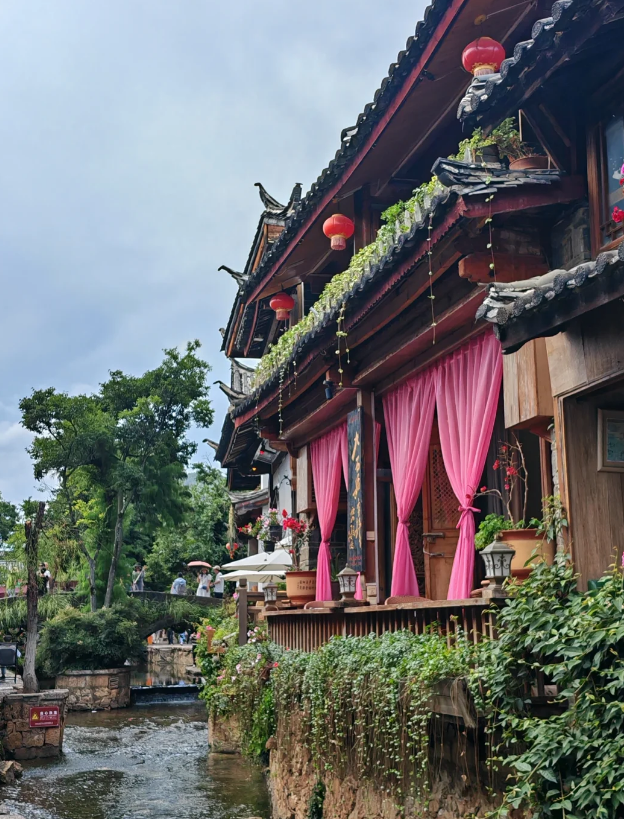
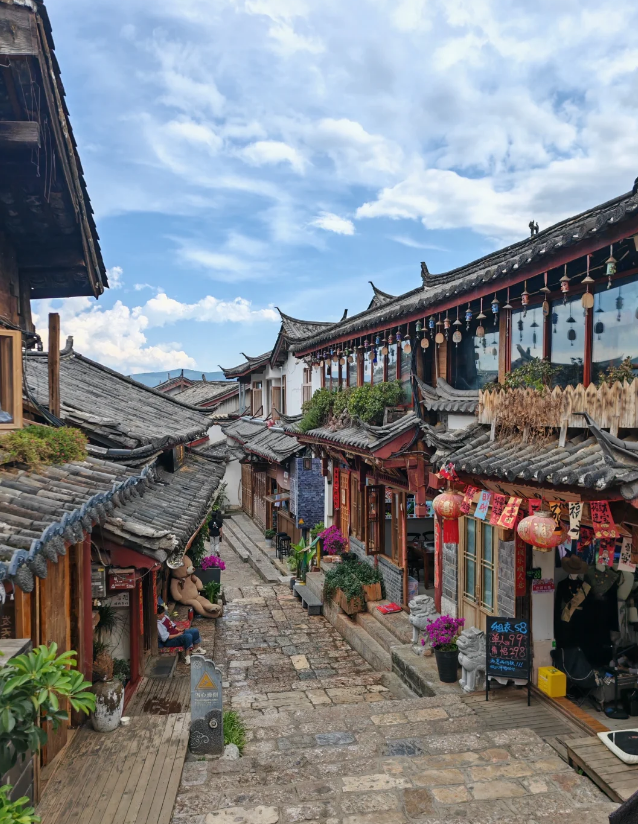
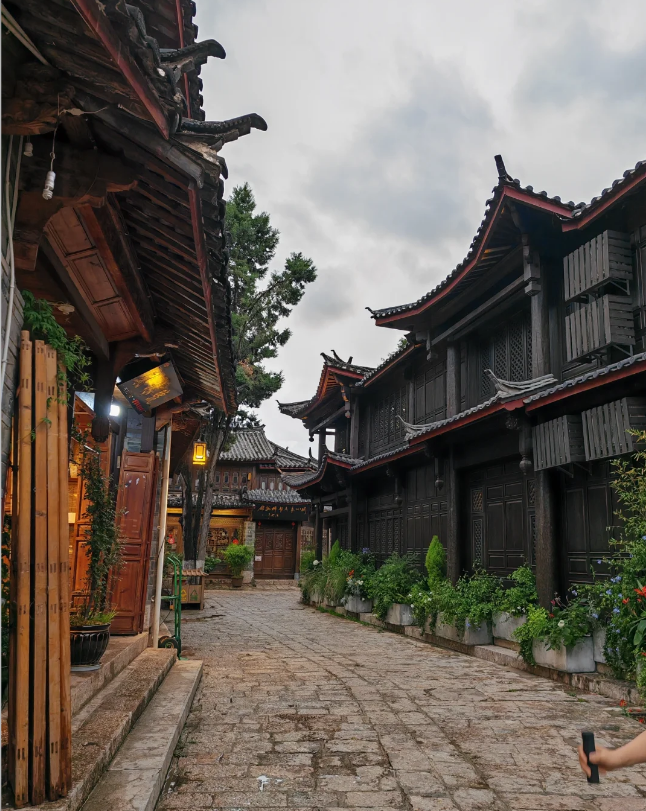
I arrived in Lijiang just as the first light was breaking over the Jade Dragon Snow Mountain, its snow-capped peak glowing pink in the dawn. The bus from the airport dropped me off at the edge of the old town, and I stood there for a minute, taking in the scene: cobblestone streets winding between wooden houses with curved, tiled roofs, streams gurgling along the sides of the roads, and the faint scent of jasmine floating in the cool air. Unlike the bustling cities I’d visited earlier in my trip, Lijiang Old Town felt like a place frozen in time—quiet, peaceful, and full of secrets waiting to be discovered.

I’d booked a guesthouse inside the old town, run by a Naxi family, and the owner, Auntie Ma, was waiting for me at the entrance. She wore a traditional Naxi dress with bright blue and white patterns, and her hair was tied back with a red ribbon. “You’re just in time for breakfast,” she said, smiling as she took my backpack. “We made congee and youtiao—local breakfast.” I followed her through the narrow streets, my shoes clicking on the cobblestones, and every few steps, we passed a small bridge over a stream, where women were washing clothes in the clear water. “The streams are our lifeblood,” Auntie Ma said. “We’ve lived with them for hundreds of years.”
Dawn in the Old Town – Quiet Streets and Morning Rituals
After breakfast—warm congee with pickles and crispy youtiao that melted in my mouth—I decided to wander the streets before the tourists arrived. The old town was still quiet, with only a few locals out and about: an old man sweeping the street with a bamboo broom, a woman setting up a stall with handwoven scarves, a group of children chasing each other along the stream, their laughter echoing through the alleys. I walked slowly, letting my feet guide me, and soon found myself in a small square where a few elderly Naxi men were playing a traditional instrument called the pipa. The music was slow and melodic, and I sat down on a stone bench to listen, watching as the sun rose higher and cast golden light on the wooden houses.
One of the men noticed me watching and waved me over. His name was Grandpa Li, and he spoke a little English. “You like Naxi music?” he asked, handing me a cup of hot tea. I nodded, taking a sip—the tea was bitter but fragrant, with a hint of mint. “We’ve been playing here for 30 years,” he said, gesturing to the other men. “Before the tourists came, we played for the villagers. Now we play for everyone.” He told me that the Naxi people have a long musical tradition, passed down from generation to generation, and that many of their songs are about the mountains and rivers that surround Lijiang. As he played another song, I closed my eyes and listened, and I could almost hear the wind blowing through the mountains and the water flowing in the streams.
As I walked further into the old town, I came across the Mu Family Mansion, a large courtyard house that was once the home of the Mu clan, the rulers of Lijiang during the Ming and Qing dynasties. The mansion was surrounded by high walls, and the entrance was guarded by two stone lions. I paid the small entrance fee and stepped inside, and was immediately struck by the beauty of the courtyard: a large pool in the center, with lotus flowers floating on the surface, and corridors lined with wooden pillars carved with dragons and phoenixes. A guide was explaining the history of the mansion to a small group, and I joined them. “The Mu family ruled Lijiang for over 400 years,” she said. “They were known for their wisdom and their respect for nature. You can see that in the design of the mansion—every room faces the mountains, and the pool collects rainwater to use for irrigation.”
In one of the rooms, there was a display of Naxi hieroglyphs—the only living hieroglyphic language in the world. The guide showed us a book written in the hieroglyphs, explaining that it was a collection of Naxi myths and legends. “Only a few people can read these now,” she said, “but we’re trying to teach the younger generation. It’s part of our culture, our identity.” I stared at the strange, beautiful symbols, and thought about how important it is to preserve these ancient traditions. In a world that’s changing so fast, places like Lijiang Old Town are like time capsules, keeping alive the stories and customs of the past.
Midday Explorations – Markets, Food and Local Life
By mid-morning, the old town was starting to fill up with tourists, but it still retained its charm. I walked to the Sifang Street, the main square of the old town, where a bustling market was in full swing. Vendors were selling everything from handwoven textiles and wooden carvings to fresh fruit and local snacks. I wandered through the market, stopping to look at a stall selling Naxi silver jewelry—intricate necklaces and bracelets with patterns inspired by nature. The vendor, a young woman named Xiao Yu, explained that the silver is mined locally and that each piece is handcrafted by artisans. “My mother taught me how to make this,” she said, holding up a bracelet with a lotus flower design. “It takes three days to make one bracelet. We don’t rush—good work takes time.” I bought the bracelet, and she wrapped it in a piece of red paper, telling me it would bring me good luck.
By noon, I was hungry, so I followed my nose to a small restaurant tucked away in a side alley. The sign outside said “Grandma’s Naxi Cuisine,” and the smell of spicy food was coming from the kitchen. I sat down at a wooden table by the window, and the owner, Grandma Wang, came over to take my order. “You must try the braised pork ribs with fermented beans,” she said, “and the fried pumpkin flowers. They’re my specialties.” I agreed, and soon the food arrived—plates of colorful, fragrant dishes that made my mouth water. The pork ribs were tender and flavorful, with a hint of spice, and the pumpkin flowers were crispy and sweet. Grandma Wang sat down with me while I ate, telling me stories about her childhood in the old town. “When I was a girl, there were no tourists here,” she said. “We played in the streams, helped our parents with the farming, and ate meals together in the courtyard. Life was simple, but happy.”
After lunch, I decided to visit the Black Dragon Pool Park, located just outside the old town. The park is famous for its clear pool, which reflects the Jade Dragon Snow Mountain perfectly on a clear day. As I walked through the park, I passed by willow trees dipping their branches in the water, and stone bridges crossing small lakes. The pool was even more beautiful than I’d imagined—the water was so clear that I could see the fish swimming at the bottom, and the snow-capped mountain was reflected perfectly in the surface, like a mirror. A group of photographers were setting up their tripods, trying to capture the perfect shot, and I stood there for a long time, staring at the reflection. It was one of those moments where you feel small, but in a good way—awed by the beauty of nature, grateful to be able to see something so perfect.
On my way back to the old town, I passed a group of Naxi women wearing traditional costumes, dancing in a square. They were holding hands and singing a folk song, their movements slow and graceful. A few tourists joined in, and soon everyone was laughing and dancing together. I stood there watching, and for a moment, I forgot that I was a tourist— I felt like part of the community. It was a reminder that even though Lijiang is a popular tourist destination, the local people still hold onto their traditions, and they’re happy to share them with others.
Afternoon Culture – Temples, Weaving and Stories
In the afternoon, I visited the Wangu Pavilion, a tall tower located on a hill in the old town. The tower offers panoramic views of the entire old town and the surrounding mountains, and it’s a popular spot for tourists. I climbed the narrow stairs to the top, and when I reached the viewing platform, I gasped. The old town spread out below me like a maze of wooden houses and cobblestone streets, with streams winding through it like silver ribbons. In the distance, the Jade Dragon Snow Mountain stood tall, its peak covered in snow. I took a photo, but like so many moments on this trip, the photo didn’t do it justice. I sat down on the edge of the platform, breathing in the fresh mountain air, and thought about how lucky I was to be there.
From the Wangu Pavilion, I walked to a Naxi weaving workshop, where local women teach visitors how to weave traditional textiles. The workshop was a small courtyard house, and inside, women were sitting at looms, their fingers moving quickly as they wove colorful fabrics. A woman named A Ling greeted me and offered to teach me how to weave. I sat down at a loom, and she showed me how to thread the yarn and move the shuttle. It was harder than it looked—my fingers kept getting tangled in the yarn, and I dropped the shuttle more than once. A Ling laughed and helped me, patience in every gesture. “Weaving is like life,” she said. “It takes time and patience, and you have to pay attention to every detail. But when you finish, it’s beautiful.” After an hour of trying, I managed to weave a small piece of fabric, which she gave me as a souvenir. It was messy, but I was proud of it—it was a tangible reminder of the time I’d spent learning about Naxi culture.
Next, I visited the Baisha Mural Temple, located a short bus ride from the old town. The temple is home to a collection of ancient murals painted during the Ming Dynasty, depicting scenes from Buddhist and Taoist myths, as well as everyday life in Lijiang. The murals are faded, but still beautiful— the colors are soft, and the details are intricate. A monk was explaining the murals to a group of visitors, and I listened as he told the story of a mural depicting the Naxi people farming and hunting. “These murals are our history,” he said. “They tell us who we are, where we came from, and what we value. We must protect them, so that future generations can learn from them.” As I looked at the murals, I thought about how art can preserve history in a way that words can’t—how a painting can capture a moment in time, and make it come alive centuries later.
On the bus back to the old town, I sat next to an elderly Naxi man who was carrying a basket of fresh vegetables. He told me that he lived in a small village outside Lijiang, and that he came to the old town every day to sell his vegetables. “I’ve been doing this for 50 years,” he said. “The old town has changed a lot—more tourists, more shops—but the mountains and the streams are still the same. They’re our roots.” He offered me a tomato from his basket, and I took it, biting into it. It was sweet and juicy, the best tomato I’d ever tasted. It was a small gesture, but it made me feel welcome, like I was part of his world.
Night in Lijiang – Lanterns, Music and Goodbyes
As the sun began to set, the old town came alive with lights. Red lanterns hung from the eaves of the houses, casting a warm glow on the cobblestone streets, and the streams were lined with small paper lanterns, their reflections dancing on the water. I walked back to Sifang Street, where street performers were playing music and singing songs. A group of musicians was playing traditional Naxi music, and a crowd had gathered around them, listening and clapping. I stood there, watching, and felt a sense of peace wash over me. There was something magical about Lijiang at night— the lights, the music, the sound of the streams—it felt like a fairy tale.
I met Auntie Ma at a small restaurant for dinner, and we ate hot pot, a popular Sichuan dish that’s perfect for cool evenings. The hot pot was filled with spicy broth, and we dipped meat, vegetables, and tofu into it, chatting as we ate. Auntie Ma told me about the Naxi New Year, which is celebrated in February. “We have a big feast with our families, and we go to the temple to pray for good luck,” she said. “The old town is decorated with lanterns, and there are dragon dances in the streets. You should come back for it.” I told her I would love to, and as I ate, I made a mental note to add it to my travel list.
After dinner, we walked through the old town together, stopping to look at the lanterns and listen to the music. We passed a small bar where a singer was playing a guitar and singing a song in Chinese. The song was slow and sad, and Auntie Ma told me it was a love song about a Naxi girl who falls in love with a traveler. “Many people come to Lijiang and fall in love,” she said, smiling. “With the town, with the people, with the life here. It’s easy to do.” I nodded, knowing exactly what she meant. Lijiang wasn’t just a place—I’d fallen in love with its beauty, its culture, and its people.
As we walked back to the guesthouse, Auntie Ma gave me a small gift: a handwoven scarf with a pattern of the Jade Dragon Snow Mountain. “It’s to remember Lijiang by,” she said. “Come back soon.” I hugged her, thanking her for her kindness. That night, as I lay in bed, I listened to the sound of the stream outside my window and thought about my day. I’d seen beautiful sights, eaten delicious food, and met amazing people. But more than that, I’d learned about a culture that’s deeply connected to nature, a people who value tradition and community, and a town that has managed to keep its soul despite the influx of tourists.
The next morning, I packed my bags and said goodbye to Auntie Ma. As the bus pulled away from the old town, I looked back, watching as the red lanterns and wooden houses disappeared into the distance. I knew I’d never forget Lijiang— the quiet dawn, the bustling market, the sound of Naxi music, the taste of Grandma Wang’s pork ribs, the warmth of Auntie Ma’s smile. It was more than a travel destination; it was a place that had touched my heart.
Months later, when I look at the bracelet Xiao Yu made me and the scarf Auntie Ma gave me, I’m transported back to Lijiang. I remember the sound of the streams, the smell of jasmine, and the feeling of peace I felt there. Lijiang Old Town isn’t just a place frozen in time—it’s a place that lives in your heart, a reminder of the beauty of tradition, the kindness of strangers, and the magic of travel. And one day, I will go back. I promise.