To understand Jilin City, you have to understand the Songhua River. And to understand the river, you have to go to Songhua Lake (Songhua Hu).
Technically, this is the Fengman Reservoir, created by a hydroelectric dam. But everyone calls it Songhua Lake. It’s the water source, the power source, and the playground for the city.
I took a high-speed train from Changchun to Jilin, a journey that takes less than an hour but feels like you’re teleporting through a winter postcard. When I arrived at the lake, the first thing I did wasn't sightseeing—it was eating.
Specifically, the "Songhua Lake Fish Feast."
There’s a saying here: "No feast is complete without fish." I sat in a rustic restaurant right on the water’s edge. The waiter brought out a pot the size of a cauldron. Inside was the "Big Head" fish (Pseudosciaena crocea)—a local specialty. The skin was gelatinous, sticky with collagen, and the meat was so tender it practically melted in my mouth. The sauce was rich, fermented bean paste that had been aging for years. I washed it down with a glass of "Jilin Feng," a local white liquor that burns going down but warms you from the inside out.
But the lake is more than just dinner. I took a boat tour. The wind on the lake is fierce. As the boat cut through the gray water, I looked back at the city skyline. It’s a beautiful contrast—the industrial smokestacks of the thermal power plant mixing with the misty mountains.
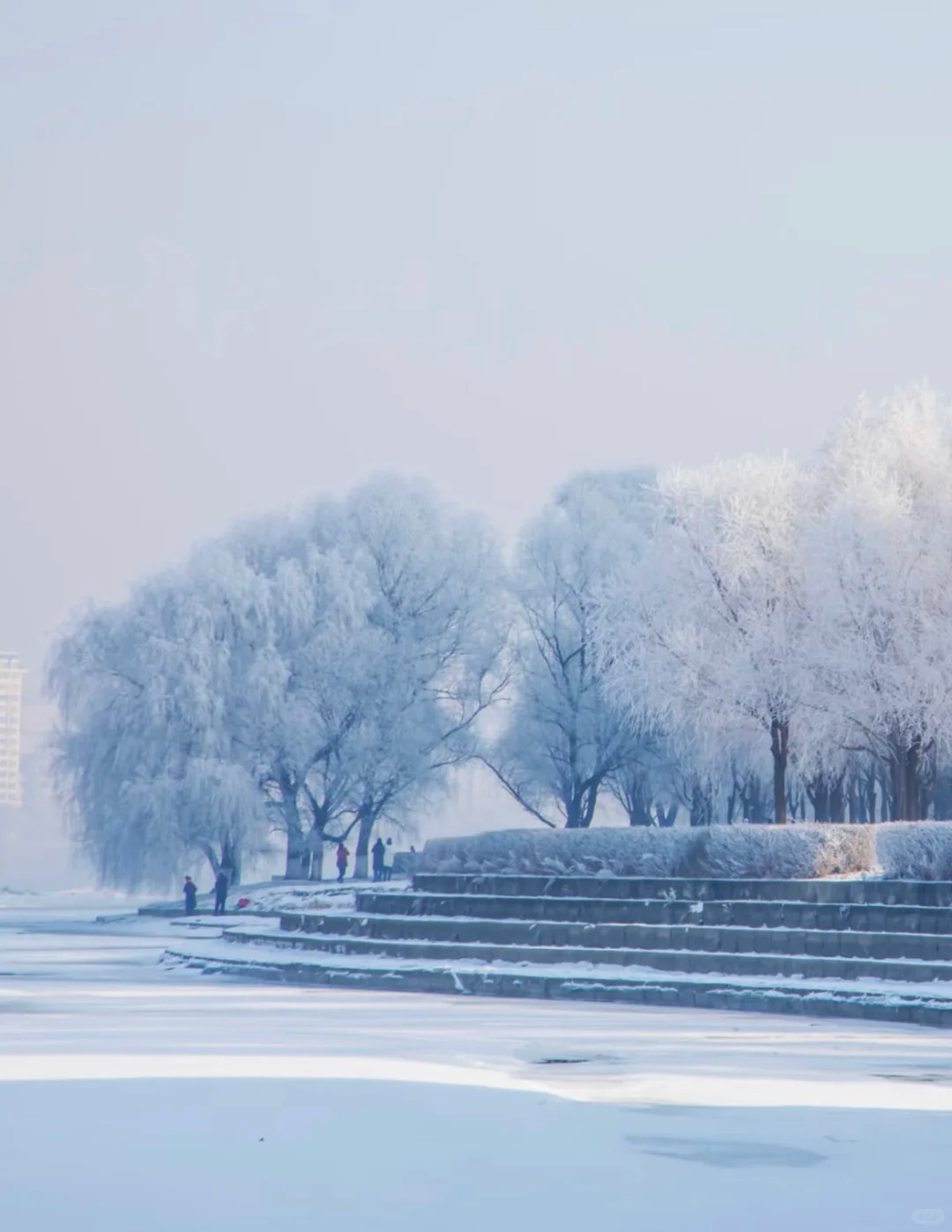
In the winter, the lake freezes solid. It becomes the largest natural ice rink in China. I’ve seen grandmothers playing ice bicycles and kids playing ice hockey with tin cans. The ice is thick enough to drive a car on (though I don’t recommend it unless you’re local).
Songhua Lake represents the industrial romance of Northeast China. It’s not pristine like a hidden alpine lake; it’s working water. It generates electricity, it feeds the city, and it holds the memories of generations who grew up swimming (or sliding) on its surface.