If the Narat Grassland is a velvet ocean, then Kalajun is a sleeping giant. The name “Kalajun” in Kazakh means “dark and barren,” but that is a cruel misnomer for a place that is, in my eyes, one of the most artistically sculpted landscapes on earth. Located in the Gongnaisi grassland of Ili, Kalajun is not about the flowers or the trees; it is about the curve. It is about the way the earth rolls, folds, and flows like a piece of green silk dropped from the heavens.
I arrived at Kalajun on a cloudy afternoon. The light was flat, diffused by a thick layer of cloud, which I initially thought was bad luck for photography. But I was wrong. The flat light emphasized the texture and the topography of the hills. Kalajun is famous for its “Body Grasslands” (Kesentun grassland), so named because the hills look like the contours of the human body—hips, waist, and shoulders—sculpted with infinite sensuality by the wind and rain.
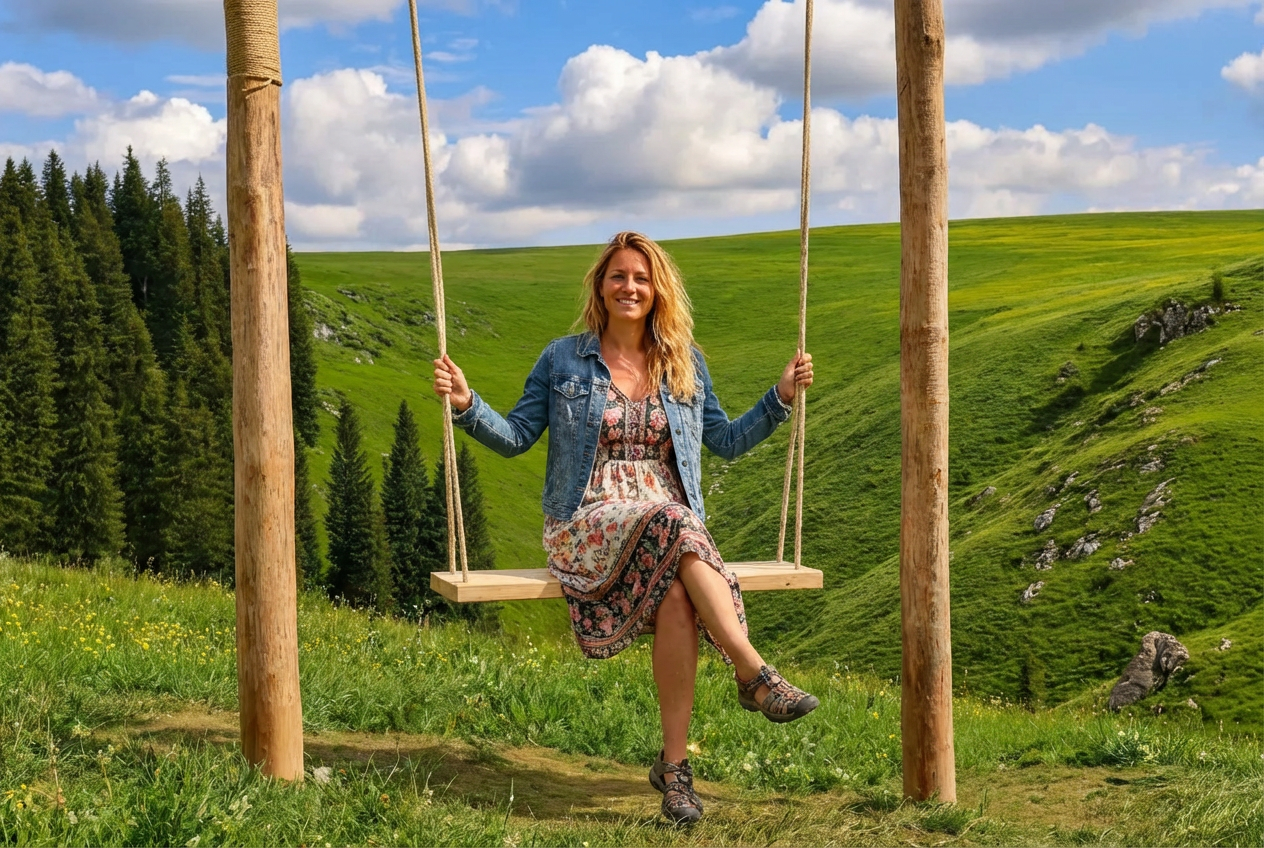
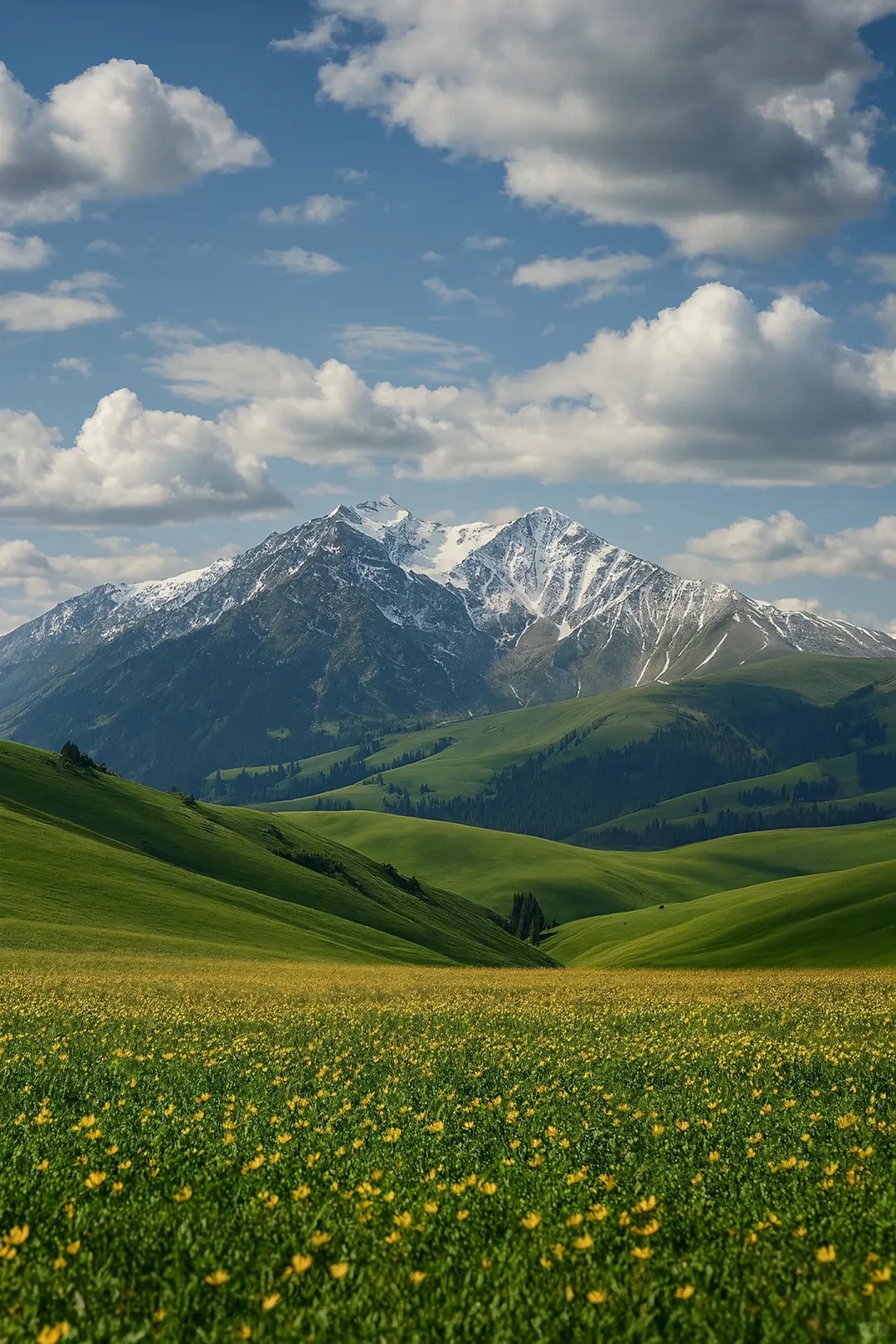
Walking along the ridge of the “Falcon Platform” (Kutubi), I felt a strange sense of vertigo. It wasn’t from height, but from the sheer smoothness of the slopes. To my left, the land dropped away in a perfect concave curve, covered in the thickest, most vibrant green grass I have ever seen. To my right, the hills rose in convex arcs, rolling endlessly towards the horizon. There were no sharp edges, no jagged cliffs. Just millions of tons of earth and grass shaped into gentle waves.
Kalajun is often considered the most beautiful of the Ili grasslands by seasoned travelers, and it’s easy to see why. It feels intimate. While Narat feels grand and open, Kalajun feels private, as if the landscape is posing just for you. The silence here is profound. Standing on the ridge, with the wind tugging at my jacket, I felt a deep sense of peace. The noise of the world—the traffic, the emails, the deadlines—seemed to dissolve into the green slopes.
One of the unique features of Kalajun is the wild peach forest in the valley below. In the spring, it turns pink with blossoms, but in late summer, it is a dark, mysterious tangle of green. I hiked down from the ridge into the valley. The transition is sudden; from the open grassland, you enter a cool, shaded tunnel of trees. The air smelled of damp earth and rotting leaves, a sharp contrast to the dry grassy scent above. It felt like entering a secret garden.
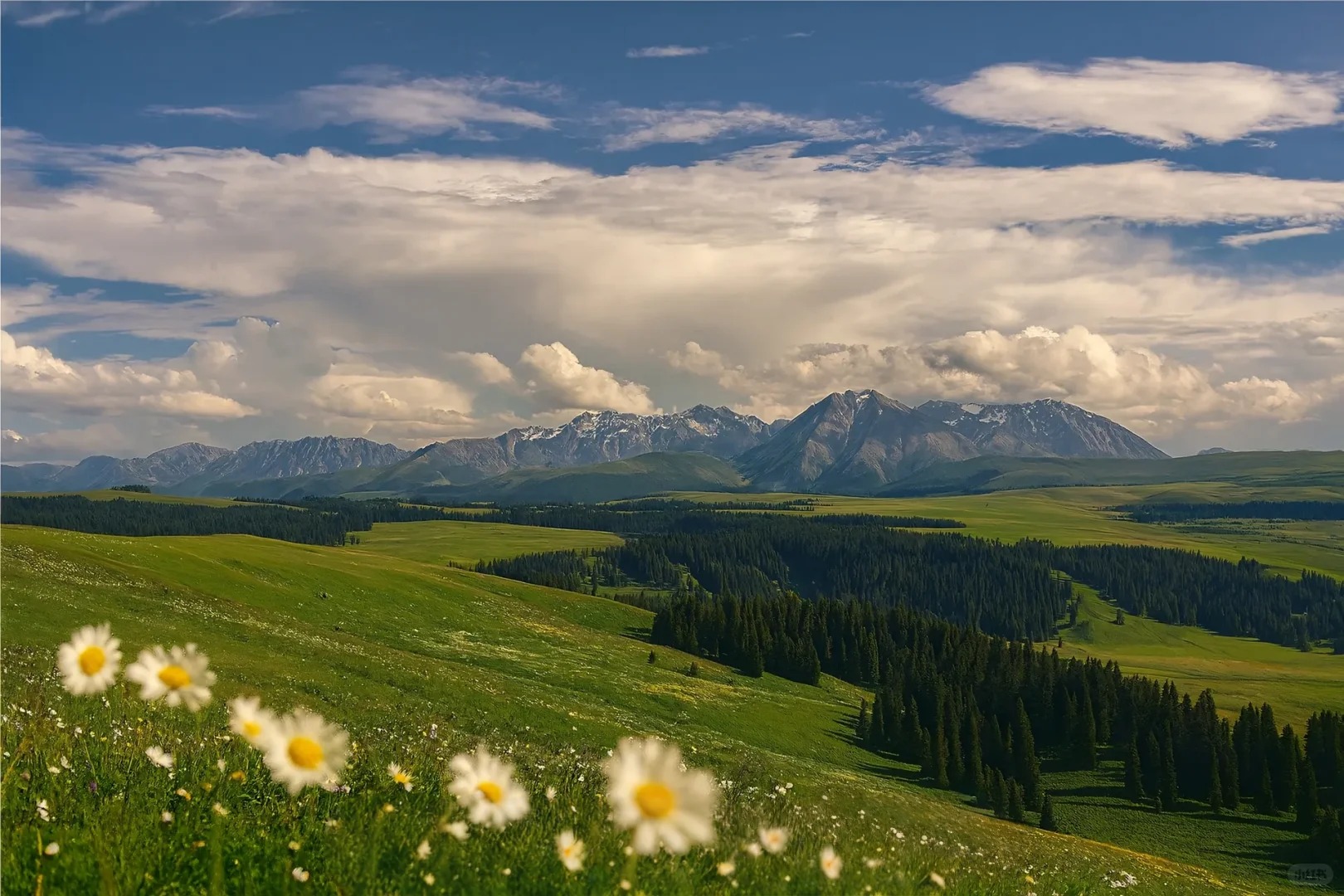
I spent the evening at the famous viewing spot for the “Nine-Eighteen Bends” of the Kuerdening River. From the high vantage point, the river snakes through the valley floor with such incredible grace. It is not a raging torrent here; it is a lazy, silver ribbon that makes loop after loop. The golden hour light was breaking through the clouds, casting spotlights on the grass. It was a scene of mesmerizing beauty. I watched a herd of horses galloping freely along the riverbank. Their manes flying, muscles rippling—pure, unadulterated freedom. It was a scene that could have been painted by a master artist a thousand years ago.
The cultural life in Kalajun is deeply rooted in the traditions of the Kazakh and Kyrgyz people. I stayed in a stone house in a nearby village rather than a yurt, wanting to experience the settled life of the herders. The host family served me *polu* (pilaf), a dish of rice, carrots, and mutton that is a staple in Xinjiang. We sat on the *kang* (a heated brick bed), eating with our hands, sharing stories.
The host, a weathered man with a face like a walnut shell, told me that the grass here is sweet. “The sheep and horses that eat this grass are strong,” he said. “And the people who eat this meat are strong.” He laughed, slapping his thigh. It is this connection to the land that defines life here. The people are not separate from the landscape; they are part of it. They move with the seasons, they understand the weather, and they respect the curves of the earth.
The next morning, I woke up to a sea of clouds. This is a rare phenomenon in Kalajun, where the valley fills with mist, leaving the peaks and ridges floating like islands in a white ocean. I rushed to the viewpoints. The sight was surreal. The green slopes of the “body” grasslands were transformed into abstract shapes rising from the mist. The sun was trying to break through, creating a mystical, almost spiritual atmosphere. It felt like I had died and gone to a heaven made of green and white.
I walked along the wooden plank road that winds through the “Finger Grasslands.” These are narrow ridges that stick out into the valley like fingers. Walking there, surrounded by clouds, was eerie and beautiful. I couldn’t see the bottom, only the endless white void. The wind whistled through the wooden railings. It was a moment of pure Zen.
Leaving Kalajun, I realized that its beauty lies in its subtlety. It doesn’t shout at you with high peaks or deep canyons. It whispers to you with its curves. It invites you to trace the lines of the hills with your eyes, to relax into the rhythm of the rolling earth. It is a landscape that feels feminine, soft, and incredibly nurturing.
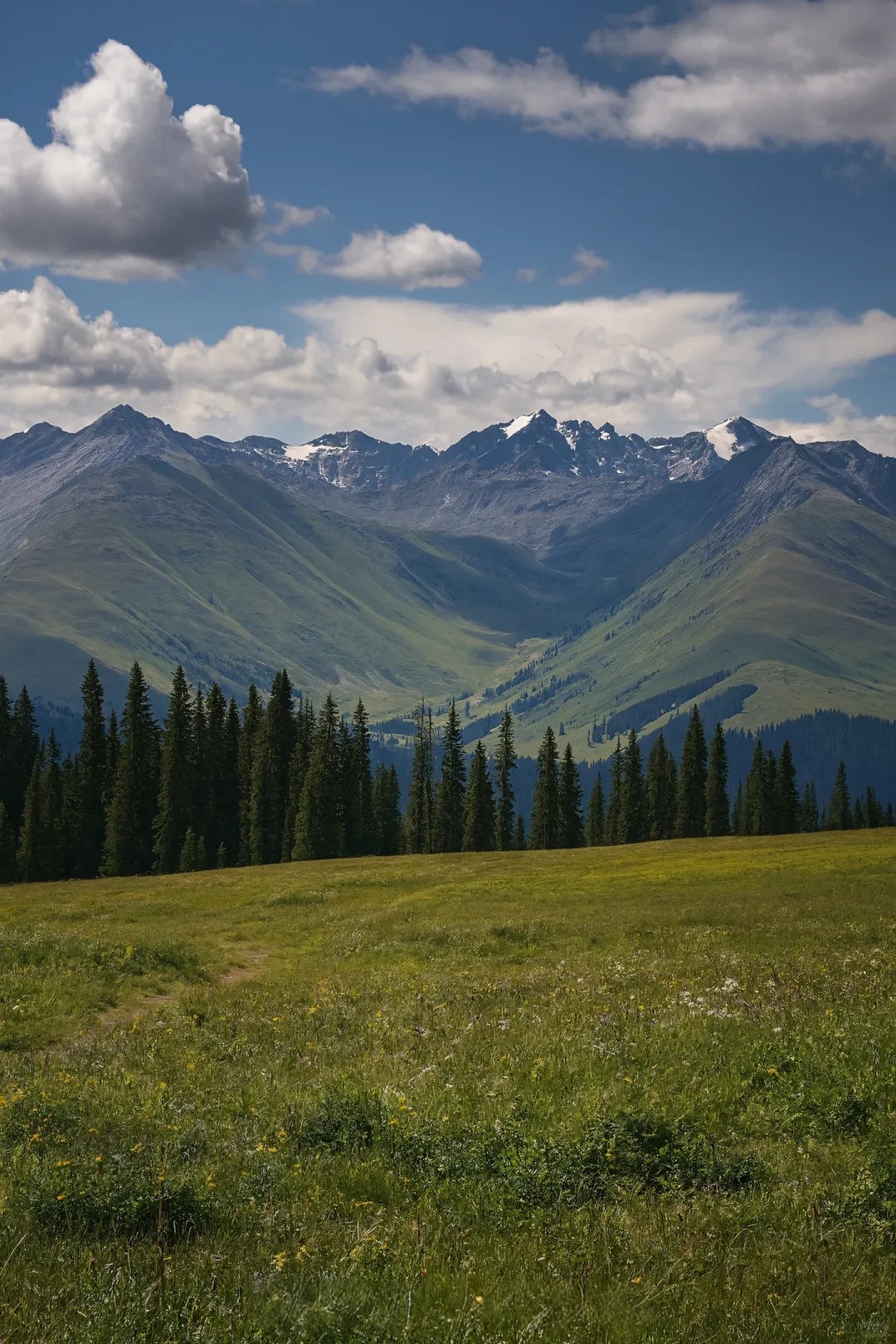
For those traveling to Xinjiang, Kalajun is a must-see. It is a place that heals the eyes and the soul. It reminds you that nature is not just about power; it is also about grace. And in the rolling hills of Kalajun, I found a grace that I will carry with me for the rest of my life. If you have the chance, sit on a ridge, close your eyes, and let the wind blow over you. You will understand what I mean.