I’d been dreaming of Huang Shan Mountain since I was a kid, flipping through a photo album my grandfather had brought back from his trip to China. The photos showed misty peaks and twisted pines, but they were flat, two-dimensional—nothing like the way the mountain loomed in front of me on that sunny summer morning. I stood at the base, squinting up at the peaks, and felt a mix of excitement and nervousness. This was the mountain that had inspired poets and painters for millennia. Would it live up to the dream?
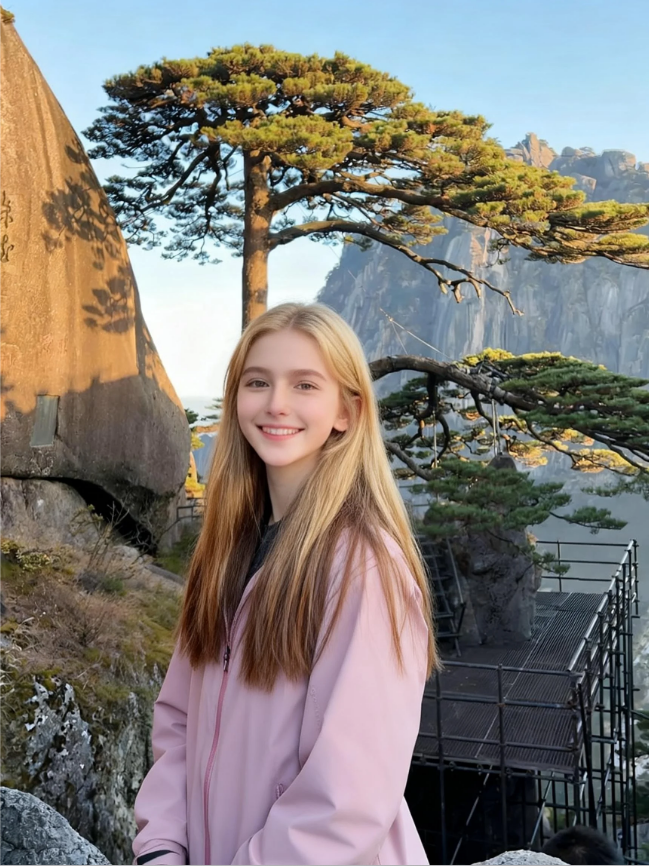
I decided to take the cable car up the first section—no shame in saving energy for the good stuff, right? As the cable car ascended, the world below shrank: the pine forests became a green carpet, the villages in the valleys looked like dollhouses, and the stone steps I’d seen earlier turned into tiny lines winding up the mountainside. The air grew cooler, and by the time we reached the mid-station, I had to pull on a light jacket. I stepped off the cable car and onto a plank road, built right into the side of the cliff, and felt my stomach flutter for a second—looking down meant staring straight at a 500-foot drop into a sea of green. But the view was worth the jitters: peaks stretched out in every direction, their tops hidden in wispy clouds.
To see the sea of clouds at dawn, I set my alarm for 4 a.m. It was still dark when I left my guesthouse, and the mountain was quiet except for the sound of my boots crunching on gravel and the occasional hoot of an owl. I joined a small group of early risers hiking to the viewing platform, and we chatted softly, all of us sleepily excited. When we reached the platform, we waited in silence. Then, slowly, the sky lightened—first pale pink, then orange, then gold. And then the clouds below us lit up, rolling and billowing like a ocean of silk. A girl next to me gasped, and I realized I was holding my breath. For 20 minutes, we just stood there, watching the sun climb higher, the clouds shifting shape with every gust of wind. A local photographer told me that this kind of dawn only happens three or four times a month. “You’re lucky,” he said. I felt it.
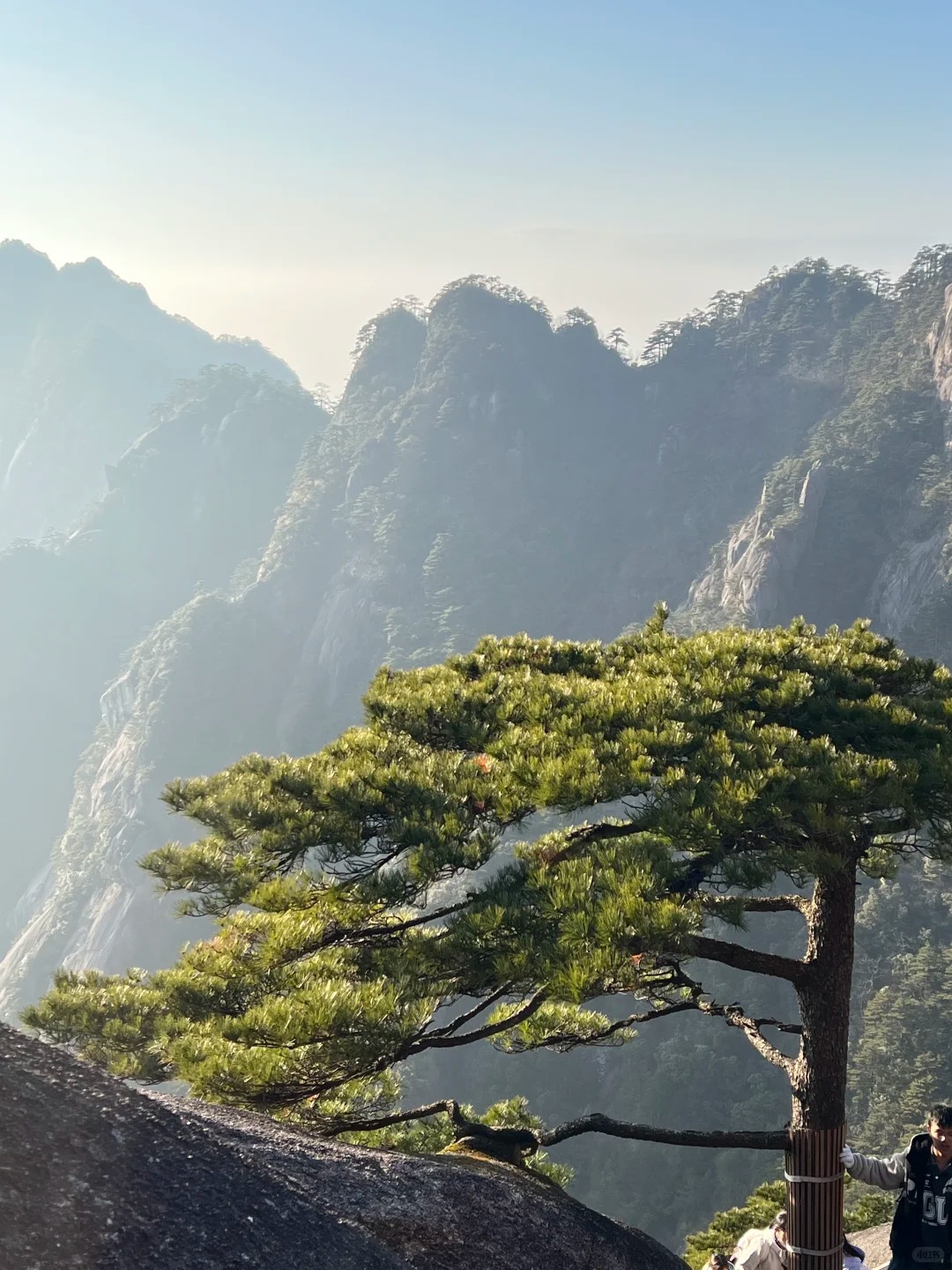
The strange pines of Huang Shan Mountain are unlike any trees I’ve ever seen. They grow where no tree should—on cliff faces, in cracks between rocks, leaning at impossible angles. The Welcoming Pine, of course, is the star. I stood there for 10 minutes, just looking at it, noticing the way its roots wrap around the granite like fingers, the way its branches reach out as if to shake your hand. An old man selling tea nearby told me that the pine is cared for by a team of gardeners who climb the mountain every week to trim its branches and check its health. “It’s a national treasure,” he said, pouring me a cup of Huangshan Maofeng tea. The tea was light and fragrant, with a hint of pine, and as I sipped it, I watched the pine sway gently in the breeze.
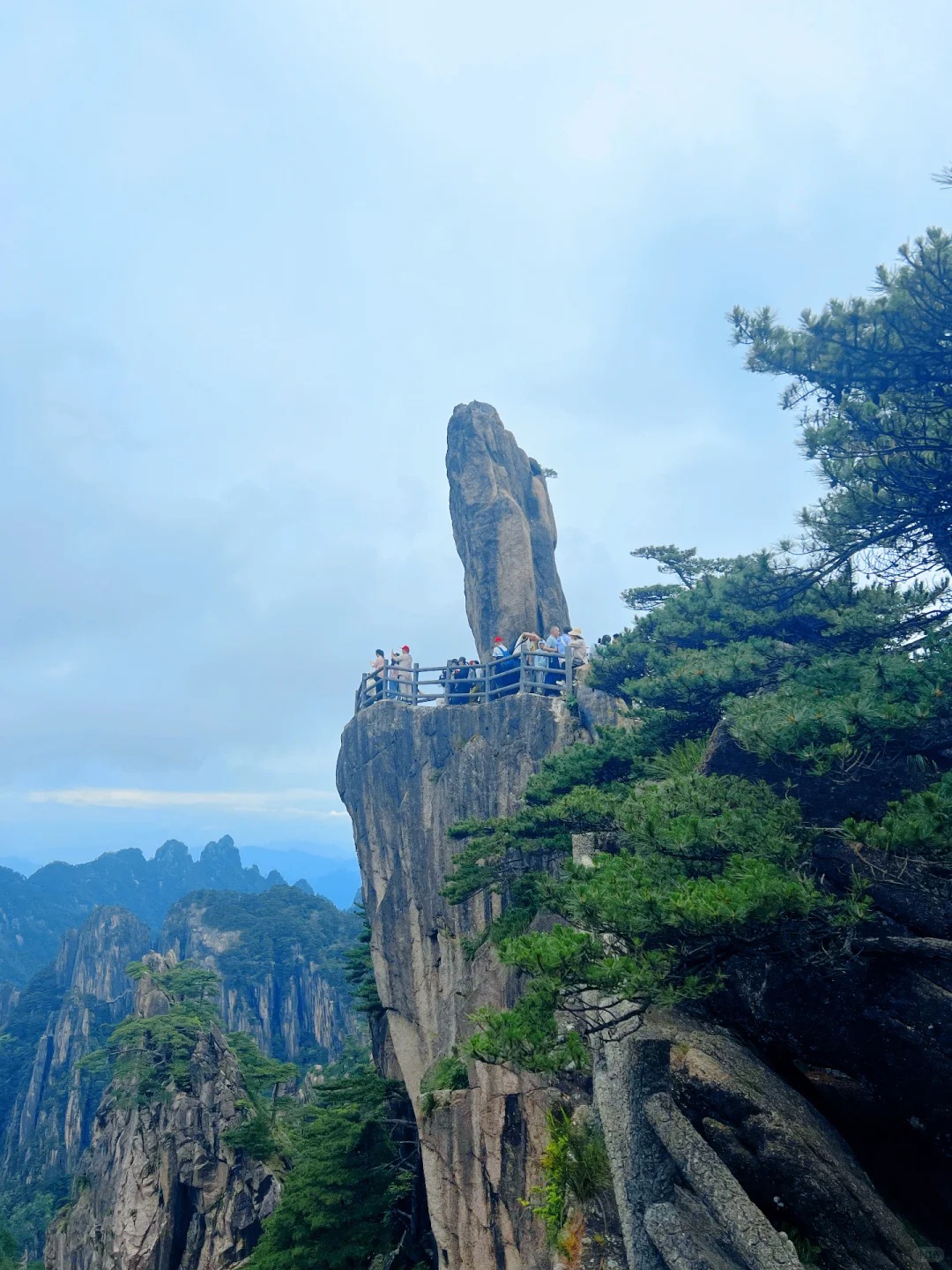
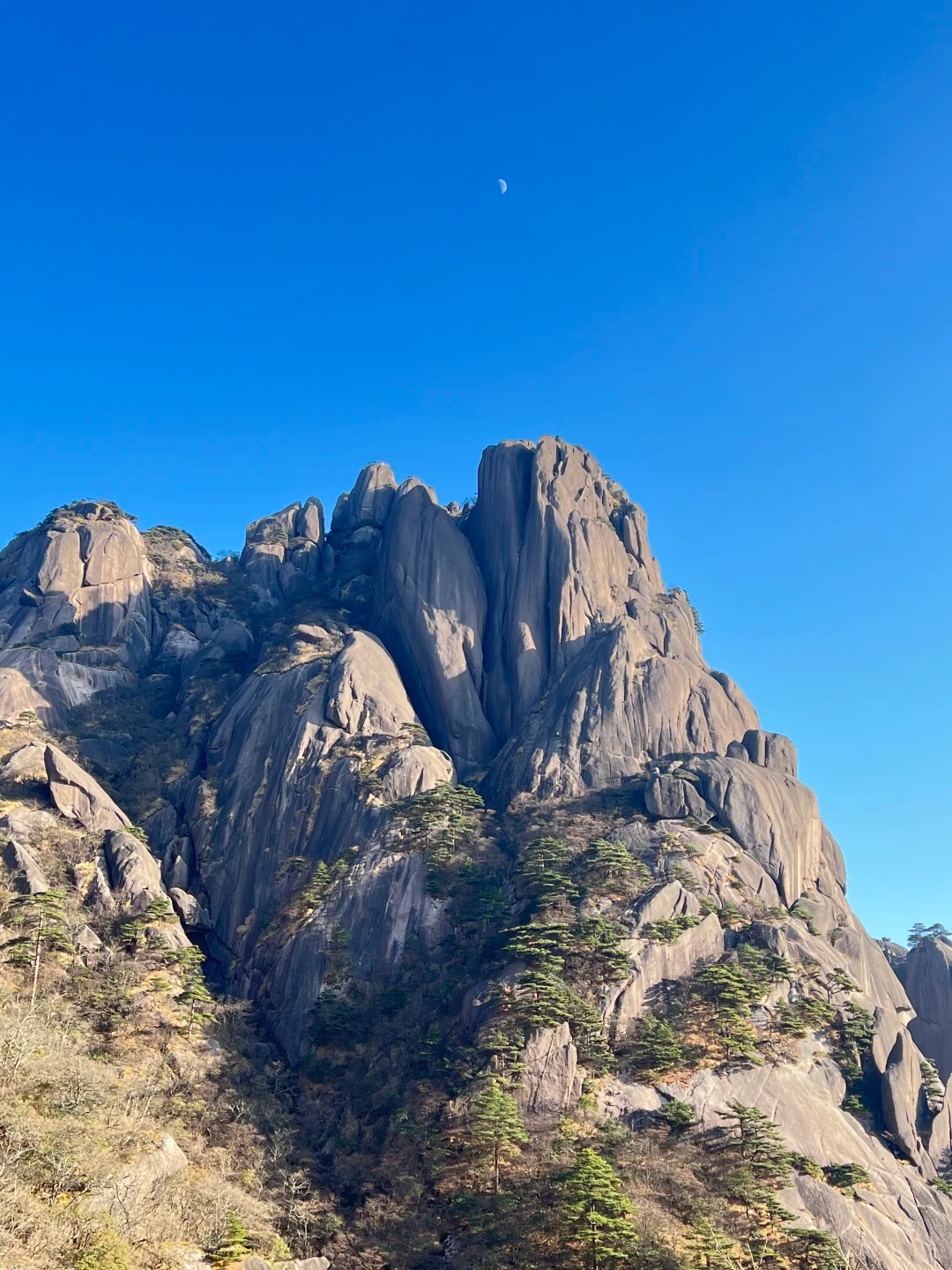
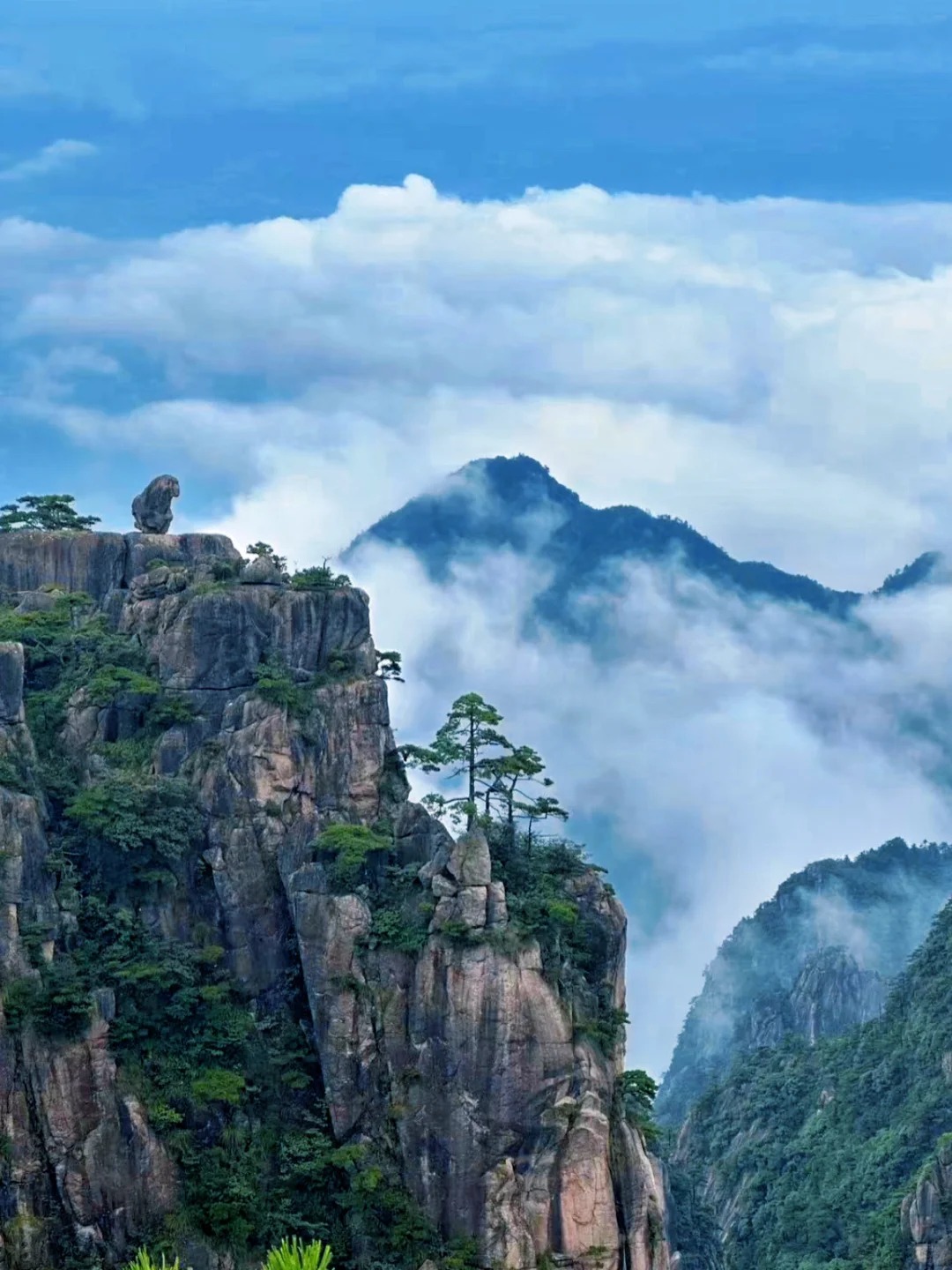
The grotesque rocks are another highlight, but the fun is in the storytelling. There’s the “Monkey Watching the Sea,” a rock that looks exactly like a monkey perched on a ledge, staring out at the clouds. A group of kids were there when I visited, making monkey sounds and laughing, and their parents joined in, pointing out other shapes I’d missed—a lion roaring, a fairy dancing. It made the mountain feel playful, not just majestic. I spent an hour wandering from rock to rock, letting my imagination run wild, and realized that’s the point: Huang Shan Mountain doesn’t just show you beauty; it invites you to participate in it.
Huang Shan Mountain isn’t just about nature—it’s steeped in culture too. I visited Hongcun Temple, a small Taoist temple hidden in a grove of bamboo. The temple was built during the Tang Dynasty, and its wooden beams are carved with intricate patterns of dragons and phoenixes. A monk showed me around, explaining that Taoists have come to Huang Shan Mountain for centuries to meditate, drawn to its quiet energy. We sat in the courtyard for a while, listening to the wind rustle through the bamboo, and he told me that the mountain teaches patience—“You can’t rush the view, you can’t rush peace.” It was a simple lesson, but it stuck with me.
The food around Huang Shan Mountain is all about fresh, local ingredients. At a small restaurant near my guesthouse, the owner served me braised bamboo shoots—tender, sweet, and cooked with a little soy sauce—and steamed stone frog, a local delicacy. I was nervous to try the frog at first, but it tasted like chicken, tender and juicy. The owner told me that all the ingredients come from the mountain: the bamboo shoots are picked that morning, the frog is caught in the streams, even the tea is grown on the lower slopes. “Mountain food is honest food,” he said. I couldn’t agree more.
What surprised me most about Huang Shan Mountain was the people. I met a couple from Australia who’d been traveling through China for a month, a solo traveler from Canada writing a book about Chinese mountains, and a family from Beijing who comes to Huang Shan every year for their summer vacation. We shared stories over meals, compared photos, and helped each other navigate the steeper trails. On my last day, the Australian couple invited me to join them for a hike to a lesser-known peak, and we spent the afternoon laughing and pointing out strange rocks and beautiful views. By the time we said goodbye, we’d exchanged contact information, promising to send each other photos from our next adventures.
When I left Huang Shan Mountain, I felt a little empty, like I was leaving a friend behind. I’d spent three days there, but it wasn’t enough—not even close. As the bus pulled away, I looked back at the mountain, now a blue silhouette against the sky, and knew I’d be back. Huang Shan Mountain isn’t just a mountain; it’s a feeling—a sense of wonder, of peace, of connection. It’s the kind of place that stays with you, long after you’ve left.