Standing at the edge of the sea, looking out at the Luoyang Bridge stretching across the water, I’m filled with awe at the ingenuity of ancient Chinese engineers. Built over 900 years ago during the Northern Song Dynasty, this stone bridge is not just a transportation structure; it’s a masterpiece of engineering, a testament to the wisdom and skill of the people who built it. As I walk across the bridge, feeling the rough stone beneath my feet and listening to the sound of the waves crashing against the piers, I can’t help but marvel at how this bridge has stood the test of time, surviving storms, tides, and the passage of centuries.

My journey to Luoyang Bridge begins with a short drive from Quanzhou’s city center. As I approach the bridge, I see its stone structure rising from the sea, like a giant serpent winding its way across the water. The bridge is 834 meters long and 7 meters wide, and it’s made entirely of stone. The first thing that strikes me is the sheer size of the stones—some of them weigh over 100 tons. I wonder how the ancient engineers managed to transport these massive stones to the construction site and lift them into place without the help of modern machinery. A local guide tells me that they used a clever method of using boats and tides to move the stones, a testament to their innovative thinking.
As I step onto the bridge, I’m greeted by a row of stone balustrades on either side. The balustrades are adorned with carvings of lions, dragons, and other mythical creatures, each one unique and intricate. I pause to admire a carving of a lion, its eyes fierce and its mane flowing, as if it’s guarding the bridge. The guide explains that these carvings not only add beauty to the bridge but also have symbolic meaning—lions represent courage and strength, while dragons represent power and good fortune. Along the bridge, there are also several stone steles inscribed with poems and inscriptions by ancient scholars and officials. I read one of the inscriptions, which praises the bridge’s construction and the benefits it brought to the local people. It’s a fascinating glimpse into the history of the bridge and the people who used it.
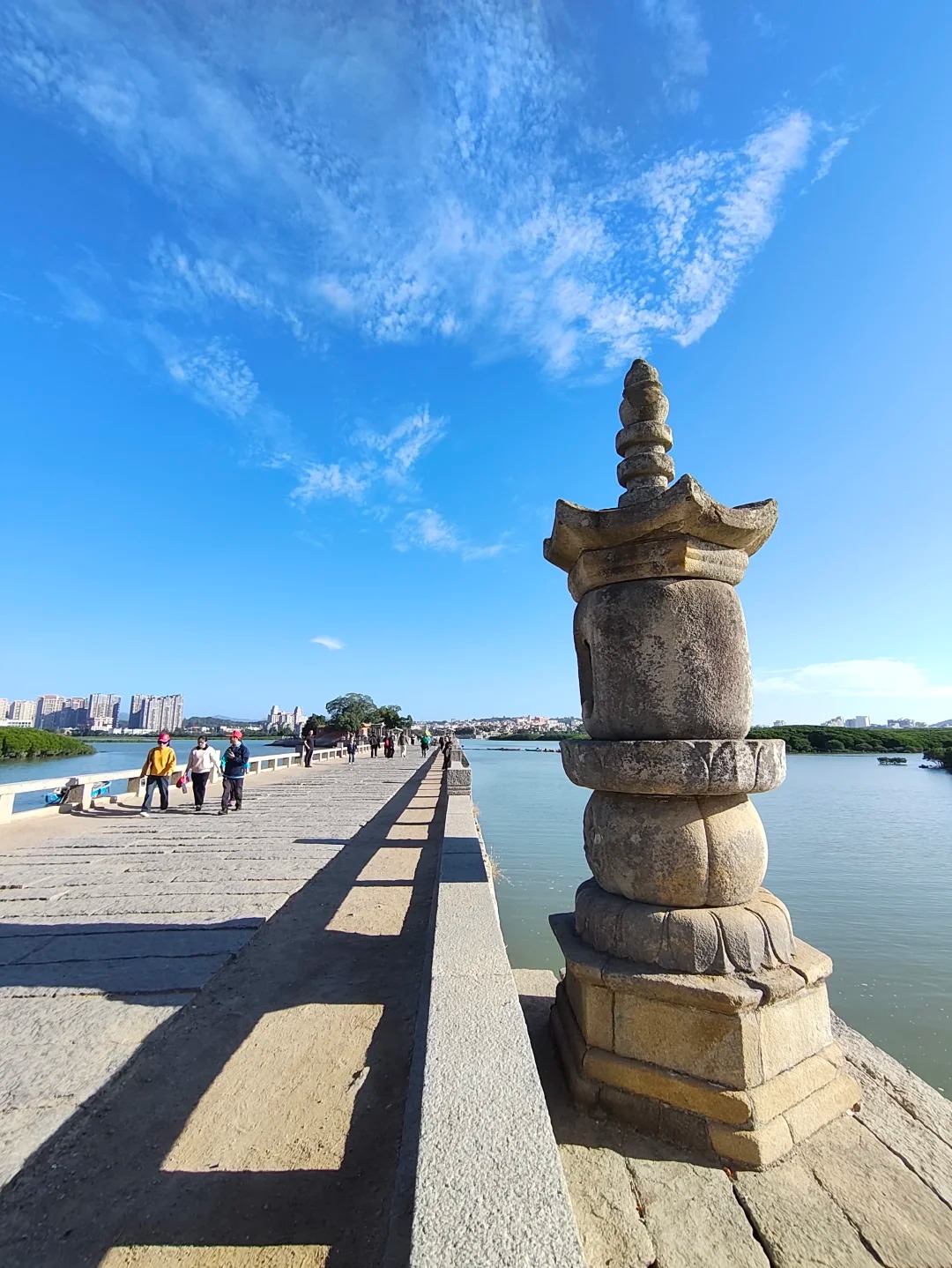
The most impressive feature of Luoyang Bridge is its piers. Unlike most bridges, which have vertical piers, Luoyang Bridge’s piers are shaped like boat hulls, with a pointed front and a flat back. This unique design helps to reduce the impact of the waves and tides, making the bridge more stable. The piers are built using large stone blocks, which are joined together with iron clamps to ensure they stay in place. Between the piers, there are stone beams that span the distance, each one carefully placed to form a smooth surface for pedestrians and horses. The guide tells me that the engineers also used a technique called “planting oysters to consolidate the foundation.” They placed oyster shells around the base of the piers, and the oysters attached themselves to the stones, creating a strong, solid foundation that helped to protect the piers from erosion. It’s an ingenious method that shows the ancient engineers’ deep understanding of the natural environment.
As I walk further along the bridge, I notice several pavilions and temples located at intervals. These pavilions were built to provide shelter for travelers and to serve as places of worship. One of the most famous pavilions is the Zhenwu Pavilion, which is dedicated to Zhenwu, the God of the North. The pavilion is a beautiful structure with a double-eaved roof and intricate wood carvings. Inside the pavilion, there’s a statue of Zhenwu, and locals often come here to pray for safety and good fortune. I also visit the Luoyang Bridge Museum, which is located near the bridge. The museum has a collection of artifacts related to the bridge’s construction, including tools, stone samples, and ancient documents. There’s also a model of the bridge, which shows how it was built. I spend a long time in the museum, learning about the history and engineering of the bridge, and I leave with a deeper appreciation for this ancient marvel.
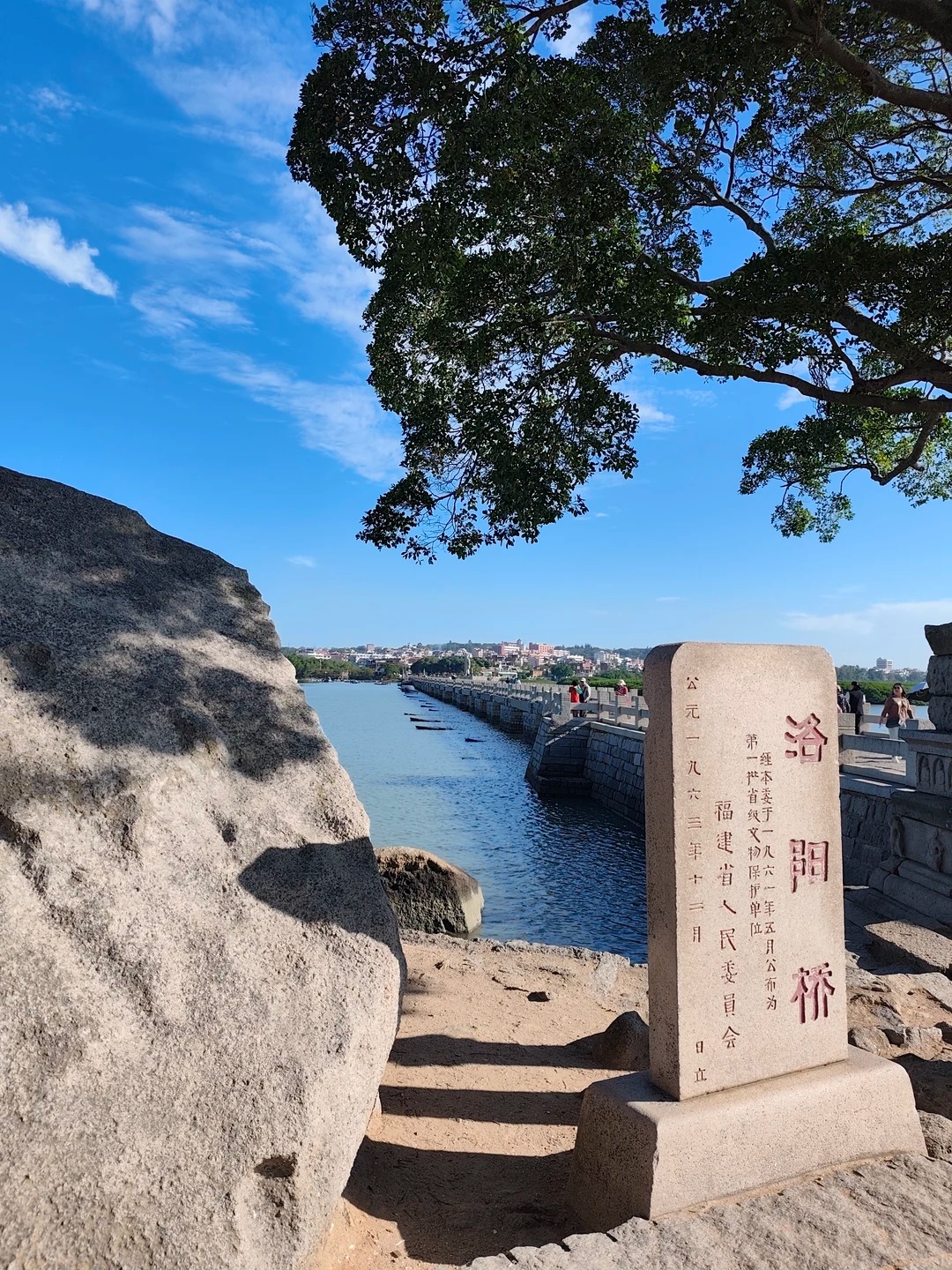
I visit Luoyang Bridge at low tide, which allows me to see the base of the piers clearly. The oyster shells that were used to consolidate the foundation are still visible, clinging to the stones. I walk along the shore, getting a close-up view of the piers and the stone beams. The waves gently lap against the shore, and seagulls fly overhead. It’s a peaceful and serene scene, a stark contrast to the hustle and bustle of modern life. I sit down on a rock and watch the sunset over the bridge. The golden light bathes the stone structure, making it look even more majestic. It’s a moment of pure beauty, and I feel grateful for the opportunity to see this ancient wonder.
After leaving the bridge, I wander through the nearby village of Luoyang. The village is a charming place, with traditional stone houses and narrow lanes. I stop at a small seafood restaurant, where I order a plate of fresh shrimp and a bowl of fish soup. The food is delicious, and it’s the perfect way to end my day. The owner of the restaurant tells me that the bridge has been an important part of the village’s history for centuries, connecting the village to the outside world and bringing prosperity to the local people.
Luoyang Bridge is more than just a bridge; it’s a symbol of ancient Chinese engineering excellence, a testament to the wisdom and skill of the people who built it. It’s a living piece of history, a reminder of the ingenuity and innovation that have shaped China’s development over the centuries. Whether you’re an engineering enthusiast, a history buff, or just someone who appreciates beautiful architecture, Luoyang Bridge is definitely worth a visit. As I leave, I look back at the bridge one last time, and I know that it will stay in my memory forever as one of the most impressive ancient structures I’ve ever seen.