Dawn was just painting the sky in soft pastels when I arrived at Detian Transnational Waterfall, and I made a deliberate choice to skip the tourist buses that would soon flood the entrance. My goal was simple: to experience this natural wonder in the quiet of early morning, before the world woke up to its roar. As I walked along the stone path lined with bamboo thickets, the first thing that struck me wasn’t the sight of the waterfall, but the sound—a low, rumbling crescendo that grew louder with each step, mixing with the chirp of unseen birds and the rustle of leaves in the gentle breeze.
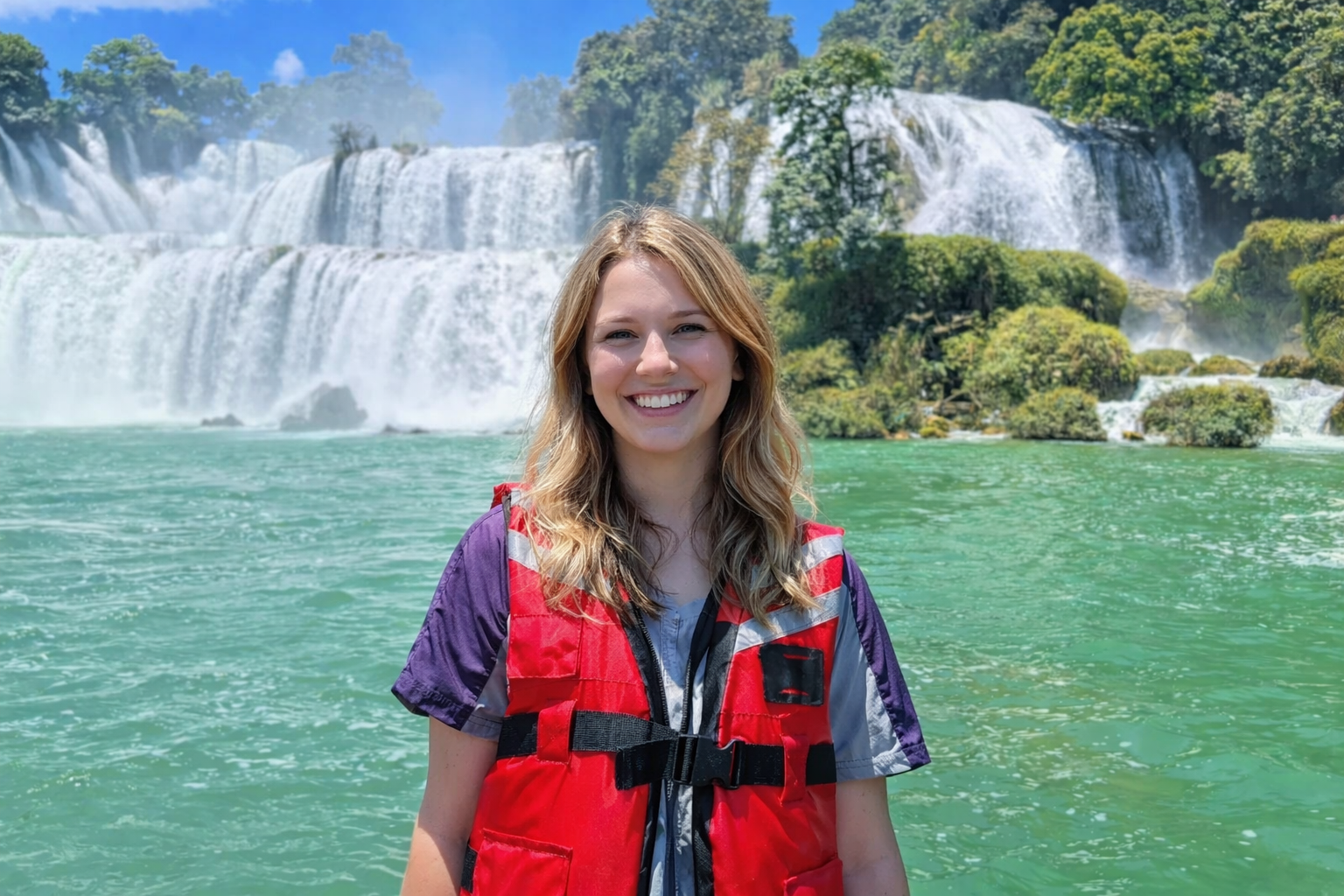
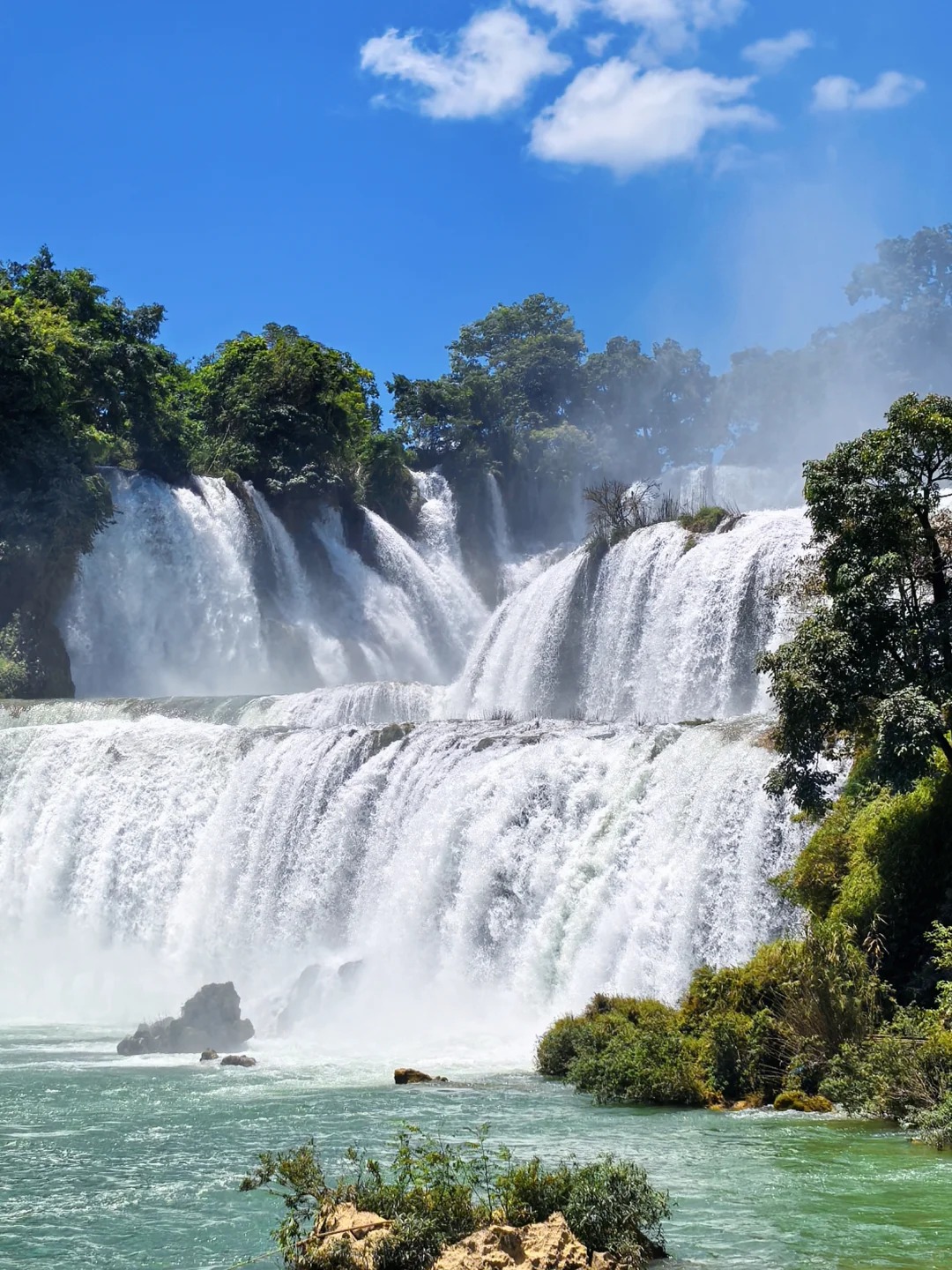
When Detian finally came into view, I stopped in my tracks. The waterfall cascaded down a 70-meter cliff in three tiers, its white foam crashing into the pool below like a thousand horses galloping. What makes Detian truly special, of course, is its transnational identity—on the other side of the river, the Ban Gioc Waterfall tumbles down from the Vietnamese side, their waters merging into a single, turquoise stream that marks the border between the two countries. I stood there for a long time, watching the sunlight catch the mist, creating rainbows that danced in the air for fleeting moments. A local elder, who was setting up a small stall selling hand-woven baskets, noticed my fascination and walked over with a smile. “You’re smart to come early,” he said in broken Mandarin, gesturing at the waterfall. “At this time, it’s just you and the water. Later, the crowds come, and you can’t hear yourself think.”
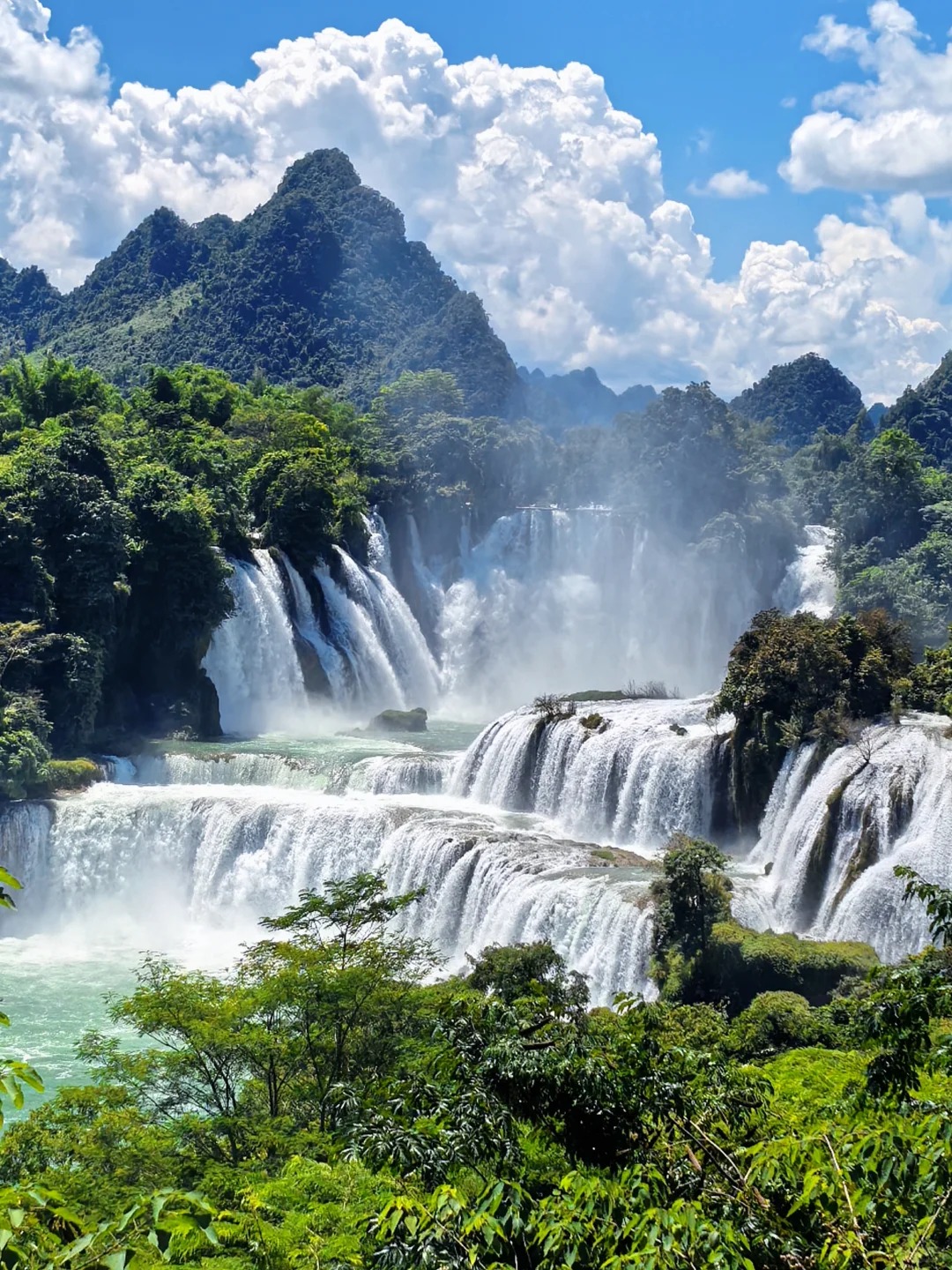
I took his advice and spent the next hour exploring the area slowly. I crossed the suspension bridge that offers a bird’s-eye view of the falls, feeling the wooden planks sway slightly under my feet as the mist sprayed my face. The air was cool and fresh, filled with the earthy scent of moss and the sweet fragrance of wildflowers growing on the cliffside. Further along the path, I found a hidden overlook where I could see both Detian and Ban Gioc clearly. A group of Vietnamese villagers were washing clothes in the river below, their laughter carrying across the water—a gentle reminder that this border is not a barrier, but a shared space where two cultures coexist.
By mid-morning, the tourist groups had arrived, so I decided to take a bamboo raft tour along the river. The raft was steered by a local fisherman, who navigated the calm waters with ease, pointing out hidden caves and rare plants along the banks. As we drifted closer to the waterfall, the mist became thicker, and I had to pull up my hood to keep dry. The fisherman told me that during the rainy season (June to August), the waterfall is even more spectacular, its flow doubling in size and its roar audible from kilometers away. “But autumn is my favorite time,” he said. “The water is clear, the sky is blue, and the leaves turn golden. It’s perfect.”
After the raft trip, I stopped at the elder’s stall and bought a small bamboo basket. He insisted on giving me a handful of candied osmanthus, a local specialty, and told me about the annual Detian Waterfall Festival, where locals from both China and Vietnam gather to celebrate with music, dance, and food. I sat on a nearby bench, eating the sweet, fragrant candies and watching the world go by—tourists taking photos, children chasing each other, vendors calling out to passersby. Even with the crowds, there was a sense of peace here, a harmony between nature and humanity that’s hard to find in big cities.
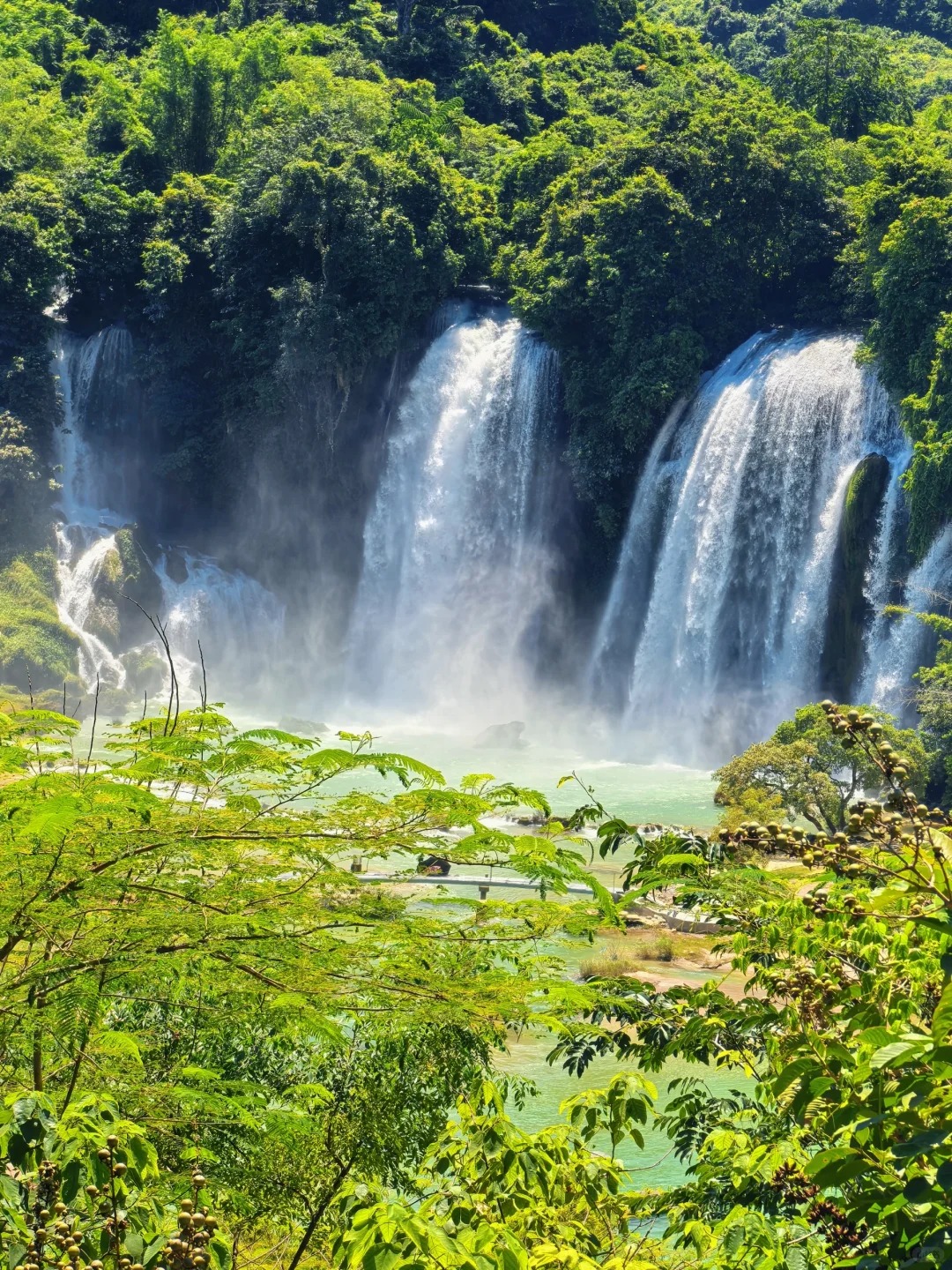
As the sun began to set, I made my way back to the entrance. The waterfall, now bathed in golden light, looked even more magical than it had in the morning. I thought about the elder’s words, and realized that Detian is more than just a beautiful waterfall—it’s a place where borders blur, where nature connects two nations, and where time moves at a slower, more gentle pace. For anyone looking to experience the beauty of southern China and the warmth of cross-cultural connection, Detian Transnational Waterfall is an absolute must-visit. It’s not just a scenic spot; it’s a memory that will stay with you long after you’ve left.