If you look for the edge of the map, the place where the earth touches the sky, you will find Daocheng Yading. I had heard the whispers among travelers in Chengdu—words spoken with a mixture of reverence and fear. “It’s high,” they said. “It’s remote.” “It will change you.” I didn’t fully grasp what they meant until I found myself gasping for air, standing on a windswept pass at 4,700 meters, staring at a mountain that seemed to be painted by the gods themselves.
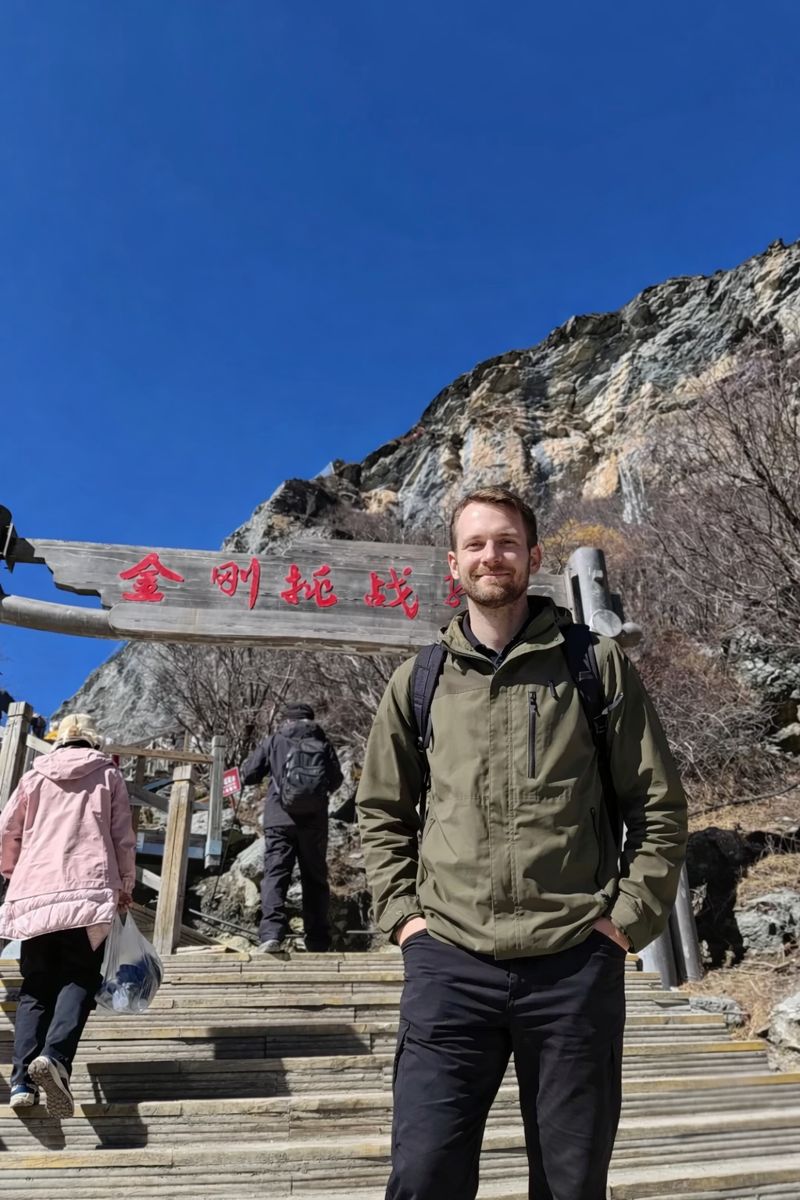
Getting to Daocheng Yading is half the battle. It is not a weekend trip; it is a pilgrimage. The flight into Daocheng Yading Airport, the highest civilian airport in the world, is a white-knuckle experience. As the plane descended, piercing through thick clouds, I saw a landscape of rolling brown hills, deep valleys, and snow-capped peaks that looked jagged and hostile. Stepping off the plane, the cold hit me instantly, followed immediately by the realization that the air here is thin. Very thin. My heart raced, and my head felt like a tight band was squeezing around it. This was altitude sickness, a subtle but constant reminder that here, nature is in charge, and I was merely a guest.
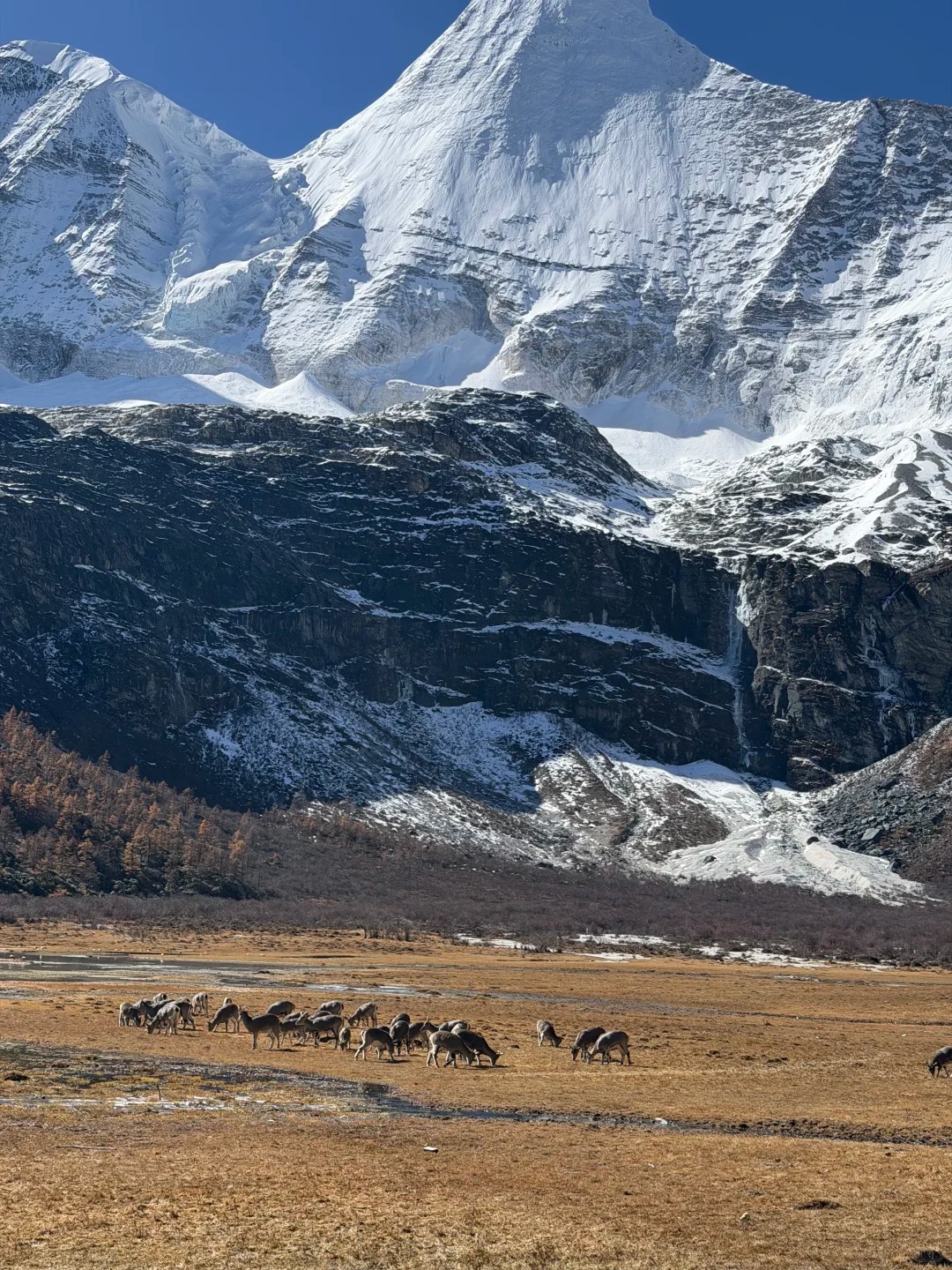
The next morning, I took the shuttle bus into the Yading Nature Reserve. The road wound through forests that turned into dwarf shrubs and finally into open tundra. The bus driver, a Tibetan man with a weathered face and a constant smile, pointed out the window and shouted, “Chenrezig!” I looked up, and my breath caught in my throat. Through a break in the clouds, the north face of Mount Chenrezig appeared. It is the highest of the three holy mountains, standing at 6,032 meters. It looked exactly like the statues you see in temples—a majestic, snow-covered pyramid glowing in the morning light. It felt spiritual, almost overwhelming. I felt a strange urge to bow, not out of religious obligation, but out of sheer respect for its presence.
I started my hike at Chonggu Temple, a small red building nestled in a valley of green. From there, I took the electric cart to Luorong Pasture. If I close my eyes now, I can still see it. It is a vision of paradise. The valley floor is carpeted in lush green grass, dotted with colorful wildflowers—yellow, purple, blue. Yaks with shaggy coats grazed lazily, their bells tinkling in the wind. In the background, the snow-capped peaks of Jambeyang and Chanadorje rose like sentinels guarding the valley. The contrast was striking: the warmth of the green meadow against the cold, sterile white of the glaciers.

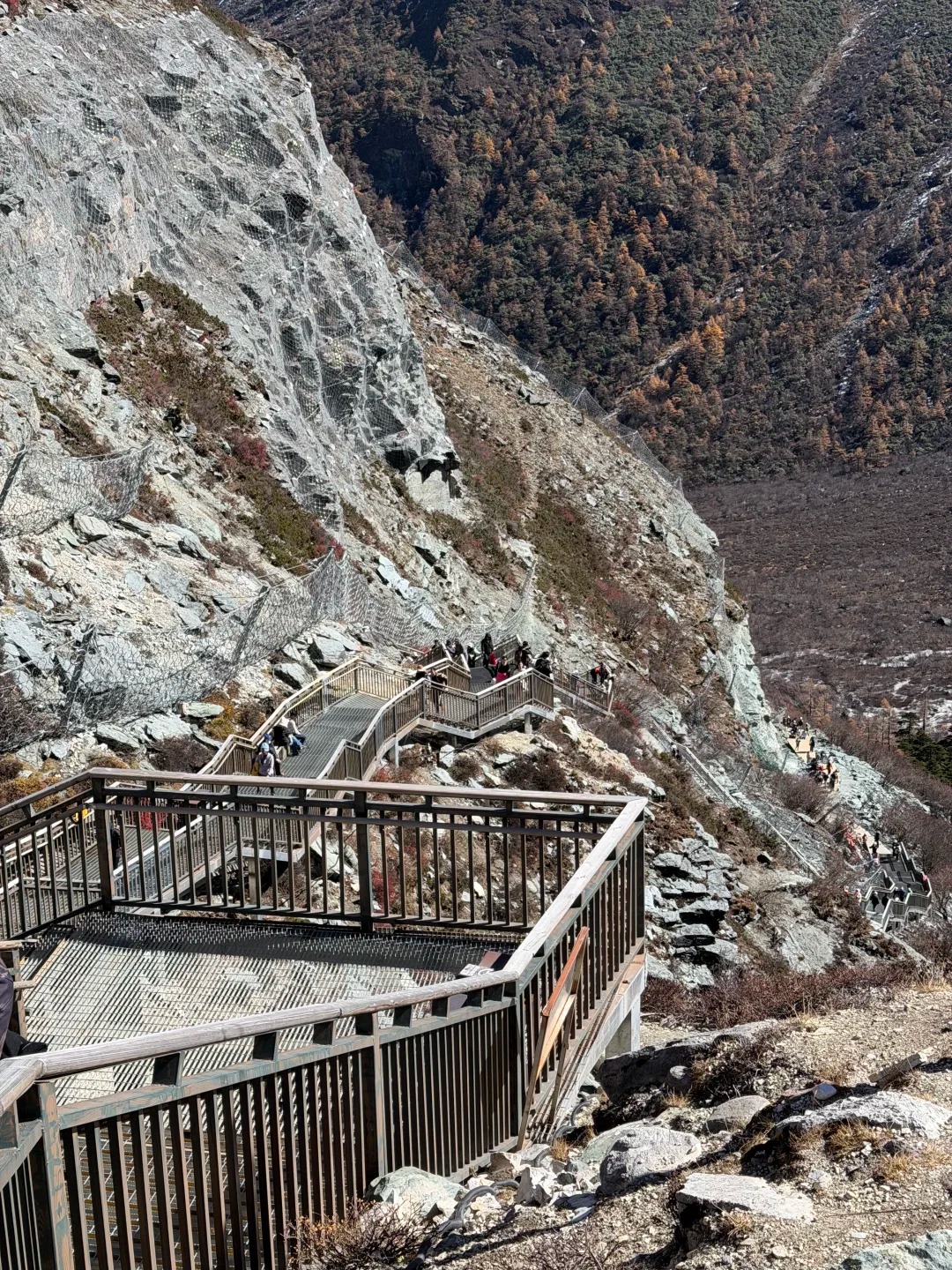
I decided to hike up to Milk Lake (Niu Hai). This is where the challenge truly began. The trail is steep, rocky, and unforgiving. Every ten steps, I had to stop to catch my breath. My heart hammered against my ribs, and I felt a wave of nausea wash over me. I looked at the other hikers trudging up the path. Some were on horseback, others were bent double, gasping. But no one turned back. There is a camaraderie on this mountain—a silent understanding that we are all suffering for a glimpse of something divine.
About halfway up, the rain started. It turned to sleet, and then to snow. The wind howled, whipping my face with tiny ice crystals. I wanted to quit. I thought, “Why am I doing this? I could be in a café in Chengdu right now drinking tea.” But then, the clouds parted for a split second, and I saw the turquoise glint of water far above. It was a flash of color so unnatural, so vibrant, that it pulled me forward like a magnet.
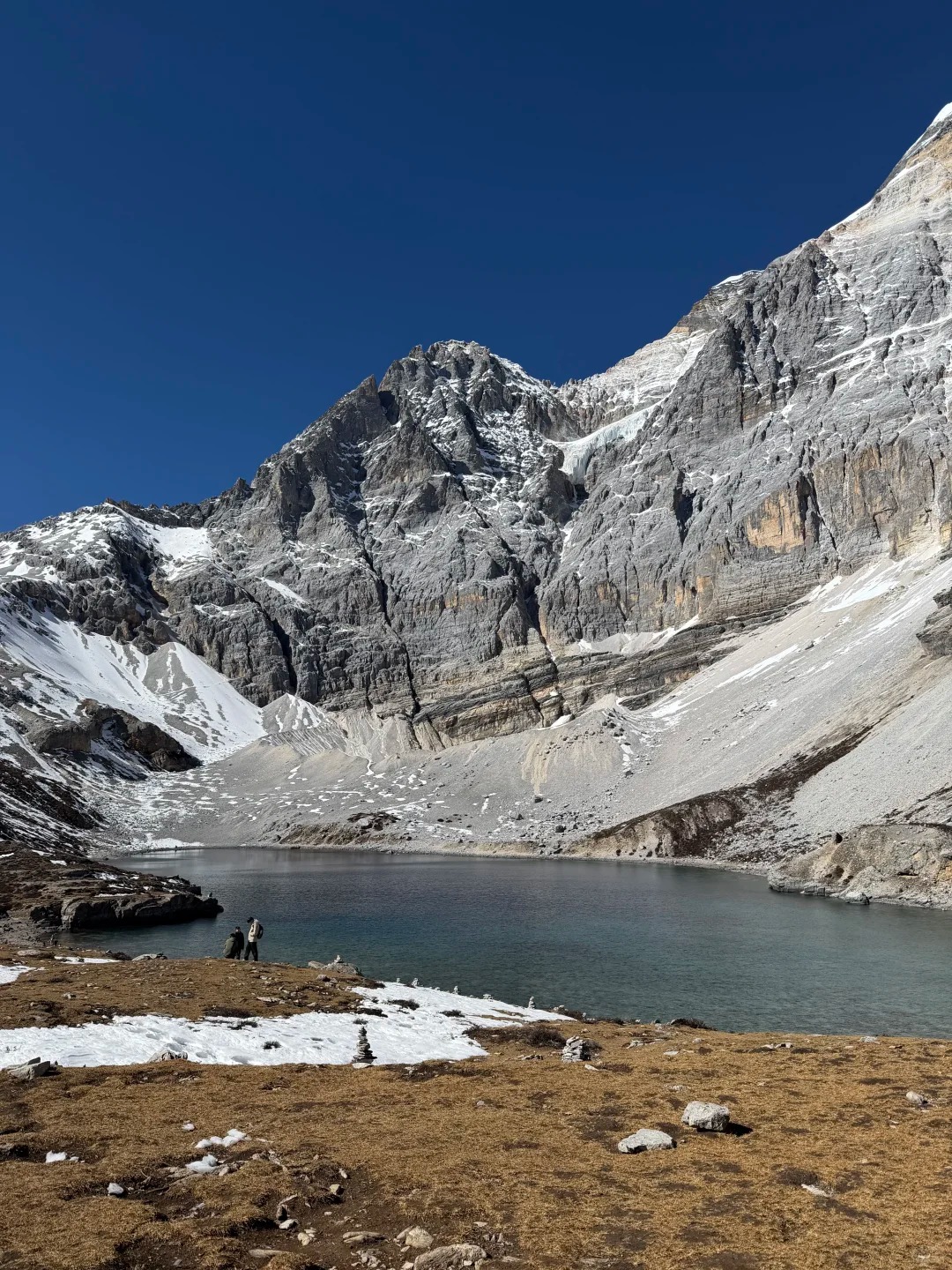
When I finally reached Milk Lake, the weather had cleared, turning the world into a brilliant, blinding white. The lake sits in a cirque, surrounded by sheer cliffs of black rock and snow. It is a small, round lake, and the water is the color of a sapphire gemstone. It is so blue it hurts your eyes. They call it Milk Lake because of the white limestone deposits that flow into it, but to me, it looked like a drop of the sky that had fallen and frozen solid.
I sat on a cold rock, wrapped in my windbreaker, and just stared. I have been to many beautiful places—Caribbean beaches, European cities, Asian jungles—but nothing compares to this. There was a silence here that you can’t find in the city. It wasn’t just the absence of noise; it was a heavy, peaceful silence. I felt small, insignificant, and strangely liberated. All my worries, my ego, my daily stresses—they were gone. In that moment, looking at that blue water and that towering snow, I felt a sense of peace that I hadn’t felt in years. I understood why the Tibetans call these mountains holy. You don’t need to be Buddhist to feel the sacredness of this place.
On the way down, the physical pain was replaced by a euphoric rush. My legs felt like jelly, but my heart was light. I passed a group of Tibetans who were praying. They were spinning prayer wheels, chanting “Om Mani Padme Hum.” I joined in, walking behind them for a while. The rhythm of the mantra matched my footsteps. It was a beautiful moment of connection—me, a stranger from a different world, walking in sync with them, united by the mountain.
Daocheng Yading is not for everyone. It is tough. It is uncomfortable. The altitude will humble you, and the weather will test you. But if you are willing to endure the hardship, you will be rewarded with a view of the world that few people ever get to see. It is a place that strips away the artificial layers of modern life and leaves you with what is real: the earth, the sky, and your own breath.
If you go, do not rush. Spend a day acclimatizing in Yading Town. Drink plenty of water. And when you are on that trail, gasping for air, remember: the pain is temporary, but the memory of standing at the roof of the world will last a lifetime. This is the real Shangri-La, raw, wild, and unforgettable.