I have seen many stone monuments in China, but wood is different. Wood has a soul. It breathes, it creaks, it ages with a grace that stone cannot match. This is what I told myself as I stood in the small town of Yingxian, staring up at the Fogong Temple Wooden Pagoda. Known as the Sakyamuni Pagoda, it is the oldest and tallest all-wooden pagoda in the world. It does not use a single iron nail.
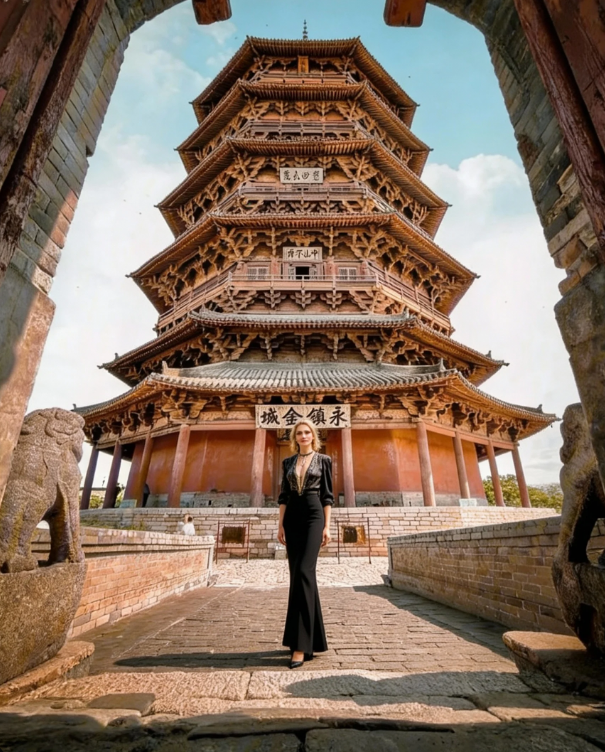
Standing at 67 meters high, the pagoda dominates the skyline. From a distance, it looks like a towering stack of intricate wooden boxes. But as I walked closer, the complexity of the structure revealed itself. It was a cloudy day, the grey sky acting as a perfect canvas for the dark, aged timber. The pagoda has stood here for nearly a thousand years, surviving earthquakes that toppled surrounding buildings and wars that burned cities to the ground. It is a survivor.
I entered the temple grounds, which are surprisingly quiet. The smell of old incense and dry wood hung in the air. The base of the pagoda is massive, supported by heavy stone pillars to protect the wood from groundwater. I walked up the steps to the first floor. My anticipation was high—I wanted to see the famous statues.
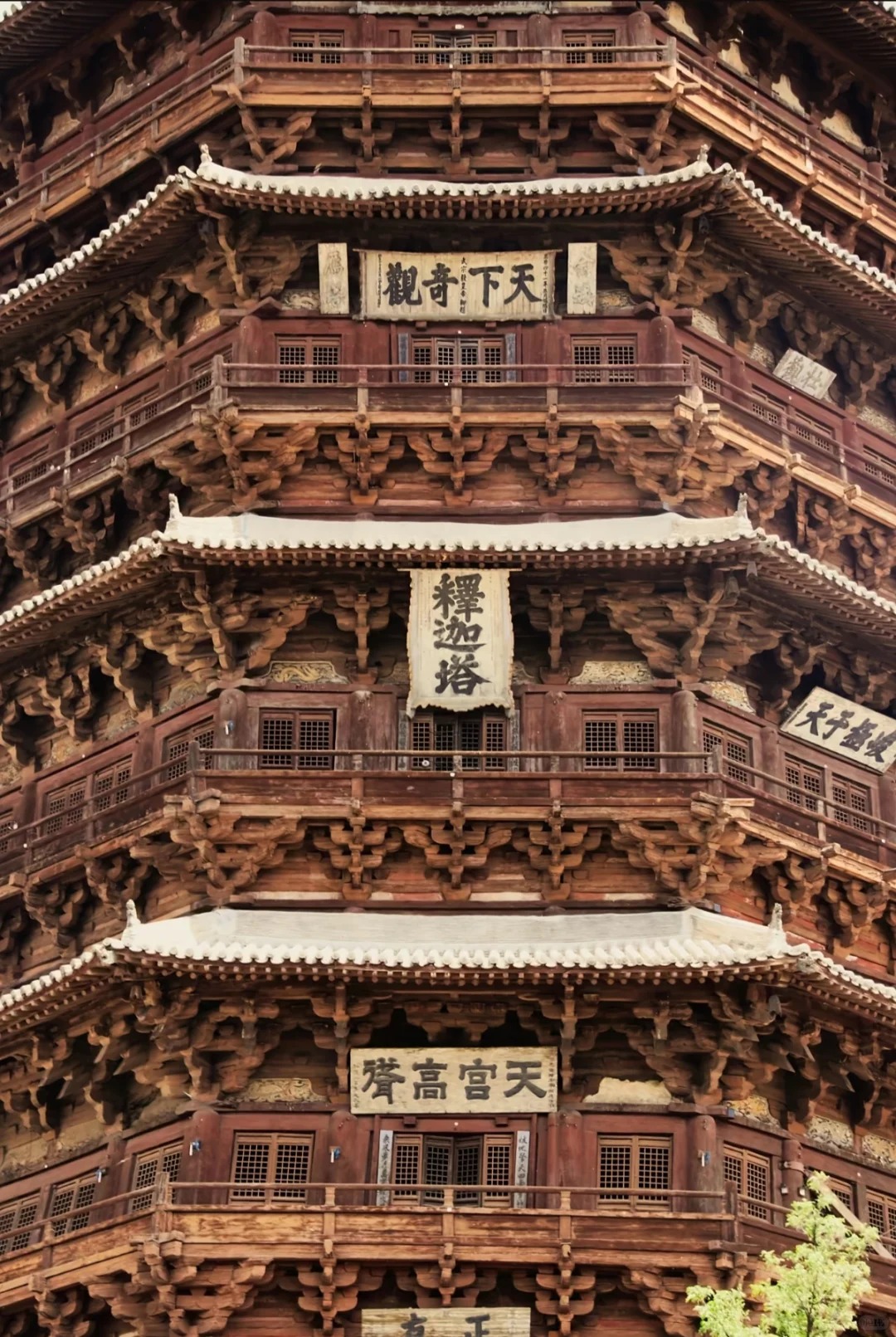
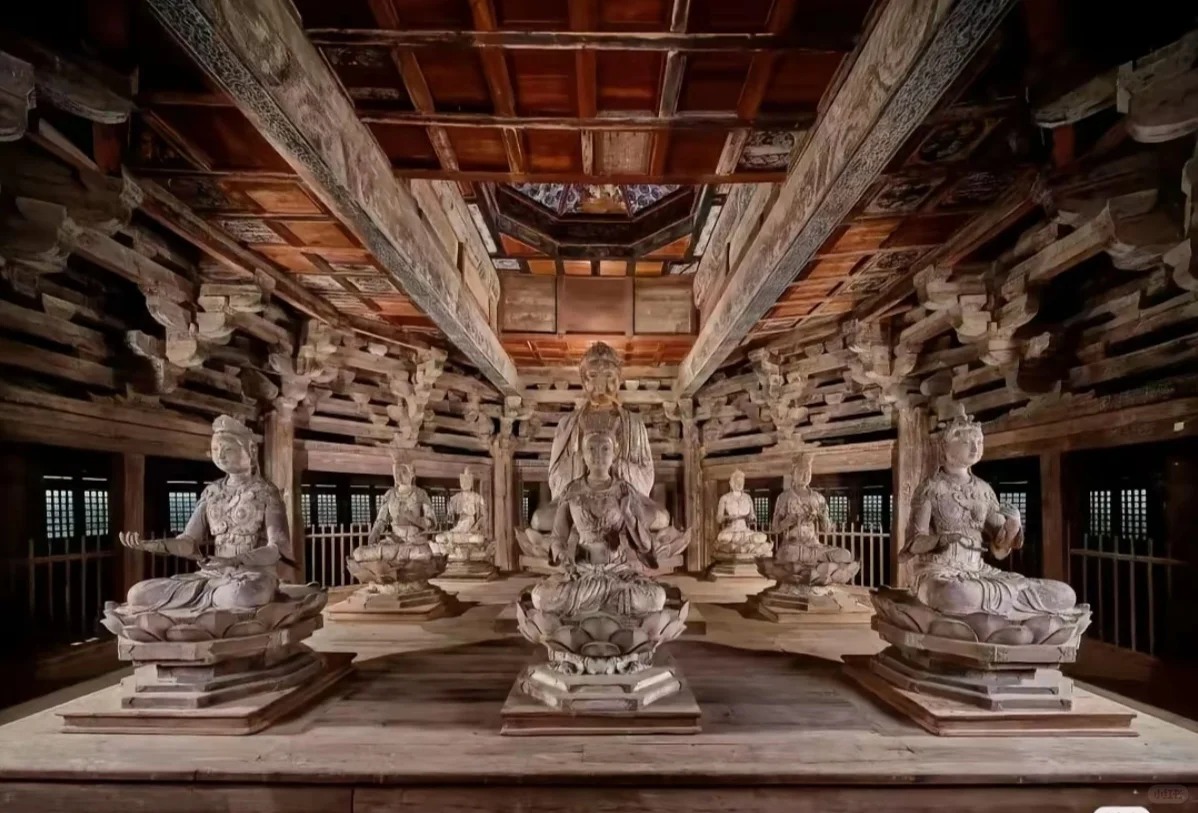
Inside, the atmosphere is dim and mysterious. Two massive Buddha statues sit in the alcoves, flanked by Bodhisattvas. The craftsmanship is stunning, but my eyes were drawn upward. The ceiling is a labyrinth of “Dou-gong”—a complex system of interlocking wooden brackets that lock the structure together. It looks like a giant, three-dimensional puzzle. I stood in the center of the hall and looked straight up the shaft that runs all the way to the top floor. The view of the layered roofs is dizzying.
The highlight of my visit was the second floor. It houses an 11-meter-high statue of Sakyamuni Buddha. I spent a long time looking at the face of the statue. It is serene, painted in colors that have faded but remain vibrant in patches. But what struck me most was the slight tilt. The pagoda is leaning. Due to centuries of wind, rain, and shifting earth, the tower lists slightly to the northeast. Seeing the statues with that same gentle tilt made them feel human to me, as if they were weary from standing guard for so long.
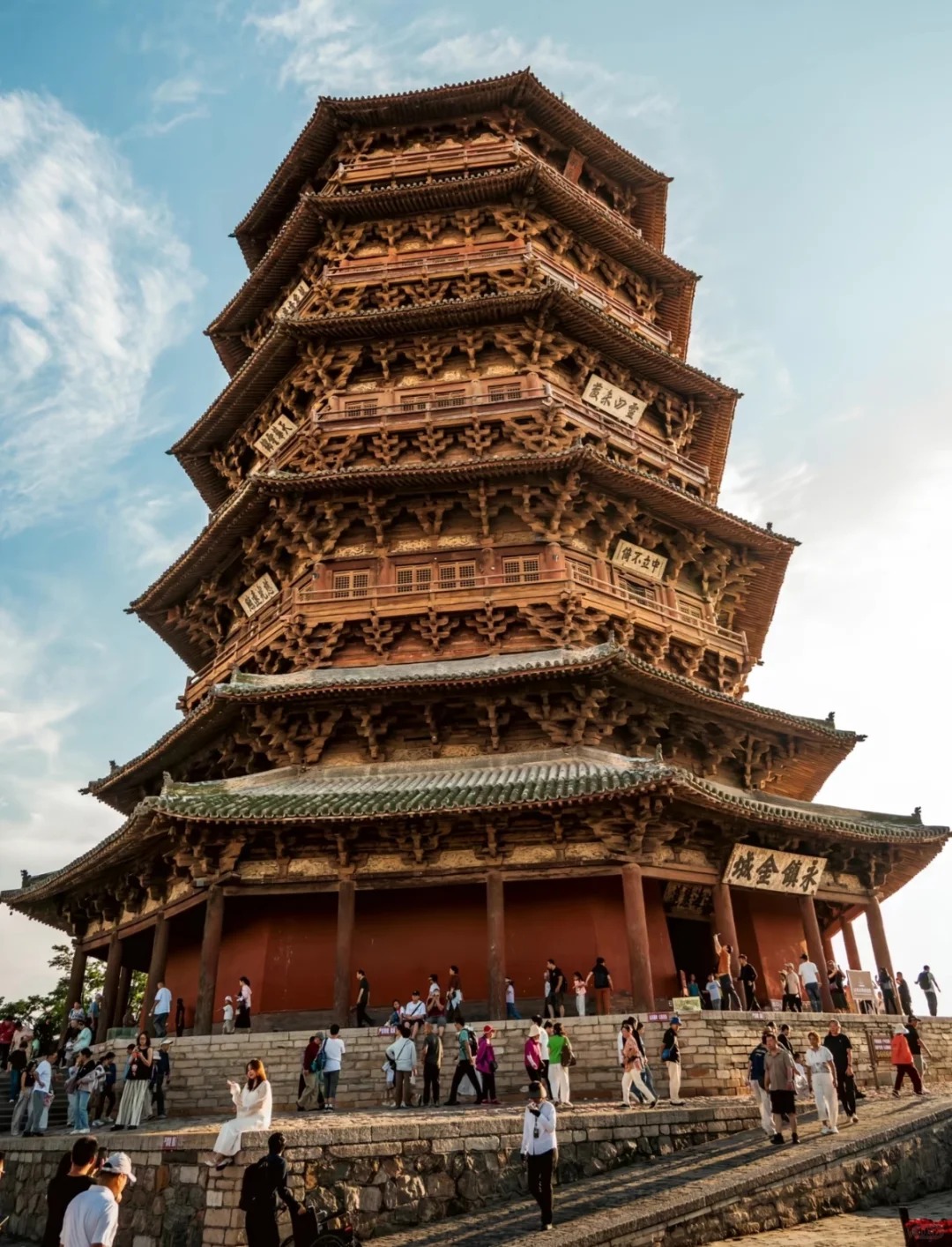
I spoke to a local guide who told me about the challenge of preserving the pagoda. “It’s alive,” he said. “We can’t just freeze it in time. The wood expands in summer and contracts in winter. Any attempt to fix it must respect that movement.” It made me appreciate the structure even more. It is not a static museum piece; it is a living, breathing organism that has adapted to its environment.
I climbed to the third floor, where the views of the surrounding town begin to open up. The windows are simple paper-covered frames, offering a glimpse into the past. I could see the old rooftops of Yingxian spreading out below, smoke rising from kitchen chimneys. It was a peaceful, timeless scene.
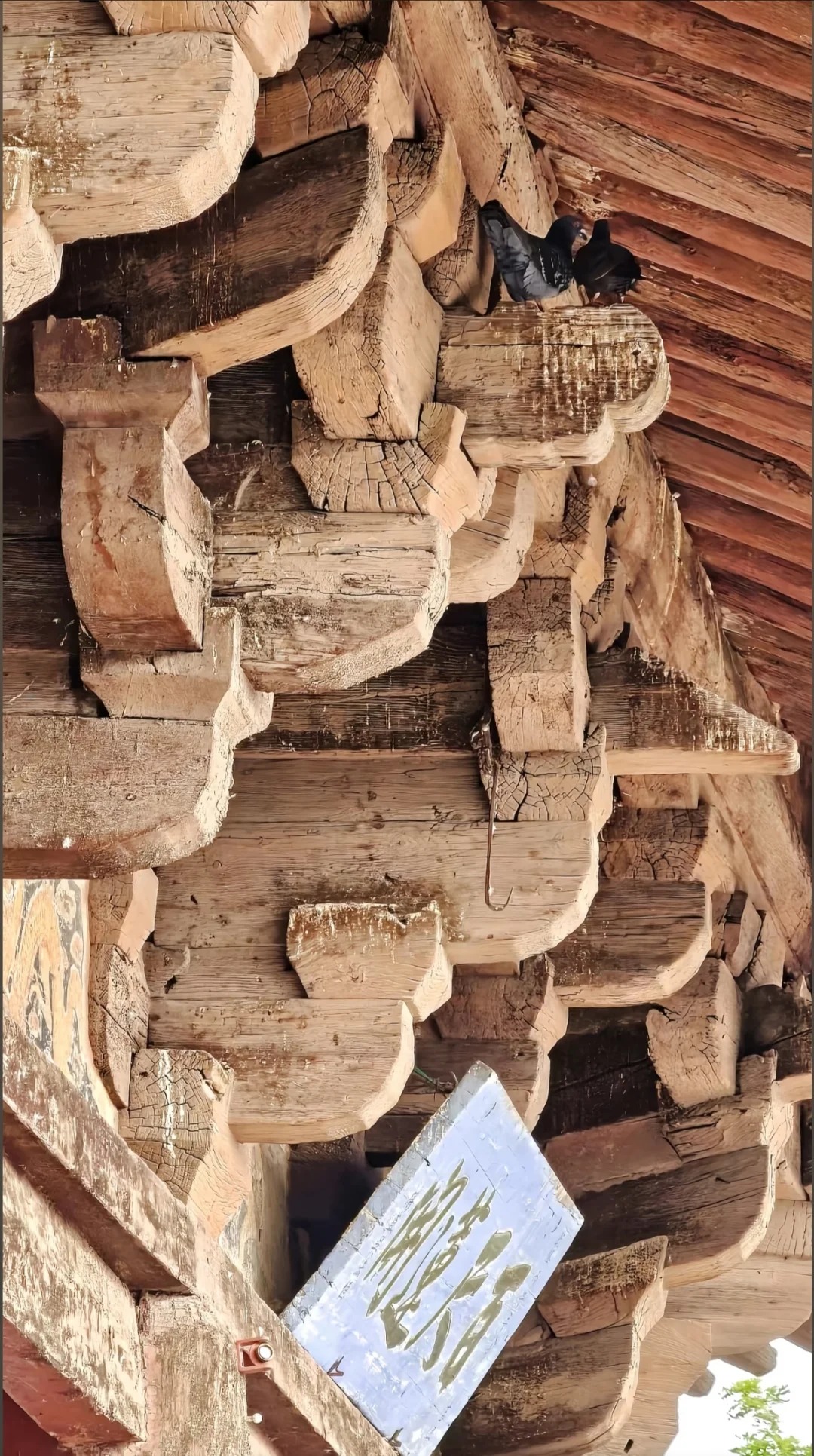
Leaving the pagoda, I walked around the perimeter. I saw birds nesting in the eaves, high above the ground. The wind whistled through the wooden slats, creating a haunting melody. It sounded like the pagoda was humming.
Before leaving, I sat on a bench in the temple courtyard and ate a local pastry called “You Mian Wa,” a bowl-shaped deep-fried dough filled with red bean paste. It was sweet and crunchy. I watched a group of architecture students sketching the pagoda, trying to capture the impossible geometry of the brackets.
The Yingxian Wooden Pagoda is not just a building; it is a miracle of human ingenuity. It is a testament to the builders of the Liao Dynasty who understood wood so well that they created a structure that could dance with the earthquakes rather than fight them. If you are in Shanxi, do not miss this. It is a place that reminds you that true strength lies in flexibility, not rigidity.