"Ten thousand peaks," the name promises. Wanfenglin. It sounds like an exaggeration, a poetic flourish typical of Chinese place names. But standing on the observation deck halfway up the mountain side, looking down into the valley, I realized it might actually be an understatement.
I arrived in Xingyi in the late afternoon. The light was golden, the kind of "magic hour" light that photographers kill for. Wanfenglin is a karst landscape on a massive scale. Unlike the sharp, solitary pillars of Guilin or the terrifying cliffs of Fanjingshan, the peaks here are conical, repetitive, and oddly soothing. They stretch out to the horizon like a sleeping army of stone pyramids, covered in green velvet.
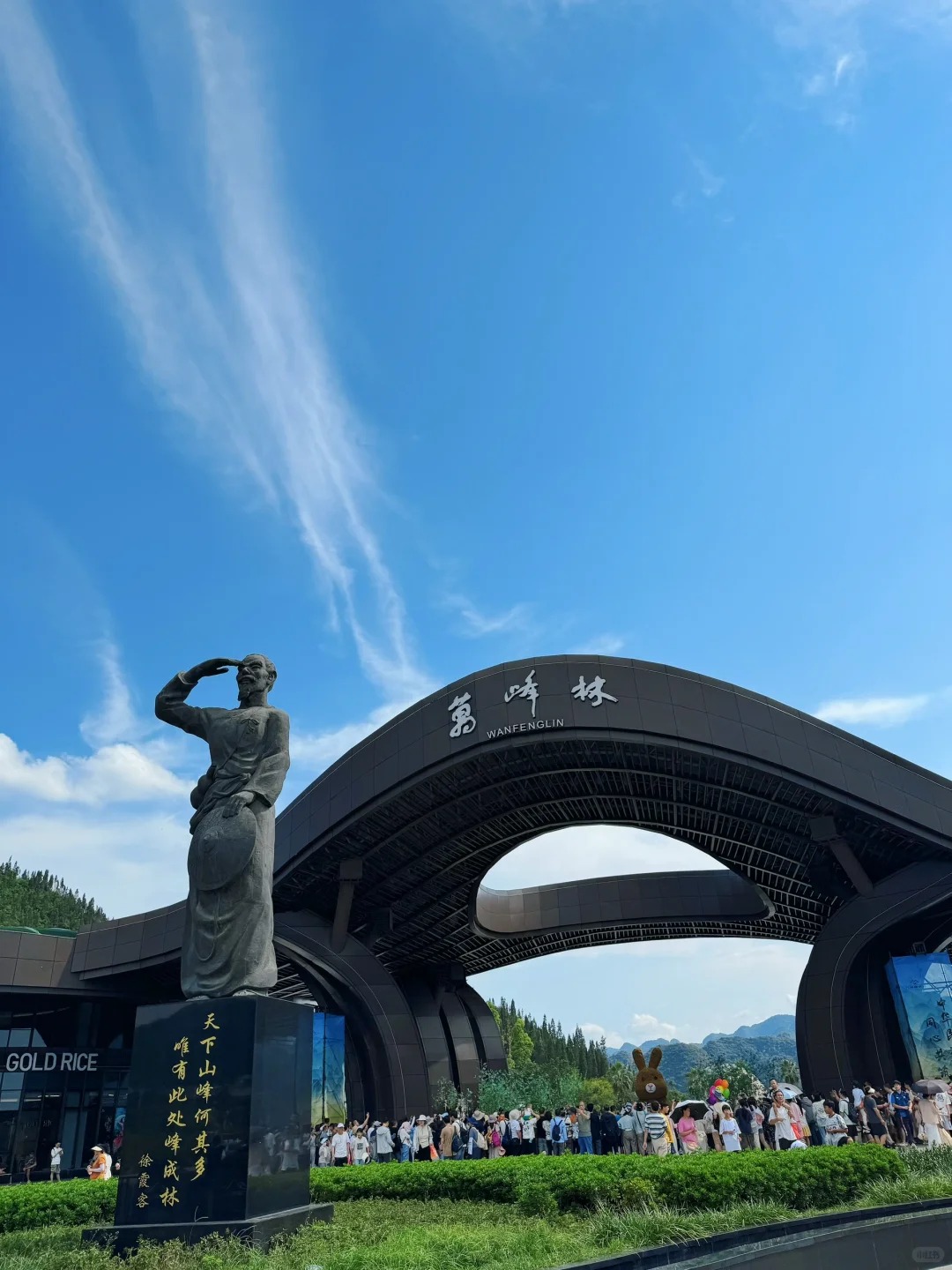
But what makes Wanfenglin truly special isn't just the geology; it’s the life that happens in between.
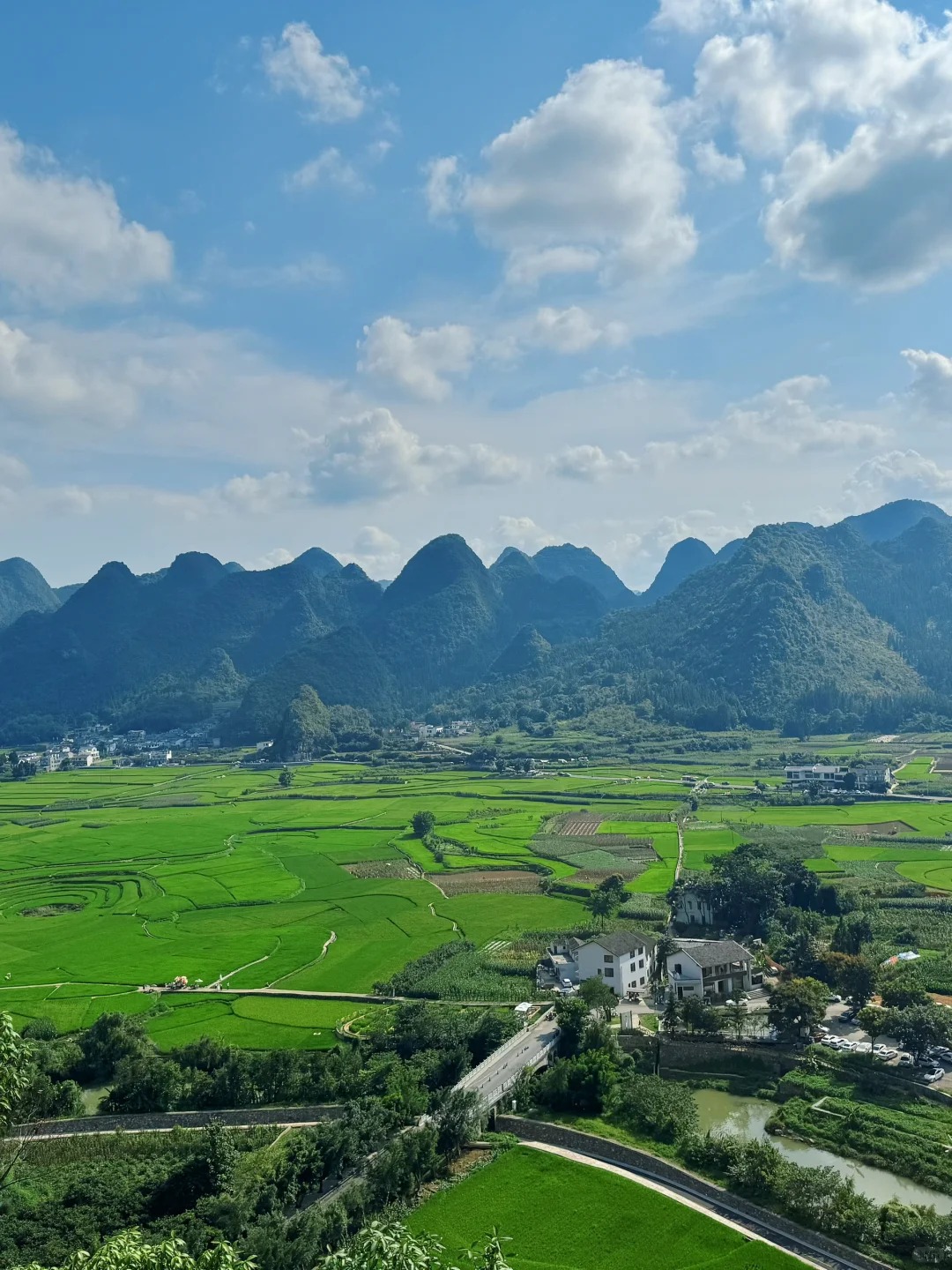
I rented a bicycle—an old, rusty mountain bike with squeaky brakes—and rode down into the valley floor. This is where the magic is. The valley is a patchwork quilt of canola fields (which turn a blinding yellow in spring, though they were a lush green during my visit), rice paddies, and small villages. The villages are inhabited mostly by the Bouyei people, an ethnic minority with a rich culture of stonework and batik.
Riding through the Nahui Village, I felt like an intruder in a painting. The houses are built from local stone, stacked without mortar in beautiful, geometric patterns. Old men sat in doorways smoking long pipes, their eyes following me with mild curiosity. Chickens darted across the road, narrowly missing my wheels. The smell of woodsmoke and cooking oil hung in the air.
I stopped at a small roadside stall run by a smiling Bouyei woman. She was selling "colorful rice"—rice dyed with natural plant extracts into vivid shades of purple, yellow, and black. I bought a bowl and sat on a low wooden stool to eat. It was sticky, fragrant, and slightly sweet.
"Good?" she asked in heavily accented Mandarin.
"Hao chi (Delicious)," I replied, giving a thumbs up. She laughed, her face crinkling into a map of wrinkles.
As I continued my ride, I found myself weaving through the "Bagua" (Eight Trigrams) fields. From above, these fields look like a mysterious symbol carved into the earth, centered around a natural sinkhole. From the ground level, they are just a maze of crops. I got lost. Hopelessly, wonderfully lost. I ended up on a narrow dirt path between two cornfields, the limestone peaks towering above me on all sides. It was silent, save for the wind rustling the corn stalks and the distant hum of a tractor.
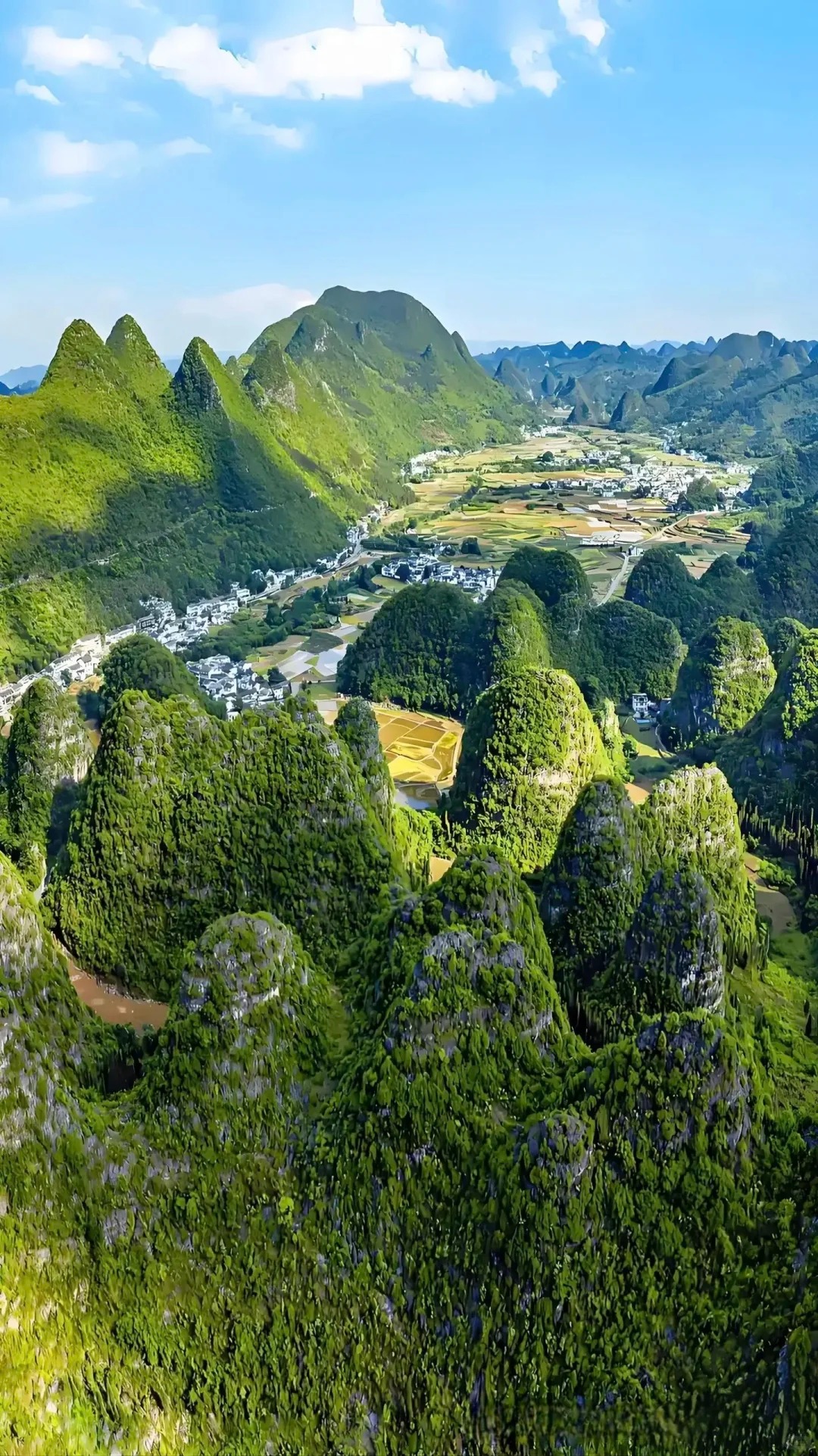
There is a rhythm to Wanfenglin. It’s the rhythm of agriculture, of seasons, of a life lived in the shadow of these eternal hills. It felt incredibly grounded. In the cities of China, everything changes at warp speed. Skyscrapers rise, old neighborhoods vanish. But here, the peaks remain, and the rice is planted and harvested just as it has been for centuries.
I cycled back as the sun dipped below the jagged horizon. The shadows of the peaks lengthened, stretching across the fields like giant fingers. The temperature dropped, and the air filled with the chirping of crickets. I returned the bike, my legs burning but my spirit calm.
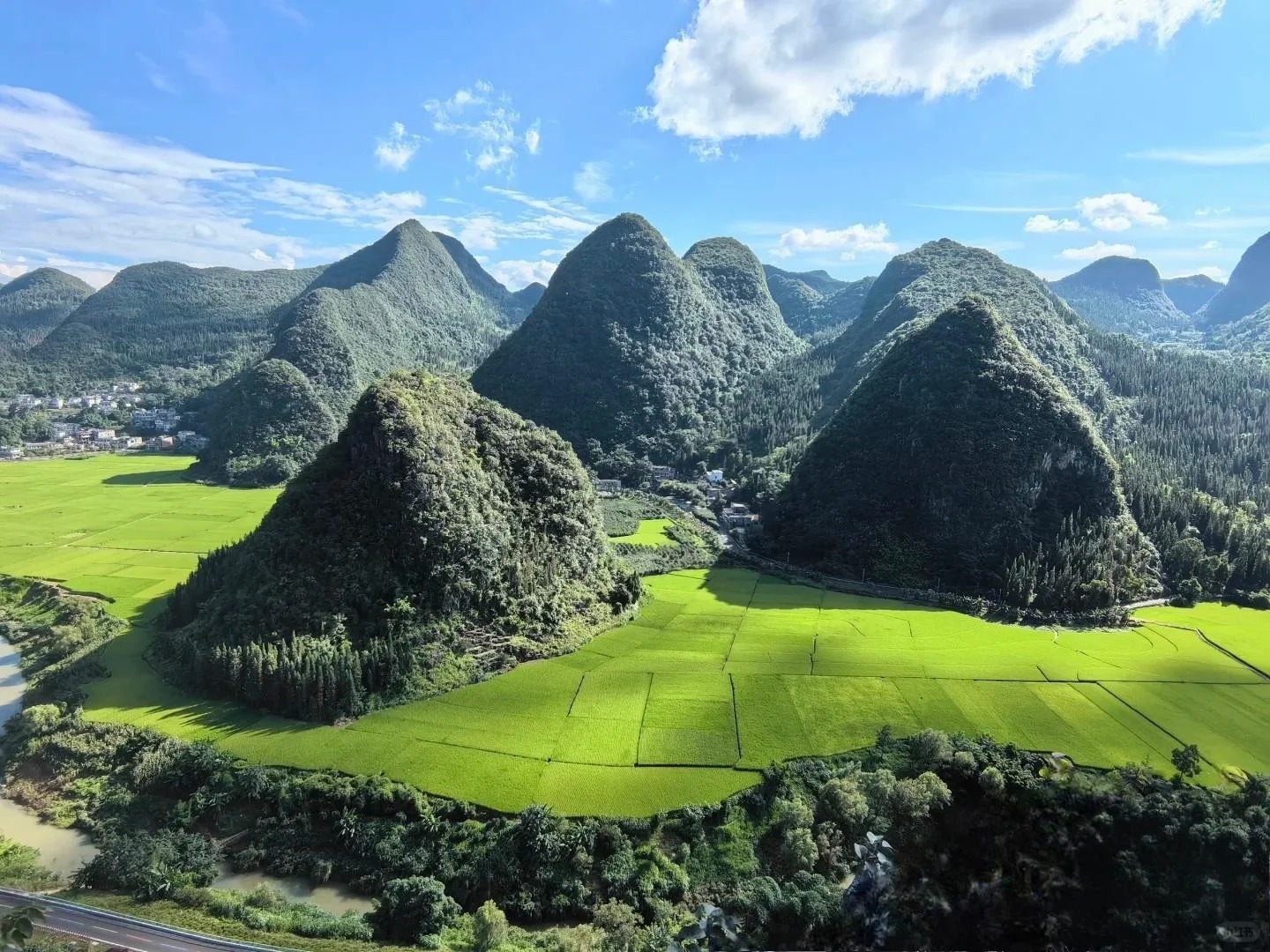
Wanfenglin isn't about adrenaline. It’s about perspective. It reminds you that nature is vast, and we are just small, temporary guests tending the fields in between the giants.