By Sofia, a Mexican food blogger with 500k followers on Instagram
As someone who grows up eating chili peppers for breakfast, I’ve always claimed I have an “iron tongue” when it comes to spicy food. But Chengdu—China’s “Spice Capital”—taught me a whole new meaning of “spicy with layers.” My journey started with a 2-hour flight from Lijiang to Chengdu Shuangliu International Airport, and the moment I stepped out of the terminal, I was hit with a wave of aromas: Sichuan peppercorns, garlic, and something sweet and savory I couldn’t quite place. My driver, Mr. Wang, laughed when I sniffed the air like a bloodhound. “You’re here for the food, right?” he said in broken English. “I’ll take you to the best jianbing stand in the city on the way to your hotel.”

My hotel was in Jinli Ancient Street, a pedestrian street lined with traditional wooden buildings, souvenir shops, and food stalls. After checking in, I dumped my luggage and raced to the street—my stomach was already growling from the jianbing tease. I started with “longchaoshou” (Sichuan wontons) at a small stall run by a woman named Granny Li. She wrapped the wontons with lightning speed, her fingers moving like a magician, and boiled them in a pot of spicy broth. When she placed the bowl in front of me, I noticed the broth was bright red with chili oil, and sprinkled with Sichuan peppercorns and green onions. I took a bite, and my eyes widened—this wasn’t just spicy; it was numbing, too. “That’s the Sichuan peppercorn effect,” Granny Li said with a grin. “We call it ‘ma la’—numbing and spicy. It’s our signature.” I nodded, already reaching for another wonton. As a Mexican, I’m used to heat, but this was a whole new flavor explosion—spicy, numbing, salty, and a hint of sweetness all at once.
By 10 AM, I was on a mission to explore Jinli Ancient Street’s food scene. I tried “spicy rabbit head” (a Chengdu classic that sounds intimidating but is actually tender and flavorful), “dan dan noodles” (noodles with spicy peanut sauce), and “zongzi” (glutinous rice wrapped in bamboo leaves, filled with spicy pork). Every stall had a story: the “spicy rabbit head” seller had been in business for 30 years, passing down the recipe from her mother; the “dan dan noodles” stall was run by a young couple who quit their office jobs to follow their passion for food. I stopped to take photos and videos for my blog, and locals crowded around, eager to see their food on an international platform. A group of teenagers even taught me how to eat the rabbit head properly—“Twist the ears, suck the broth, then pick the meat,” they said, demonstrating with glee.
For lunch, I headed to Kuanzhai Alley, a historic district with three parallel alleys: Kuan Alley (Wide Alley), Zhai Alley (Narrow Alley), and Jing Alley (Well Alley). Unlike Jinli, which is more touristy, Kuanzhai Alley has a mix of locals and visitors, and the food is more authentic. I’d researched “Fuqi Feipian” (Husband and Wife Lung Slices) and found a hidden gem called “Lao Chengdu Fuqi Feipian” in Jing Alley. The owner, Mr. Zhang, told me the dish’s name comes from a couple who invented it in the 1930s. “It’s not actually lung,” he said, noticing my hesitation. “It’s beef and beef tendons, sliced thin and marinated in our secret sauce.” He served it with a side of “bingfen” (ice jelly) to cool down the spice. The beef was tender, and the sauce was a perfect balance of spicy, numbing, and savory. I ate the whole plate in 10 minutes, and Mr. Zhang gave me a high-five. “You’re a true spicy food lover,” he said.
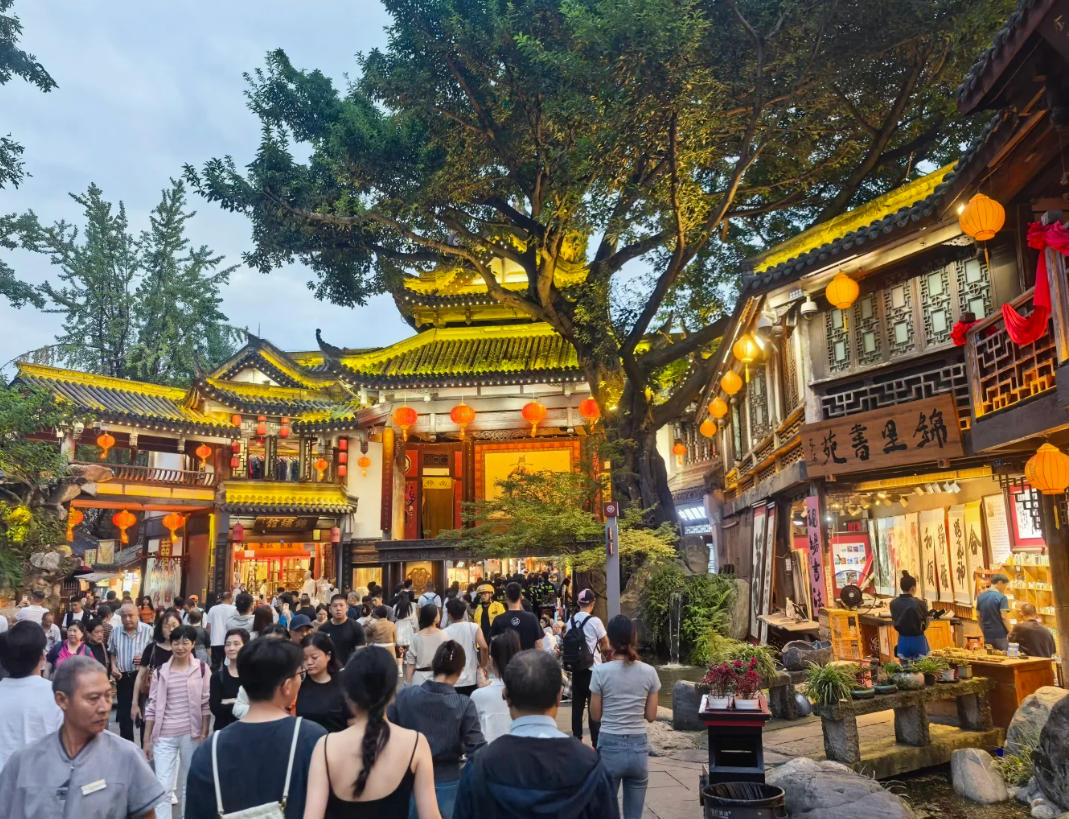
After lunch, I decided to take a break from eating and experience some Chengdu culture. I’d booked a “gaiwan tea” (covered bowl tea) and Sichuan opera show at “Shufeng Yayun” Teahouse, a historic teahouse in the heart of the city. The teahouse was packed with locals playing mahjong and chatting, and the air was filled with the scent of jasmine tea. A waiter brought me a gaiwan tea set— a small bowl with a lid and a saucer—and showed me how to brew it: “Rinse the tea leaves with hot water, then pour the water again, and cover for 30 seconds.” The tea was fragrant and mellow, the perfect antidote to the morning’s spice. At 2 PM, the Sichuan opera show started, and I was instantly captivated. The performers wore bright, elaborate costumes, and their faces changed in the blink of an eye during the “bian lian” (face-changing) act. The crowd gasped every time a new face appeared—red for loyalty, black for courage, white for treachery. I filmed the whole act for my blog, and the video later got 100k likes. During the intermission, a performer came over and taught me how to do a simple face-changing move (it’s harder than it looks!).
By late afternoon, I was ready for round two of eating. I took the subway to Chunxi Road, a busy shopping street with a famous food street nearby—Jianshe Road. Jianshe Road is a food lover’s paradise, with over 100 stalls selling everything from spicy skewers to sweet desserts. I started with “kao naohua” (grilled pig brain) at a stall run by a young woman named Xiao Yu. She noticed I was nervous and said, “Trust me, it’s creamy and delicious—like foie gras.” I closed my eyes and took a bite, and she was right—it was rich and flavorful, with a hint of garlic and chili. Next, I tried “spicy skewers” (beef, chicken, tofu, and vegetables grilled on bamboo sticks), “cheese potatoes” (crispy potatoes covered in melted cheese), and “ice powder” (a sweet dessert made with crushed ice, mung beans, and brown sugar syrup). The ice powder was a lifesaver—cold and sweet, it cooled down the spice from the skewers. I met a group of local foodies at the ice powder stall, and they invited me to join them for dinner at a hot pot restaurant. “You can’t leave Chengdu without eating hot pot,” they said. How could I say no?
The hot pot restaurant, “Hai Di Lao,” was unlike any restaurant I’d ever been to. The service was legendary—waiters refilled my water before I even asked, gave me a hair tie and a phone cover to protect my belongings, and even offered to paint my nails while I waited for the food. We ordered a “yuan yang hot pot” (split pot) with spicy broth on one side and mushroom broth on the other (for the less spicy members of the group). We added ingredients like “huanghou” (beef aorta), “yachang” (duck intestines), “nao hua” (pig brain), and a variety of vegetables. The locals taught me the “7-second rule” for duck intestines: “Dip it in the spicy broth for 7 seconds, then eat it— it’s crispy.” They were right— the duck intestines were crunchy and full of flavor. We ate and laughed for hours, sharing stories about our favorite foods. One of them, a student named Lily, told me she wants to be a food writer one day. “Your blog inspired me,” she said. I almost cried—this is why I love being a food blogger: connecting with people through food.
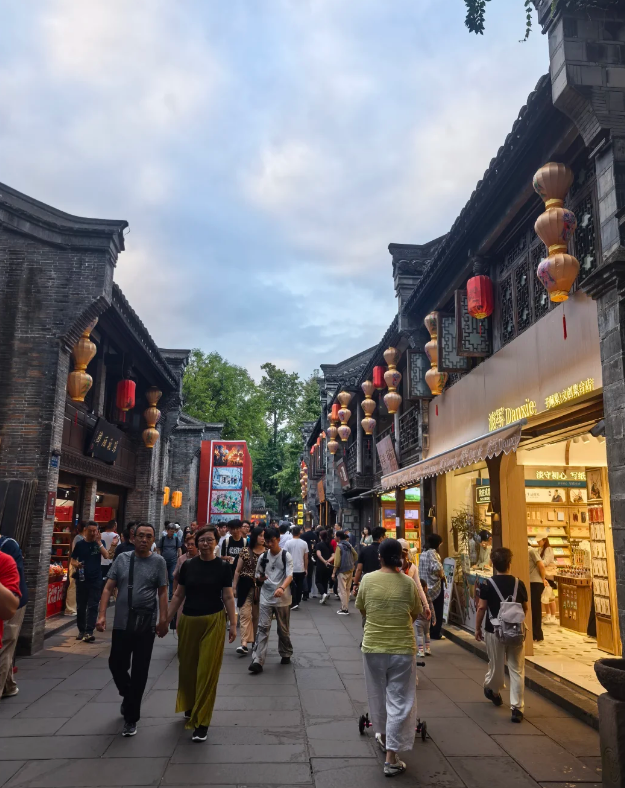
As the night ended, I walked back to my hotel, my stomach full and my heart even fuller. Chengdu isn’t just about the food—though the food is incredible. It’s about the people: the stall owners who share their recipes, the locals who invite strangers to dinner, the performers who teach you their craft. It’s a city that wraps you in warmth and flavor, and leaves you wanting more. As I lay in bed, I thought about my next blog post title: “Chengdu Spicy Food Guide: How a Mexican Food Blogger Survived (and Thrived) in China’s Spice Capital.” I fell asleep dreaming of hot pot and Sichuan peppercorns.
Travel Guide: Your Ultimate Chengdu Food & Culture Companion
1. Transportation: Getting to & Around Chengdu
- Getting to Chengdu: Chengdu has two airports—Shuangliu International Airport (CTU) and Tianfu International Airport (TFU). Both have direct flights from major Chinese cities and international destinations like Bangkok, Singapore, and Tokyo. A one-way flight from Lijiang to Chengdu takes about 2 hours, and from Beijing about 3 hours. You can also take a high-speed train from Chongqing (1.5 hours) or Xi’an (4 hours) to Chengdu East Railway Station.
- Getting Around Chengdu: Subway: Chengdu’s subway system is fast and affordable, covering all major attractions. Download the “Chengdu Metro” app (available in English) or use Alipay: search for “Chengdu Subway Electronic Card” and scan the QR code at the gate. A single ride costs 2-10 yuan depending on distance.
- Buses: Buses are a good option for reaching smaller alleys. Most buses cost 2 yuan, and you can pay with Alipay or a transportation card. Look for bus stops with English signs—most major stops have them.
- Taxis: Taxis are cheap and convenient. Flag down a taxi with a green or blue roof (official ones) or use ride-hailing apps like Didi Chuxing (available in English). A 10-kilometer ride costs about 25-35 yuan.
- Bikes: Shared bikes (Mobike, Hellobike) are perfect for exploring Jinli Ancient Street and Kuanzhai Alley. Rent for 2 yuan per 30 minutes, and park only in designated areas.
2. Top Attractions: Food & Culture Highlights
- Jinli Ancient StreetHighlights: A 1,700-year-old street with traditional architecture, souvenir shops, and over 50 food stalls. Must-try foods: longchaoshou, spicy rabbit head, zongzi. Don’t miss the “shadow puppet show” at the end of the street—it’s a traditional Chinese art form.
- Hours: 9 AM-10 PM (food stalls open until midnight on weekends).
- Pro Tip: Visit early (9-10 AM) to avoid crowds and get fresh food. The jianbing stall at the entrance is run by Granny Wang—she’s been there for 20 years.
Kuanzhai Alley (Wide & Narrow Alleys)Highlights: Three alleys with a mix of historic courtyard houses, cafes, and local restaurants. Kuan Alley has traditional teahouses, Zhai Alley has boutique shops, and Jing Alley has the best food. Must-try: Fuqi Feipian at Lao Chengdu Fuqi Feipian.
Hours: 9 AM-9 PM (restaurants open until 11 PM).
Pro Tip: Walk through all three alleys—they’re connected. Stop at “Shu Brocade Museum” in Kuan Alley to see traditional Chinese silk weaving.
Shufeng Yayun TeahouseHighlights: A historic teahouse founded in 1999, offering gaiwan tea and Sichuan opera shows (face-changing, Sichuan opera singing, acrobatics). The show is in Chinese, but there are English subtitles for key parts.
Price: Gaiwan tea 30-50 yuan per person, show ticket 180-380 yuan per person (VIP tickets include front-row seats and snacks).
Hours: 9 AM-10 PM, shows at 2 PM and 7:30 PM.
Pro Tip: Book tickets online 1-2 days in advance (search “Shufeng Yayun Teahouse official website” for English booking).
Jianshe Road Food StreetHighlights: A street with over 100 food stalls, popular with locals and food bloggers. Must-try: kao naohua (grilled pig brain) at Xiao Yu’s stall, spicy skewers at “Lao Wang Spicy Skewers,” ice powder at “A-Mei Ice Powder.”
Hours: 4 PM-midnight (busiest 7-10 PM).
Pro Tip: Go on a weekday—weekends are extremely crowded. Bring wet wipes—most stalls don’t have napkins.
Chengdu Research Base of Giant Panda BreedingHighlights: A must-visit for animal lovers—home to over 150 giant pandas and red pandas. You can watch pandas eat bamboo, play, and even volunteer to feed them (booking required).
Tickets: 55 yuan per person (free for children under 1.2 meters).
Hours: 7:30 AM-6 PM (summer), 8 AM-5:30 PM (winter). Pandas are most active in the morning (8-10 AM).
Pro Tip: Take subway line 3 to “Panda Avenue Station” and then a bus (10 yuan) to the base. Arrive by 8 AM to see pandas at their most active.
3. Food: The Ultimate Chengdu Food Guide
Chengdu’s food is all about “ma la” (numbing and spicy), but there are also mild options for those who can’t handle heat. Here’s a breakdown of must-try dishes, where to find them, and how to order like a local:
Must-Try Dishes (with English & Pinyin)
| Dish Name (Pinyin) | Description | Where to Try | Price (Yuan) |
| Longchaoshou (Dragon Wontons) | Wontons in spicy or mild broth, filled with pork or shrimp | Granny Li’s Stall, Jinli Ancient Street | 15-20 |
| Fuqi Feipian (Husband & Wife Lung Slices) | Sliced beef/tendons marinated in spicy sauce | Lao Chengdu Fuqi Feipian, Kuanzhai Alley | 30-40 |
| Mapo Tofu (Spicy Tofu) | Silky tofu with minced pork in spicy sauce | Chen Mapo Tofu, Chunxi Road | 25-35 |
| Chengdu Hot Pot | Split pot (spicy/mild) with various ingredients | Hai Di Lao, multiple locations | 80-120 per person |
| Kao Naohua (Grilled Pig Brain) | Creamy pig brain grilled with garlic and chili | Xiao Yu’s Stall, Jianshe Road | 10-15 per serving |
| Bingfen (Ice Jelly) | Sweet dessert with crushed ice and brown sugar | A-Mei Ice Powder, Jianshe Road | 8-12 |
Eating Spicy Food Tips
- Ask for Less Spice: Most restaurants can adjust the spice level. Say “wei la” (very mild), “qing la” (mild), or “bu yao la” (no spice) when ordering.
- Pair with Mild Foods: Order rice, bingfen, or “tangyuan” (glutinous rice balls) to cool down the spice.
- Drink Milk: Milk (not water!) helps soothe the numbing effect of Sichuan peppercorns. Most restaurants serve free milk or yogurt.
- Start Small: If you’re new to Sichuan food, start with mild dishes like longchaoshou before moving to hot pot or mapo tofu.
4. Accommodation: Where to Stay in Chengdu
- Jinli Ancient Street Area: Perfect for food lovers. Try “Chengdu Jinli Hotel” (mid-range, 500-700 yuan/night)—it’s steps from Jinli Street and has a rooftop bar with views of the ancient street. For budget travelers, “Home Inn Jinli” (300-400 yuan/night) is clean and affordable.
- Chunxi Road Area: Great for shopping and nightlife. “The Ritz-Carlton Chengdu” (luxury, 1,500+ yuan/night) is in the heart of Chunxi Road and has a Michelin-starred restaurant. “7 Days Inn Chunxi Road” (budget, 200-300 yuan/night) is convenient for subway access.
- Kuanzhai Alley Area: For a cultural experience. “Chengdu Temple House” (mid-range, 800-1,000 yuan/night) is a boutique hotel in a historic courtyard house, with traditional Chinese decor. “Kuanzhai Alley Hostel” (budget, 100-200 yuan/night) is popular with backpackers and has a communal kitchen.
- Panda Base Area: For animal lovers. “Panda Hotel” (mid-range, 600-800 yuan/night) is a 10-minute drive from the Panda Base and has panda-themed rooms. It also offers shuttle buses to the base every morning.
5. Cultural Etiquette & Practical Tips
- Table Manners: It’s common to share dishes in Chengdu—order 2-3 dishes per person. Use chopsticks (most restaurants have forks for foreigners, but it’s polite to try chopsticks). Don’t stick chopsticks upright in rice—it’s considered bad luck.
- Bargaining: Bargain at souvenir shops in Jinli and Kuanzhai Alley—start with 50% of the asking price. Food stalls have fixed prices, so don’t bargain there.
- Cash vs. Cashless: Most restaurants, stalls, and shops accept Alipay or WeChat Pay. Carry 100-200 yuan in cash for small stalls that don’t accept mobile payments.
- Weather: Chengdu is humid year-round. Summer (June-August) is hot (30-35°C) and rainy—bring an umbrella and sunscreen. Winter (December-February) is cold (5-10°C) and foggy—pack a warm jacket.
- Language: Most young people and restaurant staff speak basic English. Download the “Google Translate” app with offline Chinese language pack—it’s a lifesaver for ordering food.
- Safety: Chengdu is a very safe city, even at night. Keep an eye on your belongings in crowded areas like Jinli and Jianshe Road.
6. Two-Day Itinerary for Chengdu
Day 1: Food & Ancient Streets
- 1. 8:00 AM: Breakfast at Granny Li’s stall in Jinli (longchaoshou + jianbing).
- 2. 9:30 AM: Explore Jinli Ancient Street—visit the shadow puppet show, buy souvenirs.
- 3. 12:00 PM: Lunch at Lao Chengdu Fuqi Feipian in Kuanzhai Alley (Fuqi Feipian + bingfen).
- 4. 2:00 PM: Gaiwan tea and Sichuan opera show at Shufeng Yayun Teahouse.
- 5. 4:30 PM: Walk to Chunxi Road—shop and visit Chen Mapo Tofu for a snack (mapo tofu).
- 6. 7:00 PM: Dinner at Hai Di Lao Hot Pot (split pot + various ingredients).
- 7. 9:30 PM: Late-night snack at Jianshe Road (spicy skewers + ice powder).
Day 2: Pandas & Local Culture
- 8. 7:30 AM: Breakfast at hotel—try “youtiao” (fried dough sticks) and “soy milk.”
- 9. 8:00 AM: Take shuttle bus or taxi to Chengdu Panda Base—watch pandas eat breakfast.
- 10. 11:00 AM: Volunteer to feed pandas (book in advance) or visit the red panda enclosure.
- 11. 12:30 PM: Lunch at the Panda Base’s restaurant (panda-shaped steamed buns).
- 12. 2:00 PM: Visit Wuhou Temple— a historic temple dedicated to Zhuge Liang, a famous Chinese strategist.
- 13. 4:00 PM: Walk to Jinli Ancient Street for afternoon tea (gaiwan tea + osmanthus cake).
- 14. 6:30 PM: Dinner at a local Sichuan restaurant—try “yuxiang rousi” (fish-flavored pork shreds) and “ganbian caixin” (dry-fried Chinese cabbage).
- 15. 8:30 PM: Watch a street performance in Kuanzhai Alley—local musicians play traditional Chinese instruments.