I’ve always been obsessed with stories—those written in ancient stones, woven into local dialects, and simmered in street food stalls. After years of daydreaming, I finally packed a backpack, traded my office shoes for sneakers, and set off on a month-long journey through China. This wasn’t a rushed tour of “must-see” spots; it was an attempt to lean into the unexpected—to let the country unfold through my senses: the smell of jasmine in a Beijing hutong, the feel of sun-warmed brick under my bike on Xi’an’s city wall, the sound of bamboo poles knocking against a Guilin riverbank. What follows is the story of that journey, messy, vivid, and entirely mine.
Beijing: Red Walls and Hidden Courtyards
My first stop was Beijing, a city that feels like a conversation between the past and present. I arrived at dawn, and as my taxi wound through the streets, I watched as elderly men unrolled scrolls to practice calligraphy in Tiananmen Square, their brushes moving in slow, deliberate arcs while skyscrapers glinted in the distance. It was a perfect introduction—old and new, side by side.
I spent my first morning at the Forbidden City, and I’ll admit, I was nervous. I’d seen photos, read history books, but nothing prepared me for the scale of it. The red walls rise like giants, their surfaces worn smooth by centuries of hands, and the golden roofs catch the sun so brightly it makes your eyes water. I followed a tour group for ten minutes before peeling off—groups move too fast, and I wanted to linger. I found a quiet corner near the Hall of Supreme Harmony, where a stone dragon curled around a pillar, its scales still sharp despite being carved in the 15th century. A guard noticed me staring and smiled. “Many people take photos of the big halls,” he said in gentle English. “But the dragons—they’re the ones who hold the stories.” He told me how each dragon has nine claws (a symbol of imperial power) and how craftsmen spent years carving them, knowing a single mistake could cost their lives. As I ran my finger over the cool stone, I thought about all the emperors, eunuchs, and concubines who’d walked this same ground. It wasn’t just a palace; it was a living museum of ambition and fear, beauty and control.
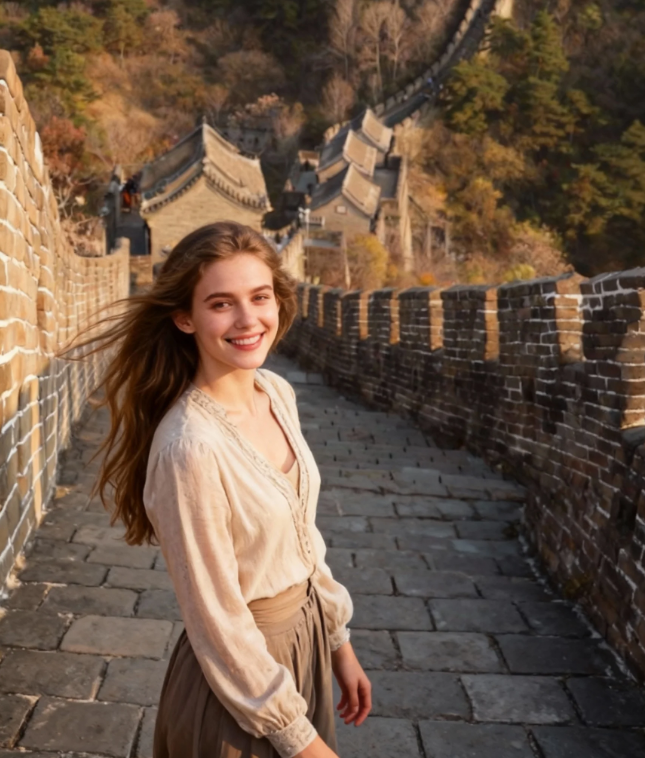
But Beijing’s magic isn’t just in its grand landmarks. It’s in the hutongs—narrow alleyways that twist like labyrinths behind the main streets. I rented a bike one afternoon and got lost on purpose. The lanes are lined with gray brick houses, their doors painted red with brass knockers, and laundry flutters from bamboo poles strung between roofs. I passed a woman selling jianbing (a crispy pancake stuffed with egg and scallions) from a cart, and the smell made my stomach growl. I stopped, and she laughed when I fumbled with my Chinese. “First time in Beijing?” she asked. I nodded, and she handed me a jianbing, still hot from the griddle. The crust crunched between my teeth, and the spicy sauce burned just enough to make my nose run. “Good, right?” she said. We chatted for a few minutes—she’d lived in the hutong her whole life, raised her kids here, watched the city change around her. “The skyscrapers are nice,” she said, nodding toward the skyline. “But here? This is home.”
That evening, I climbed Jingshan Park, a hill just north of the Forbidden City. The park was filled with locals—couples walking hand in hand, old men playing chess, kids chasing each other with kites. I found a spot on a stone bench and watched the sun set. The Forbidden City spread out below me, its golden roofs turning pink, and the city’s traffic hummed like a distant song. A man sat down next to me and offered me a cup of tea. “Beautiful, isn’t it?” he said. His name was Mr. Li, and he’d been coming to this spot every evening for 20 years. “When I was young, you could see the stars better,” he said. “But the city’s heart is still here.” As darkness fell, the Forbidden City’s lights turned on, and it looked like a castle from a fairy tale. I took a sip of tea—warm, bitter, and comforting—and realized Beijing wasn’t just a city. It was a feeling: the weight of history, the warmth of strangers, and the quiet pride of a place that’s been at the center of the world for centuries.
Xi’an: Walls, Warriors, and Wheat Noodles
From Beijing, I took a high-speed train to Xi’an—six hours of speeding through green fields and small towns, watching the landscape change from northern plains to central China’s rolling hills. Xi’an is one of China’s oldest cities, once the capital of the Tang Dynasty, and it feels like stepping into a time machine. My first stop was the Terracotta Army, and I’ll be honest: I thought it would be overhyped. I was wrong.
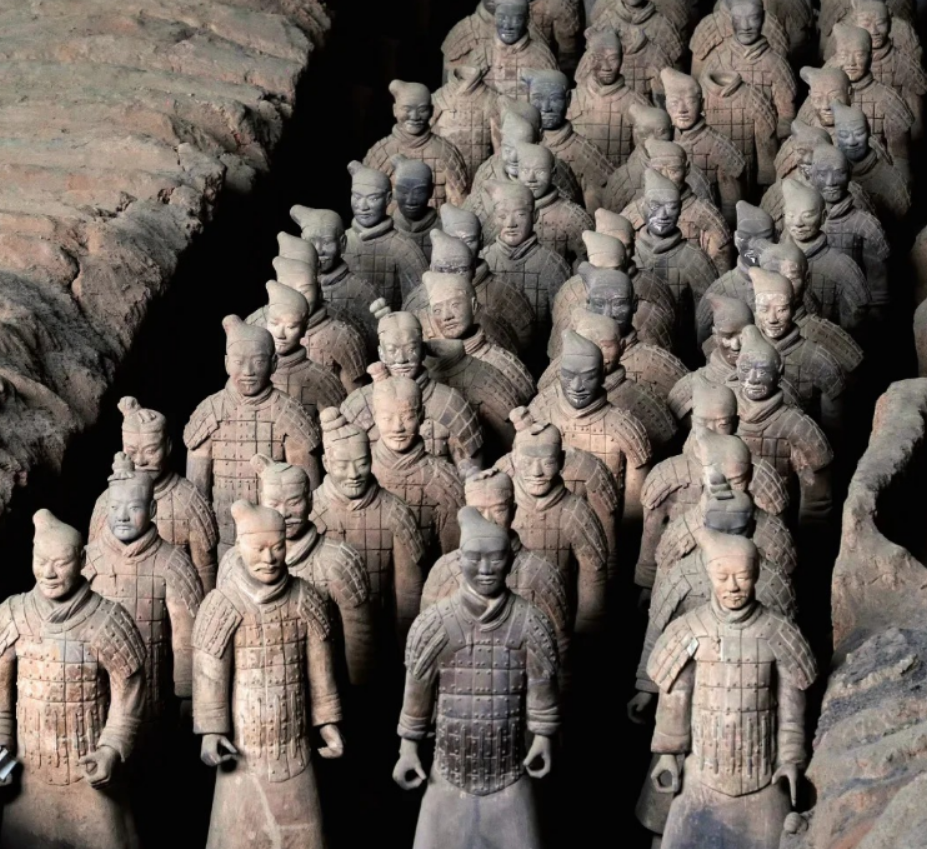
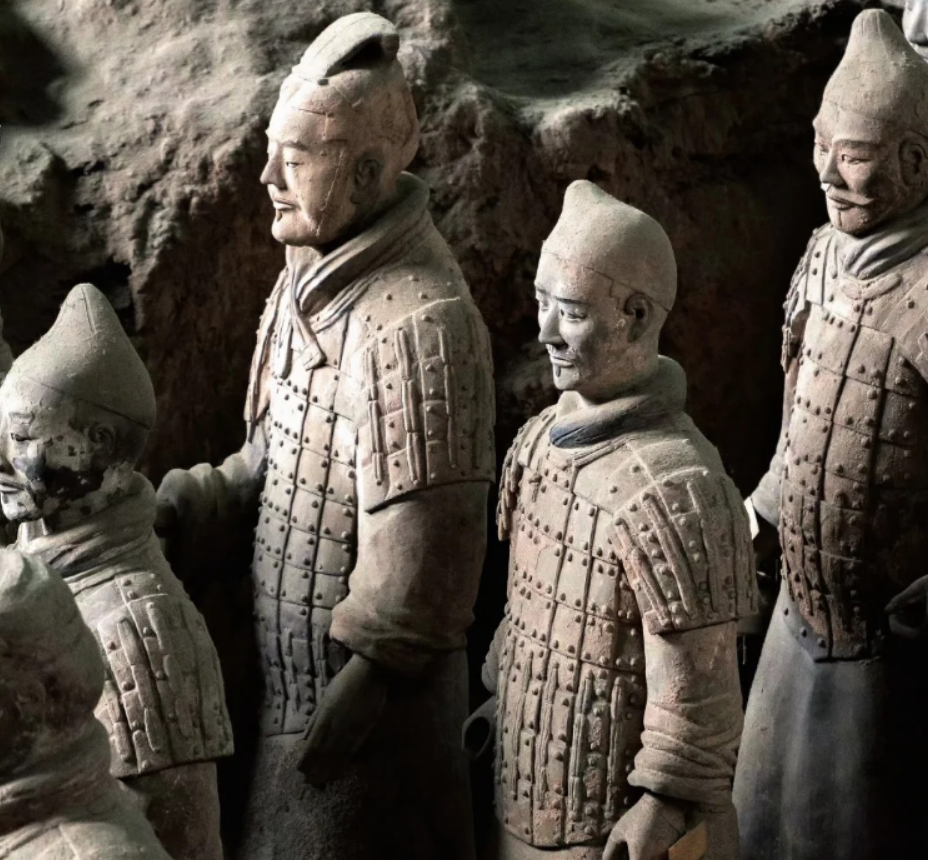
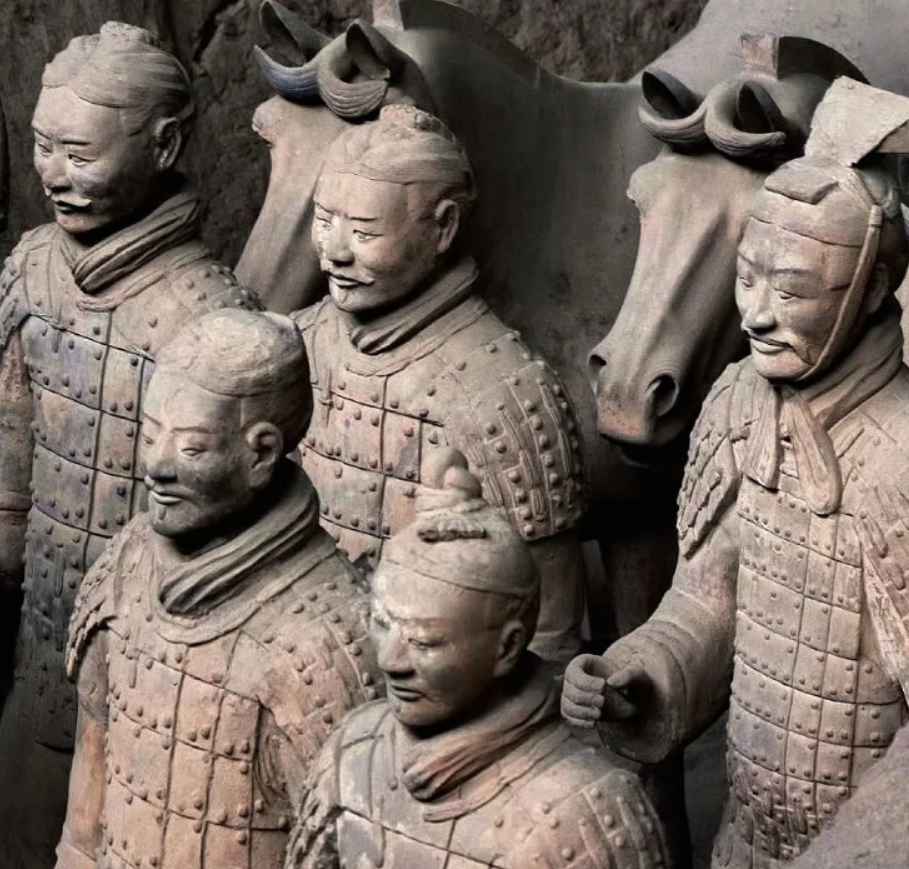
The museum is built over the excavation site, and when you walk into Pit 1, the first thing you notice is the silence. Thousands of soldiers stand in rows, their faces turned toward the east, ready to defend their emperor in the afterlife. Each one has a unique face—some scowling, some smiling, some with wrinkles, some with young, sharp features. Archaeologists believe craftsmen modeled them after real soldiers, and looking at their faces, I felt a jolt of connection. This wasn’t just a bunch of clay statues; these were people. I leaned against the railing and stared at a soldier with a broken arm, his posture still straight, his eyes still fierce. A guide nearby told a group that the army was buried with Emperor Qin Shi Huang in 210 BCE, along with chariots, horses, and even weapons made of real bronze. “He wanted to rule in the afterlife just like he ruled on earth,” she said. I thought about how much power that must take—how much fear, how much ambition—to build something so grand for your own death. But there was beauty in it too: the attention to detail, the dedication of the craftsmen, the way this army has outlasted empires, wars, and time itself.
But Xi’an’s most underrated treasure, in my opinion, is its city wall. Built during the Ming Dynasty, it’s 13.7 kilometers long, 12 meters high, and wide enough for four horses to gallop side by side. I rented a bike at sunset—everyone told me sunset was the best time, and they were right. As I pedaled, the wall’s gray bricks warmed by the sun, I could see the city spread out below me: ancient temples with curved roofs, modern shopping malls with neon signs, and street food stalls smoking in the alleyways. I passed a group of students taking selfies, an old man walking his dog, and a couple sitting on the edge of the wall, sharing a bag of dates. The wind blew through my hair, and the sun dipped below the horizon, painting the sky orange and purple. For a moment, I forgot I was in a modern city. I felt like a traveler from the Tang Dynasty, looking out over a city that had been thriving for thousands of years.
Xi’an is also a food lover’s paradise, and I spent most of my evenings wandering the Muslim Quarter. The quarter is a maze of narrow streets lined with stalls selling lamb skewers, rice cakes, and my new favorite: biang biang noodles. The noodles are thick and wide, hand-pulled by chefs who slap them against the counter with a loud “biang” sound (hence the name), then tossed in a sauce of chili oil, garlic, and vinegar. I ate at a small stall run by a woman named Auntie Wang, who told me she’d been making biang biang noodles for 30 years. “My mother taught me,” she said, slapping a ball of dough against the counter. “It’s not just food—it’s our family’s story.” I watched her work, her hands moving so fast they blurred, and took a bite of the noodles. They were chewy, spicy, and full of flavor—so good I ate two bowls. As I sat there, listening to the sound of vendors calling out, the smell of lamb skewers filling the air, I realized Xi’an was a city of contrasts: ancient and modern, grand and intimate, fierce and warm.
Chengdu: Tea, Pandas, and Sichuan Spice
After Xi’an, I flew to Chengdu, the capital of Sichuan Province. I’d heard two things about Chengdu: it’s the home of pandas, and it’s so spicy the food will make you cry. Both were true—but there’s so much more to this city than that. Chengdu is slow, laid-back, and unapologetically joyful. It’s a city where people spend their afternoons drinking tea in parks, playing mahjong under trees, and laughing louder than in any other place I’ve been.
I started my first day at the Chengdu Research Base of Giant Panda Breeding. I arrived at 8 a.m.—the pandas are most active in the morning—and walked through the bamboo groves. The first panda I saw was a mother and her cub, lying on a tree branch. The cub climbed onto its mother’s back, and she yawned, showing her huge teeth. A zookeeper told me the cub was only six months old, and its name was Xiao Mi (Little Rice). “She’s very naughty,” he said, smiling. “Yesterday, she stole a bamboo shoot from her mother.” I watched them for 45 minutes, forgetting to take photos, just smiling. There’s something about pandas—their round faces, their clumsy movements, their sheer cuteness—that makes everyone relax. Later, I visited the red panda enclosure. Red pandas are smaller than giant pandas, with fluffy red fur and bushy tails, and they’re just as adorable. One climbed down from a tree and looked at me, tilting its head like it was curious. I waved, and it scurried back up, disappearing into the bamboo. Leaving the research base, I felt lighter—like I’d spent the morning with old friends.
But the real soul of Chengdu is its tea houses. I went to Heming Tea House, a historic spot in People’s Park, and sat down at a wooden table. A waiter came over with a teapot and a gaiwan (a small porcelain cup with a lid), and poured me a cup of jasmine tea. “Slow down,” he said. “This is Chengdu.” I took a sip—sweet, fragrant, and calming—and looked around. The tea house was packed: old men playing mahjong, their tiles clacking loudly; women chatting while peeling peanuts; a musician playing the erhu (a two-stringed instrument), its sound soft and melancholic. A man walked around offering ear cleaning—a traditional Chengdu service—and I decided to try it. He used a long, thin tool with a cotton ball on the end, and it tickled so much I laughed. “Relax,” he said. “This is how we unwind here.” As I sat there, drinking tea, listening to the music, and watching the world go by, I realized Chengdu’s secret: it’s a city that knows how to enjoy life. In a world that’s always rushing, Chengdu reminds you to slow down, breathe, and savor the moment.
And then there’s the food. Sichuan food is famous for its spiciness—thanks to Sichuan peppercorns, which give it a numbing, tingling sensation called “ma”—but it’s not just spicy. It’s complex, with layers of flavor: sweet, sour, salty, and umami. I ate hot pot at a restaurant called Hai Di Lao, which is famous for its service (they’ll give you a foot massage while you wait, no joke). I ordered a “medium spicy” broth, and the waiter warned me, “Medium is very spicy for foreigners.” I laughed it off—until the broth arrived, bubbling red with chili peppers. I dipped a piece of beef into the broth and took a bite. My mouth exploded. It was spicy, numbing, and so flavorful I couldn’t stop eating. I drank three glasses of water, and the waiter brought me a bowl of sugar water to cool my mouth. “Told you,” he said, grinning. Later, I tried mapo tofu—soft tofu in a spicy sauce with ground pork—and dan dan noodles. Every dish was a revelation. But my favorite meal was at a street stall near my hotel, where an old woman sold spicy rabbit heads. I was hesitant at first—rabbit heads sound scary—but she insisted I try one. She peeled off the skin and gave me the meat, and it was delicious: tender, spicy, and full of flavor. “In Sichuan, we eat everything,” she said. “Nothing goes to waste.”
Guilin: Mountains, Rivers, and Rice Terraces
My last stop was Guilin, in Guangxi Zhuang Autonomous Region. I’d seen photos of Guilin’s landscape—karst mountains rising straight out of the ground, their reflections in the Li River—and I thought they were too beautiful to be real. They weren’t. Guilin is like a painting come to life, a place where nature is so stunning it makes you speechless.
I took a bamboo raft down the Li River from Guilin to Yangshuo—a four-hour journey that’s often called one of the most beautiful boat rides in the world. The raft was operated by two men, Mr. Zhang and his son, who used long bamboo poles to push the raft through the water. The river was clear, so clear I could see fish swimming near the bottom, and the mountains rose around us like green giants. Some looked like animals—a frog, a camel, a sleeping Buddha—and Mr. Zhang pointed them out, telling me the stories behind each one. “That’s the Elephant Trunk Hill,” he said, pointing to a mountain that looked like an elephant drinking water. “Legend says it’s a divine elephant that came to help the people, and it turned to stone to stay forever.” As we floated along, I leaned back and watched the clouds drift over the mountains. A heron flew past, its wings outstretched, and a group of children waved from the riverbank. The only sounds were the water lapping against the raft, the wind rustling through the bamboo, and Mr. Zhang and his son chatting in their local dialect. It was peaceful—more peaceful than any place I’d ever been. For a moment, I forgot about emails, deadlines, and the outside world. I just existed, surrounded by beauty.
From Yangshuo, I took a bus to Longji Rice Terraces, which are located in the mountains outside the city. The terraces were built by the Zhuang and Yao ethnic minorities over 2,000 years ago, and they wind up the mountains like green stairs. I hired a guide named Mei, who was from a Yao village, to take me up the mountain. “My grandmother helped build these terraces,” she said as we walked. “It’s hard work—carrying soil up the mountain, planting the rice by hand—but it’s our heritage.” We walked for two hours, and when we reached the top, I gasped. The terraces stretched as far as the eye could see, each one filled with water that reflected the sky. Mei told me that in spring, when the rice is planted, the terraces are bright green; in autumn, they’re golden. “But today is perfect,” she said. “The water makes them look like mirrors.” We sat down on a stone and ate lunch—rice, pickled vegetables, and chicken that Mei’s mother had cooked. As I ate, I watched a group of Yao women washing clothes in a stream, singing in their native language. Their clothes were bright—red, blue, and yellow—and their silver jewelry jingled as they moved. It was a scene out of a movie, but it was real.
That evening, I stayed in a Yao village guesthouse. The owner, Auntie Ling, cooked me dinner—braised pork, stir-fried greens, and sweet potato soup—and told me about her life. She’d never left the mountains, she said, and she didn’t want to. “This is my home,” she said, gesturing to the terraces outside. “The mountains protect us, the river feeds us, and our family is here.” After dinner, I sat on the porch and watched the stars. The sky was so clear I could see the Milky Way, and the only sounds were crickets and the distant sound of a dog barking. I thought about my journey—Beijing’s history, Xi’an’s walls, Chengdu’s joy, and Guilin’s beauty. China wasn’t just a country; it was a collection of stories—stories of emperors and farmers, pandas and warriors, tea and spice. It was a place where the past and present lived side by side, where strangers were kind, and where nature was so beautiful it made you believe in magic.
Home, But Never the Same
When I flew back home, I unpacked my backpack and found little reminders of my journey: a jianbing wrapper from Beijing, a bamboo keychain from Guilin, a photo of Xiao Mi the panda. As I looked at them, I realized something: this trip hadn’t just changed the way I saw China. It had changed the way I saw the world. I’d gone expecting to see landmarks and eat food, but I’d come back with something far more valuable: connections. With Mr. Li in Beijing, who shared his tea and his stories. With Auntie Wang in Xi’an, who taught me that food is family. With Mei in Guilin, who showed me the beauty of heritage.
People often ask me, “What’s the best place in China?” I always smile and say, “It depends on what you’re looking for.” If you want history, go to Beijing or Xi’an. If you want joy, go to Chengdu. If you want beauty, go to Guilin. But the truth is, the best part of China isn’t the landmarks or the food. It’s the people. The people who take the time to talk to you, to share their stories, to make you feel welcome. The people who remind you that no matter where you’re from, we’re all just looking for the same things: love, connection, and a place to call home.
I often think about that evening in Jingshan Park, watching the sun set over the Forbidden City. Mr. Li told me, “Beijing is the heart of China.” But now I know he was wrong. China’s heart isn’t in its cities or its landmarks. It’s in its people. It’s in the way a stranger offers you tea, the way a chef shares her family’s recipe, the way a guide shows you her heritage. That’s the China I fell in love with—the real China, the one you can’t see in photos or read about in books. The one you have to feel for yourself.
And I can’t wait to go back.