The first thing that hits you at the Nanjing Confucius Temple (Fuzimiao) isn’t the history—it’s the noise. A glorious, overwhelming, carnival cacophony. The honking of electric sightseeing carts, the sizzle of dozens of street food woks, vendors calling out over tinny pop music, and the laughter of a thousand voices. It’s a living, breathing, shouting monument.

I entered from the busy Zhonghua Road, passing under an ornate paifang (archway), and was instantly swept into a current of people. To my left was the serene, willow-lined Qinhuai River, where painted dragon boats glided past. To my right, the actual temple complex—its classic yellow walls and upturned eaves a dignified island amidst the commercial frenzy. I chose the frenzy first.
The snack street was a symphony of aroma. Sweet osmanthus-glazed cakes steamed next to pungent stinky tofu, its infamous scent cutting through everything. I joined a queue for a paper cone of tanghulu—candied hawthorn berries that shone like edible rubies. As I bit into the sweet, hard crackle giving way to tart fruit, I watched families pose for photos, teenagers in Hanfu robes browsing trinket stalls, and old men playing Chinese chess on stone tables, utterly unfazed by the bedlam.
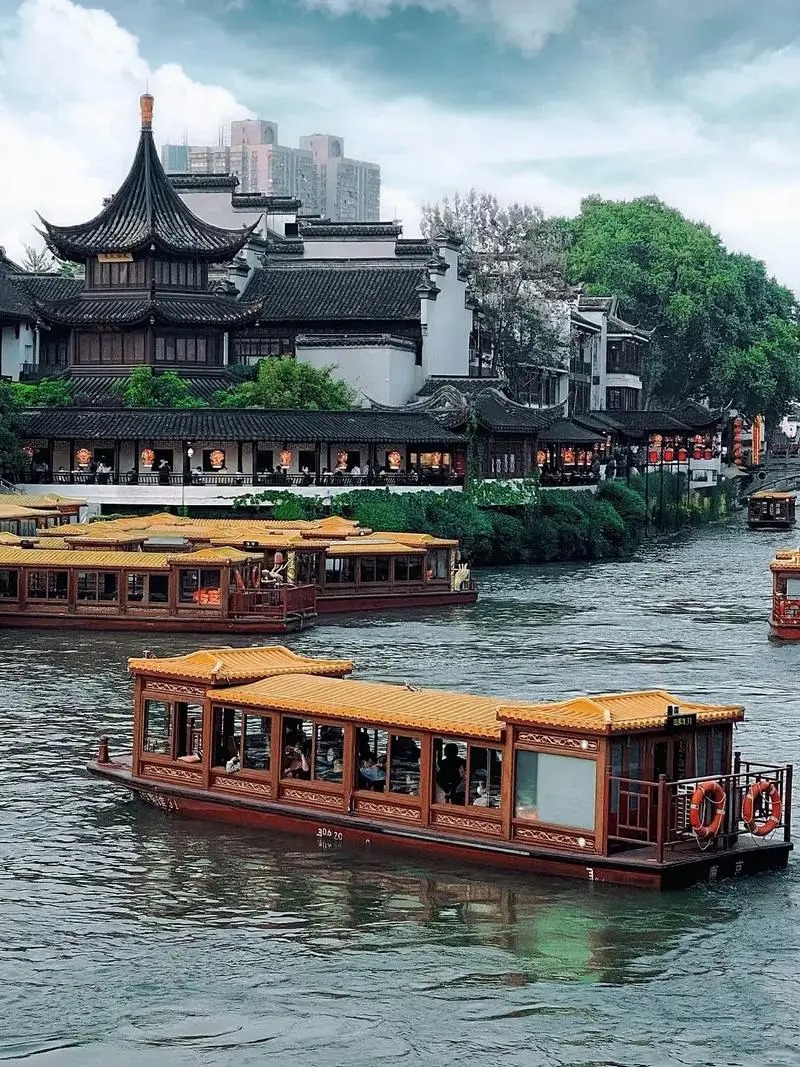
Eventually, I bought a ticket and stepped into the temple grounds. The change was instantaneous. The noise faded to a distant hum, replaced by the rustle of bamboo and the low chant of recorded classical texts. In the main courtyard, before the statue of the great sage, a few visitors were performing slow, deliberate bows. Incense smoke curled lazily in the still air. Here, Confucius was a teacher, not a tourist brand.
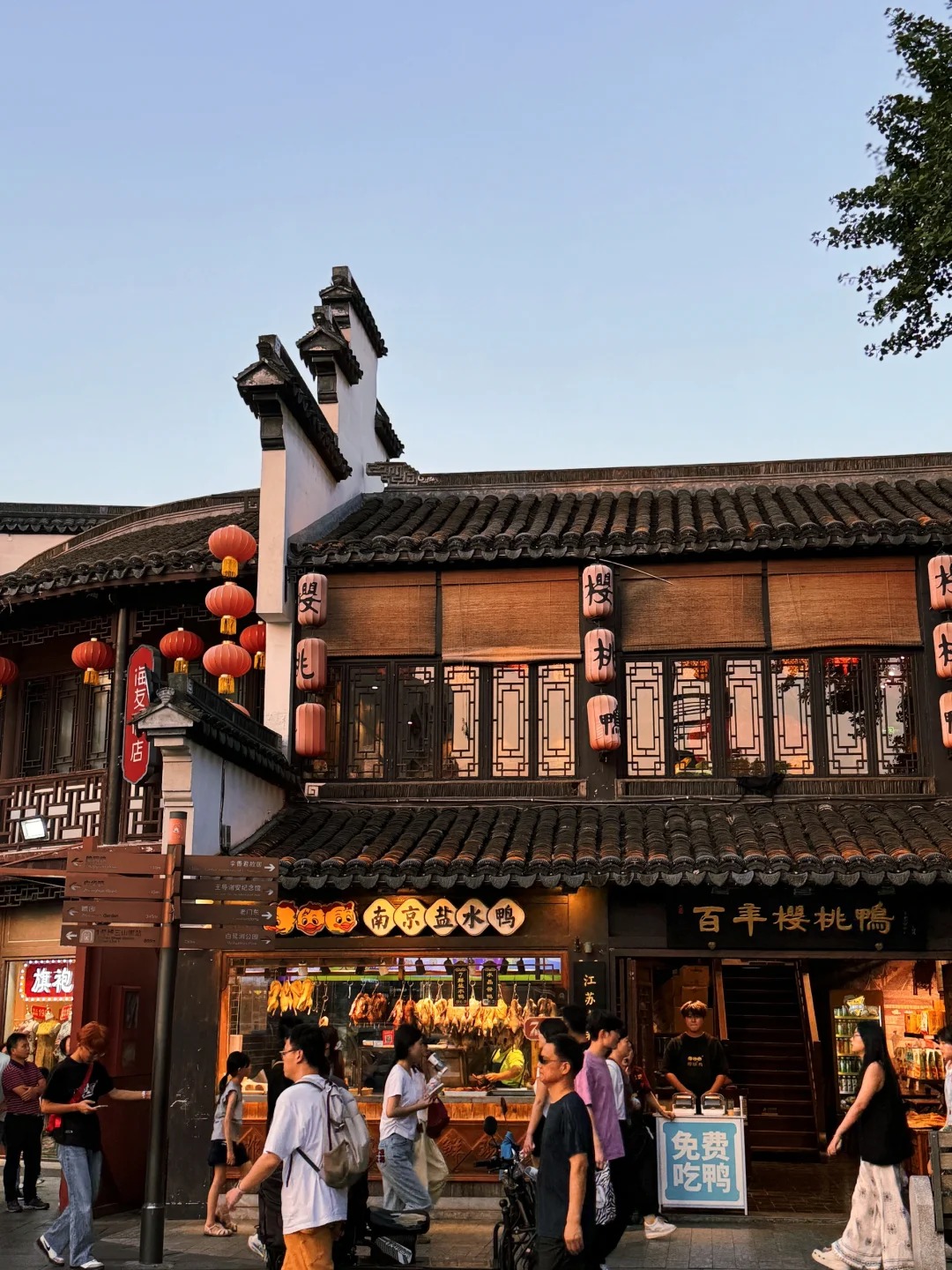
The real magic of Fuzimiao, I realized, is this perfect, unapologetic coexistence. It’s a vibrant marketplace that has grown organically around a scholarly shrine for centuries. It embodies a very Chinese practicality: one can pay respects to wisdom and philosophy, then immediately go enjoy the visceral pleasures of life—a bowl of savory duck blood vermicelli soup, a silly souvenir, a lively boat ride.
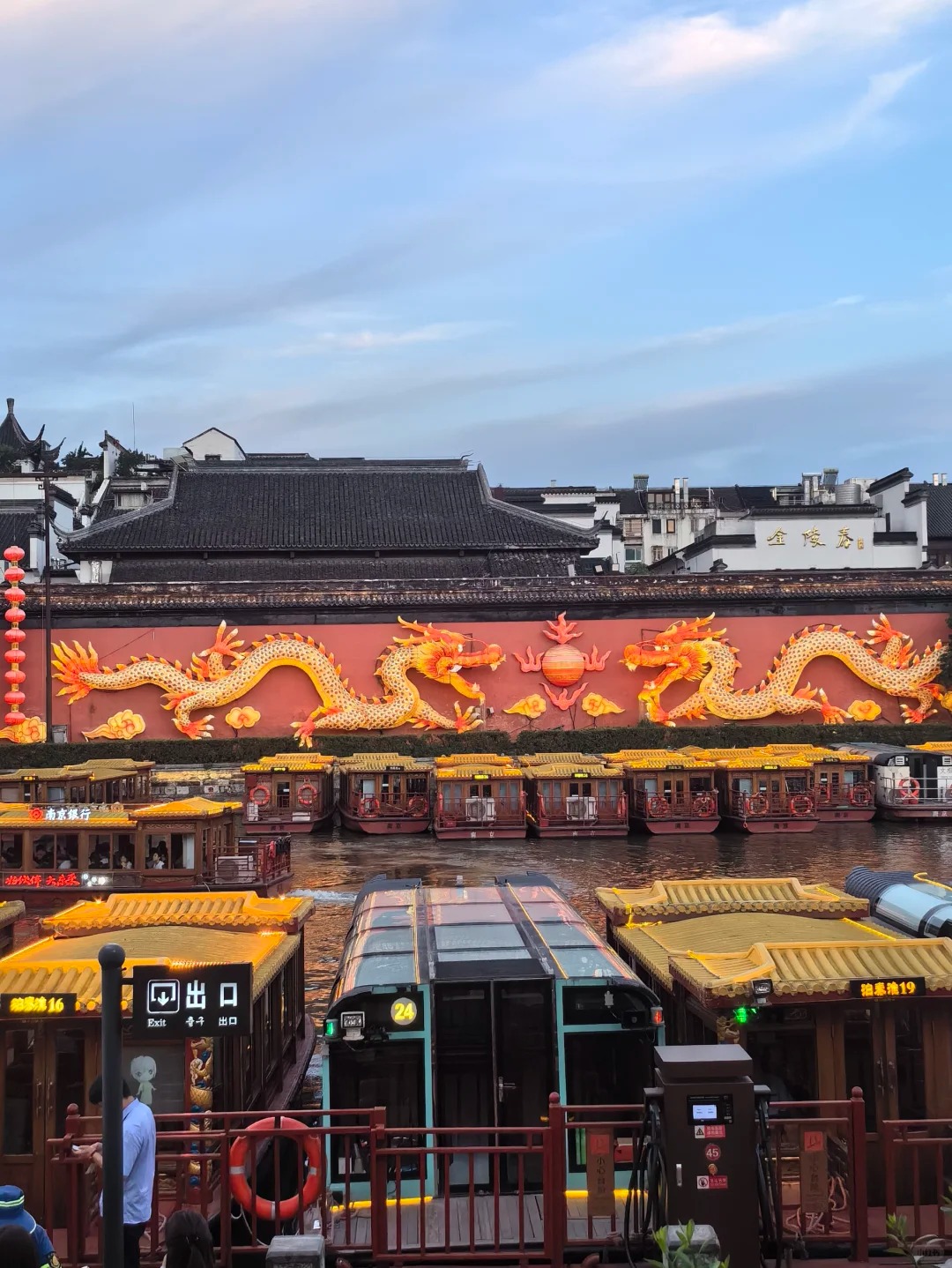
As dusk fell, the neon lights along the riverbank ignited, reflecting in the dark water like strings of fallen stars. The temple buildings were softly lit, glowing like lanterns of ancient knowledge. I sat on a riverbank step, my paper cone empty, listening to the two soundtracks of China—the timeless quiet of tradition and the joyful roar of the present—playing in perfect, dissonant harmony.