I first heard about Xidi from a travel photographer friend, who described it as “a village frozen in time.” As I drove along the winding road to the village, I wasn’t sure what to expect. But when Xidi came into view—rows of white-walled, black-tiled houses nestled between green hills, with a small river flowing through the center—I knew my friend was right. This was a place unlike any other, a village that had preserved its ancient charm for centuries.
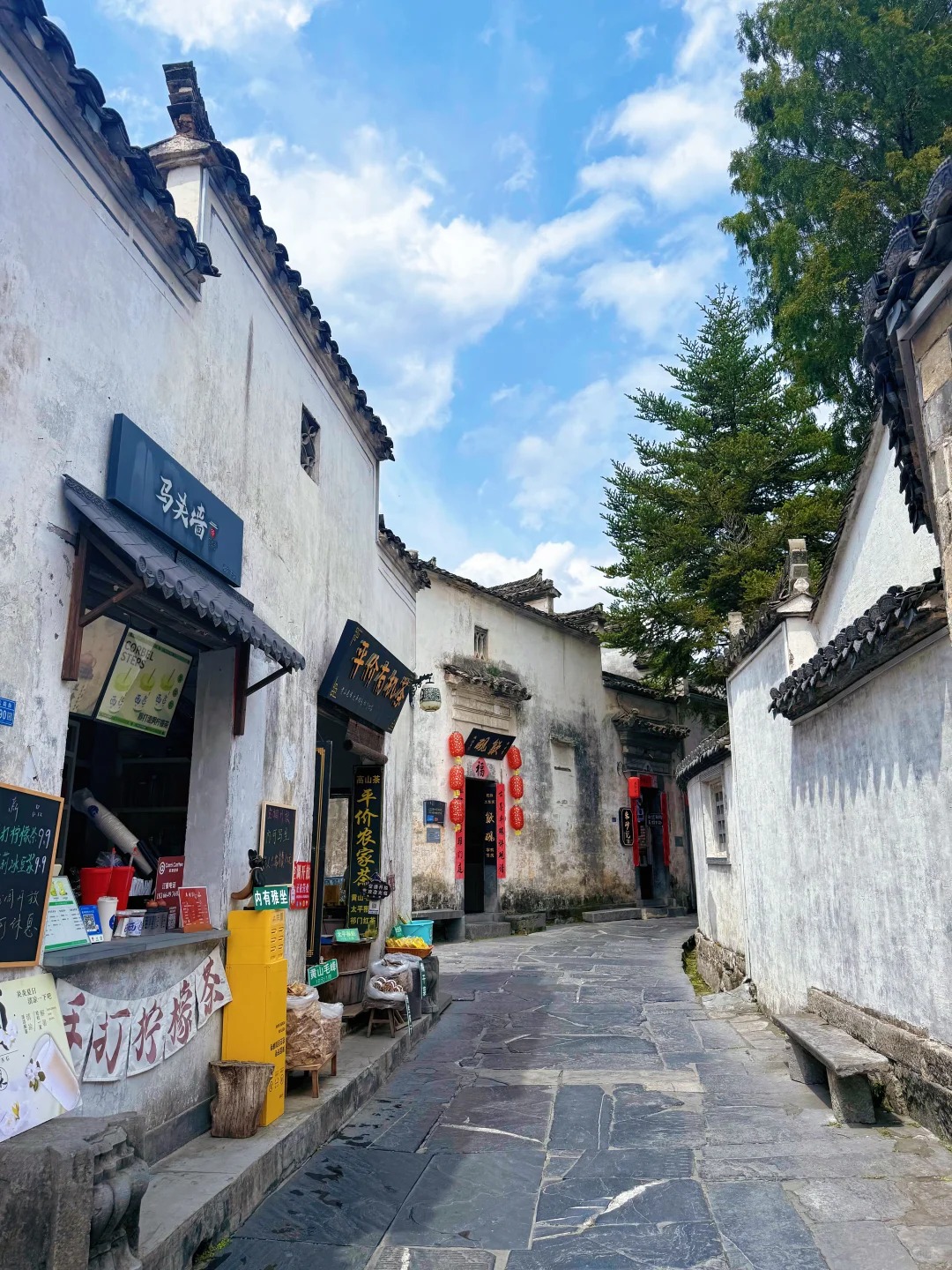
Xidi is a small ancient village located in Yixian County, Huangshan City, Anhui Province. It was built during the Northern Song Dynasty and has a history of over 900 years. The village is famous for its well-preserved Ming and Qing dynasty architecture, which is typical of Huizhou style. What makes Xidi special is that it’s not a reconstructed ancient village—it’s a living community, where over 1,000 locals still live and work. As I walked through the village’s narrow alleyways, I saw locals hanging laundry outside their houses, old men playing chess under the shade of ancient trees, and women selling handmade crafts at small stalls. This wasn’t a museum—it was a home.
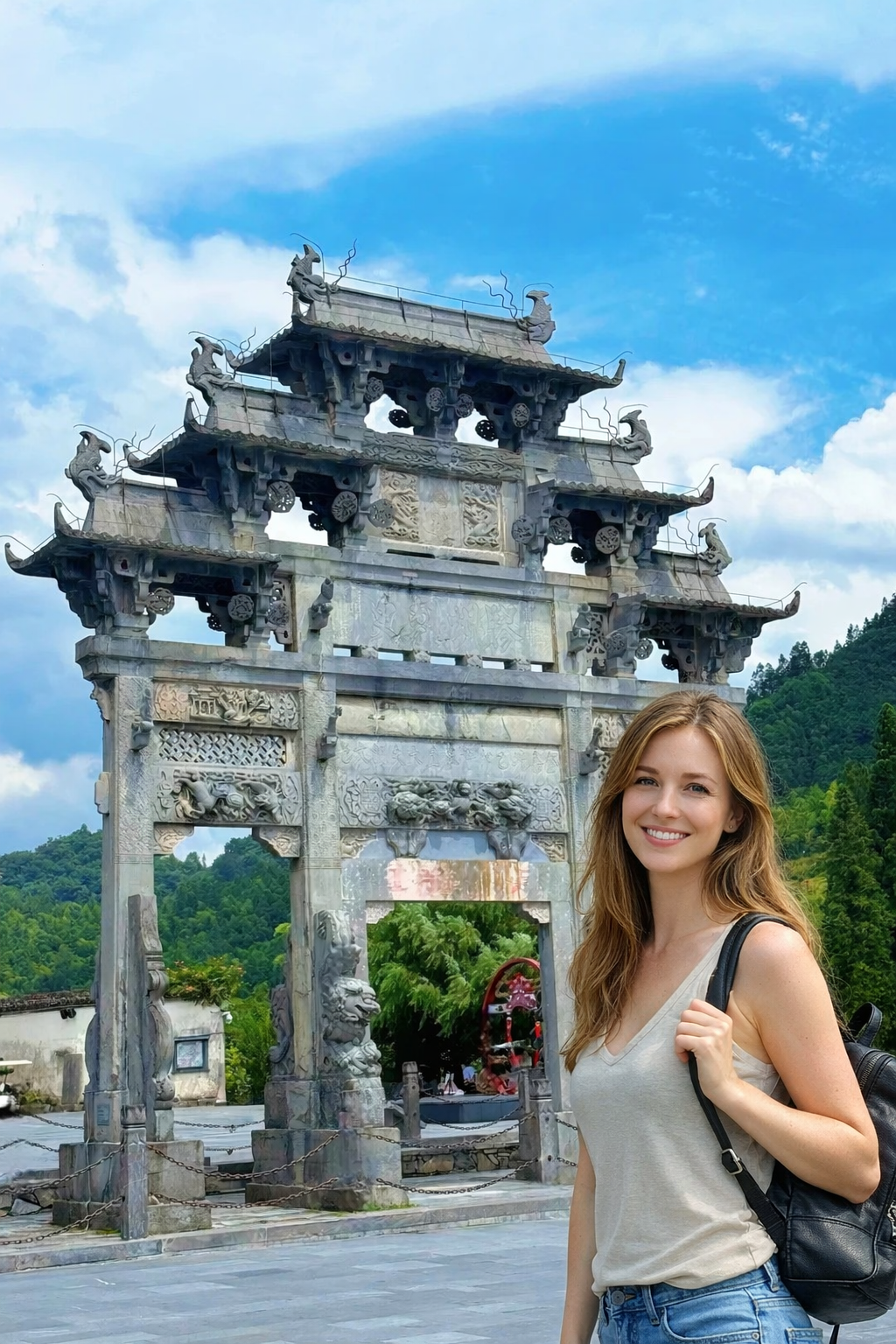
My first stop was the Memorial Archway of Hu Wenguang, which stands at the entrance of the village. Built during the Ming Dynasty, the archway is made of stone and is intricately carved with dragons, phoenixes, and other mythical creatures. It was erected to honor Hu Wenguang, a local official who served during the Ming Dynasty. I stood in front of the archway, admiring the craftsmanship, and a local guide told me that the archway has survived wars, floods, and earthquakes for over 400 years. “It’s a symbol of Xidi’s history and prosperity,” he said.
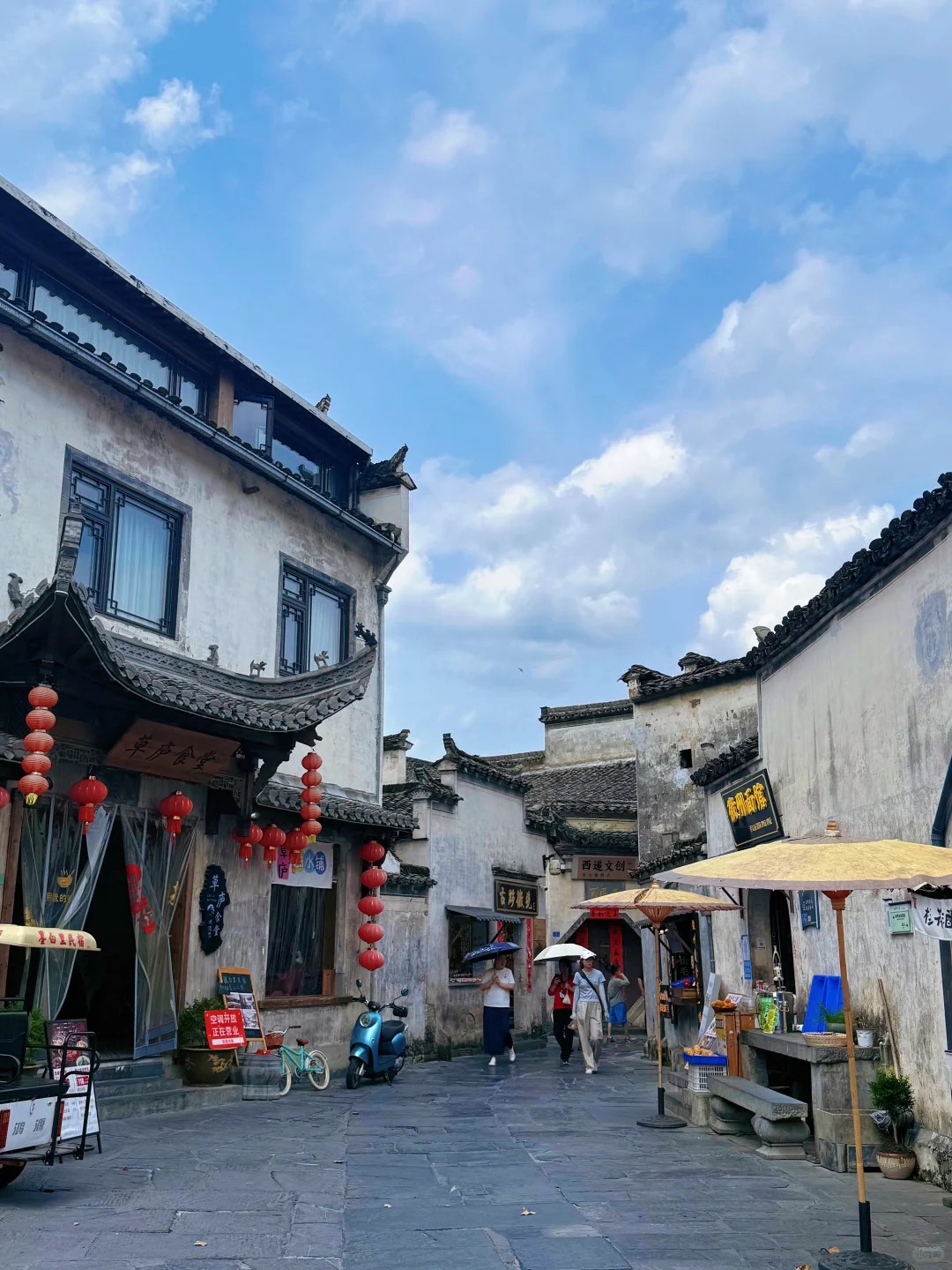
As I wandered deeper into the village, I visited several ancient residences. One of the most impressive was the Dafu Mansion, which was built in the 18th century by a wealthy Huizhou merchant. The mansion has a large courtyard with a garden, and the interior is decorated with intricate wood carvings and stone sculptures. The wood carvings, in particular, are stunning—depicting scenes from Chinese mythology, flowers, and birds. A descendant of the merchant still lives in part of the mansion, and she showed me around, explaining the history of the family and the mansion. “My ancestors built this mansion with hard work,” she said. “We’re proud to keep it alive.”
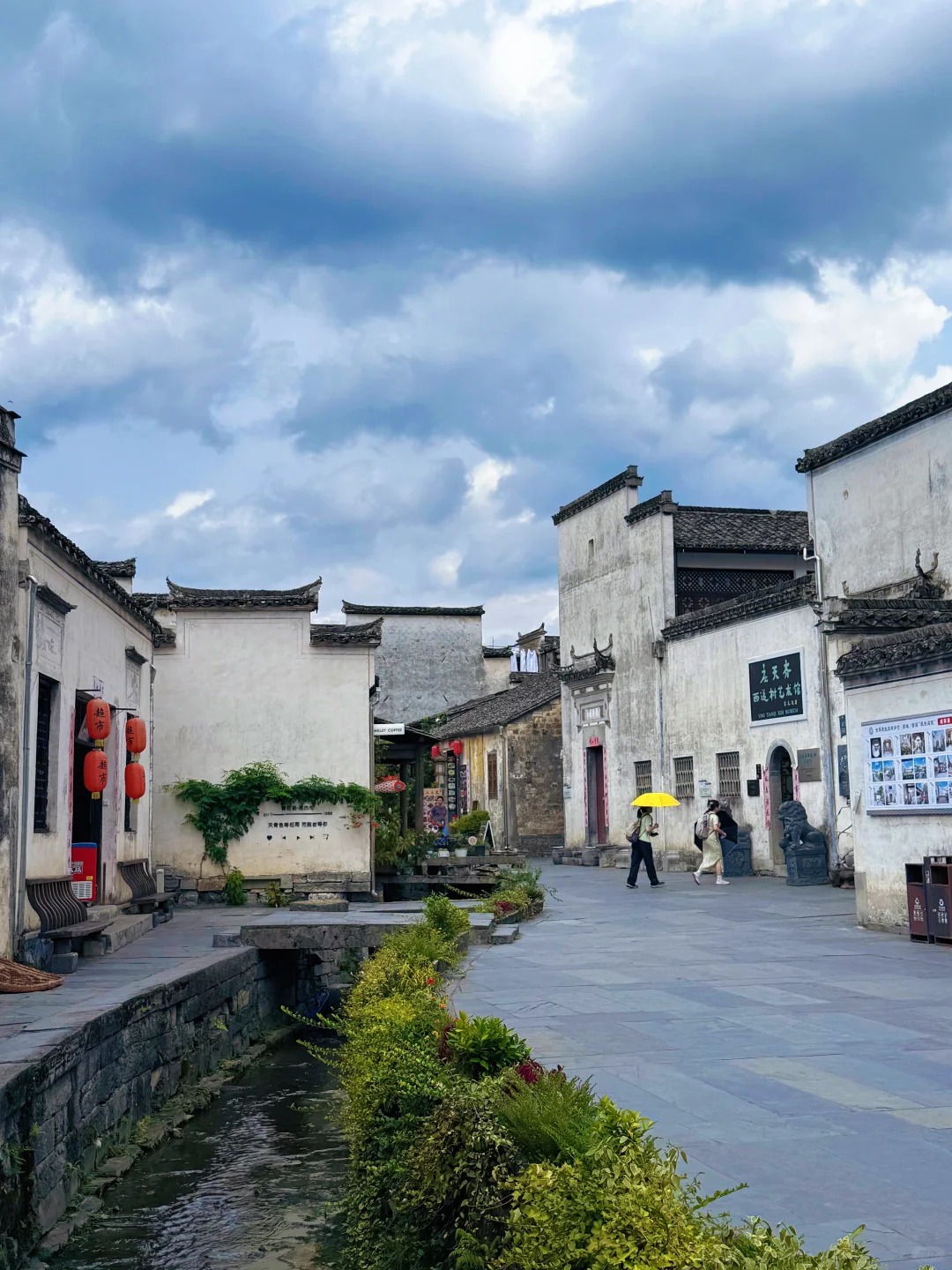
The village is crisscrossed by small alleyways and stone bridges. I walked along the river that runs through the center of the village, crossing small stone bridges that date back to the Qing Dynasty. The water was clear, and I could see fish swimming below. Locals were washing clothes in the river, a tradition that has been passed down for generations. I stopped to talk to an old woman who was washing clothes, and she told me that the river is the lifeblood of the village. “We drink its water, wash our clothes in it, and it irrigates our fields,” she said. She offered me a cup of tea, which she brewed with river water, and it was the freshest tea I’d ever tasted.
Lunch was at a small restaurant in the village, run by a local family. The owner cooked me Xidi’s famous dish—stir-fried bamboo shoots with dried shrimp. The bamboo shoots were fresh from the hills, and the dried shrimp added a salty, umami flavor. I also had braised tofu skin and a bowl of rice. The food was simple but full of flavor, and it was served in traditional blue and white porcelain bowls. The owner told me that all the ingredients were locally sourced—bamboo shoots from the surrounding hills, tofu from the village’s tofu workshop, and dried shrimp from the nearby river. “We cook the food that our grandparents cooked,” he said. “It’s the taste of Xidi.”
In the afternoon, I visited the Xidi Museum, which is located in a former ancient residence. The museum showcases the history and culture of Xidi, with exhibits on the village’s architecture, customs, and famous residents. I learned that Xidi was once a wealthy village, thanks to the Huizhou merchants who made their fortune trading tea, silk, and salt. The merchants brought back wealth to the village, building magnificent mansions and supporting local education. The museum also has a collection of ancient tools, clothing, and furniture, which gave me a better understanding of daily life in Xidi centuries ago.
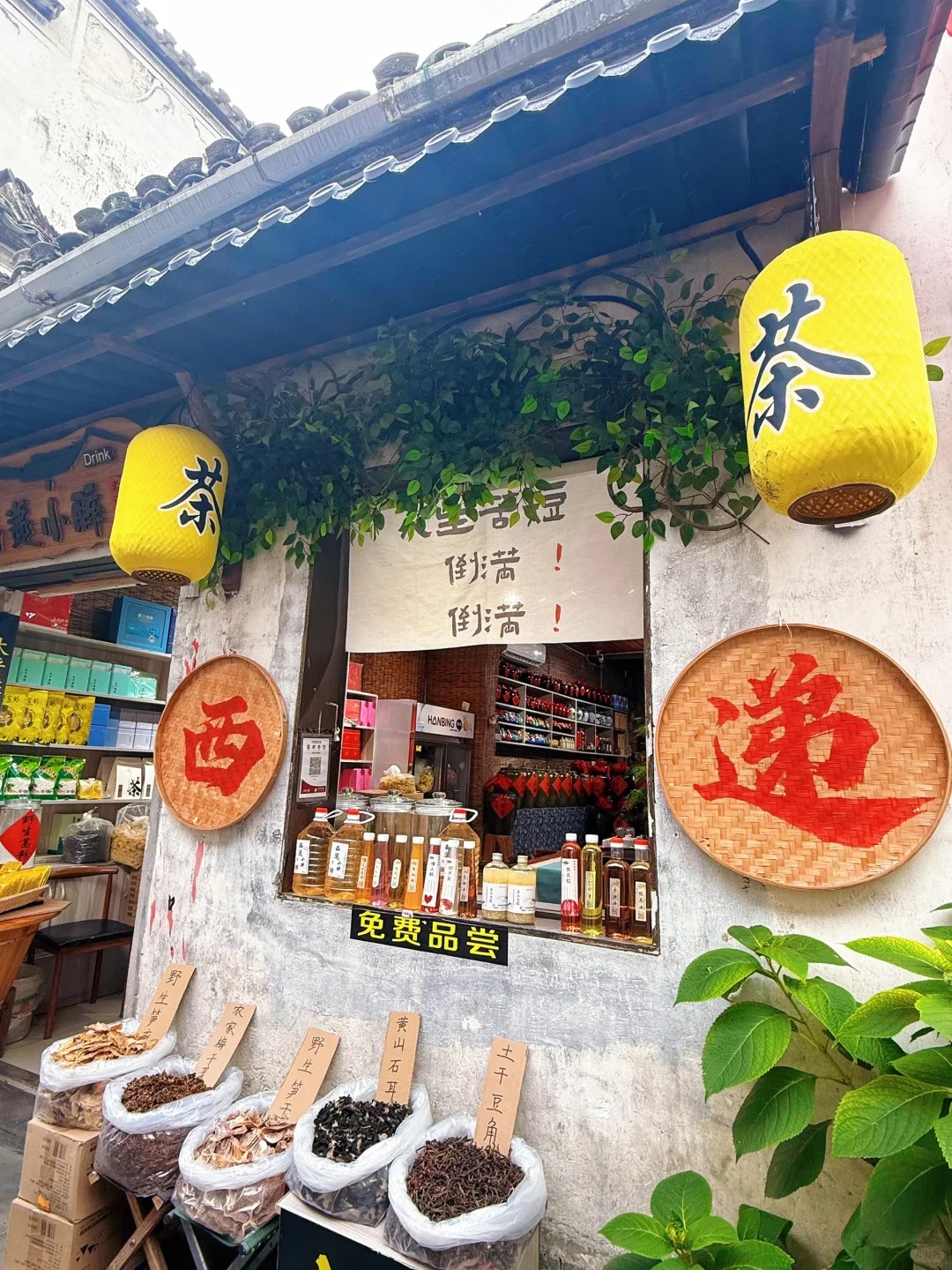
One of my favorite moments in Xidi was sitting in a small tea house in the center of the village. The tea house was built in the Qing Dynasty, and it has a wooden interior with a thatched roof. I ordered a cup of Huangshan Maofeng tea and sat by the window, watching the world go by. Locals came and went, chatting and laughing, and a group of elders played mahjong at a nearby table. The atmosphere was relaxed and peaceful, and I felt like I was part of the village. I stayed there for over an hour, just sipping my tea and enjoying the quiet.
As the sun began to set, I walked to the top of a small hill outside the village to get a panoramic view. From there, I could see the entire village—white walls and black roofs glowing in the golden light, the river winding through the center, and green hills surrounding it. It was a breathtaking view, and I took dozens of photos. A local farmer was working on the hill, and he stopped to talk to me. He told me that he’d lived in Xidi all his life, and he wouldn’t want to live anywhere else. “Xidi is a beautiful place, and the people are kind,” he said. “It’s my home.”
When I left Xidi that evening, I felt a sense of reluctance. I’d only spent a day in the village, but I’d grown to love its ancient charm, its friendly people, and its slow pace of life. Xidi isn’t just a tourist attraction—it’s a living, breathing village that has managed to preserve its traditions and way of life in a rapidly changing world. If you’re looking for a quiet, peaceful place to escape the hustle and bustle of the city, Xidi is the perfect destination. It will transport you back in time and leave you with memories that will last a lifetime.