The wind in Datong is different. It doesn’t just blow; it carries the grit of the northern grasslands, a reminder that you are standing on a frontier where China’s agrarian heartland once met the nomadic world. It was with this wind at my back that I arrived at the Yungang Grottoes, a place I had read about in history books but never truly understood until I saw it with my own eyes.
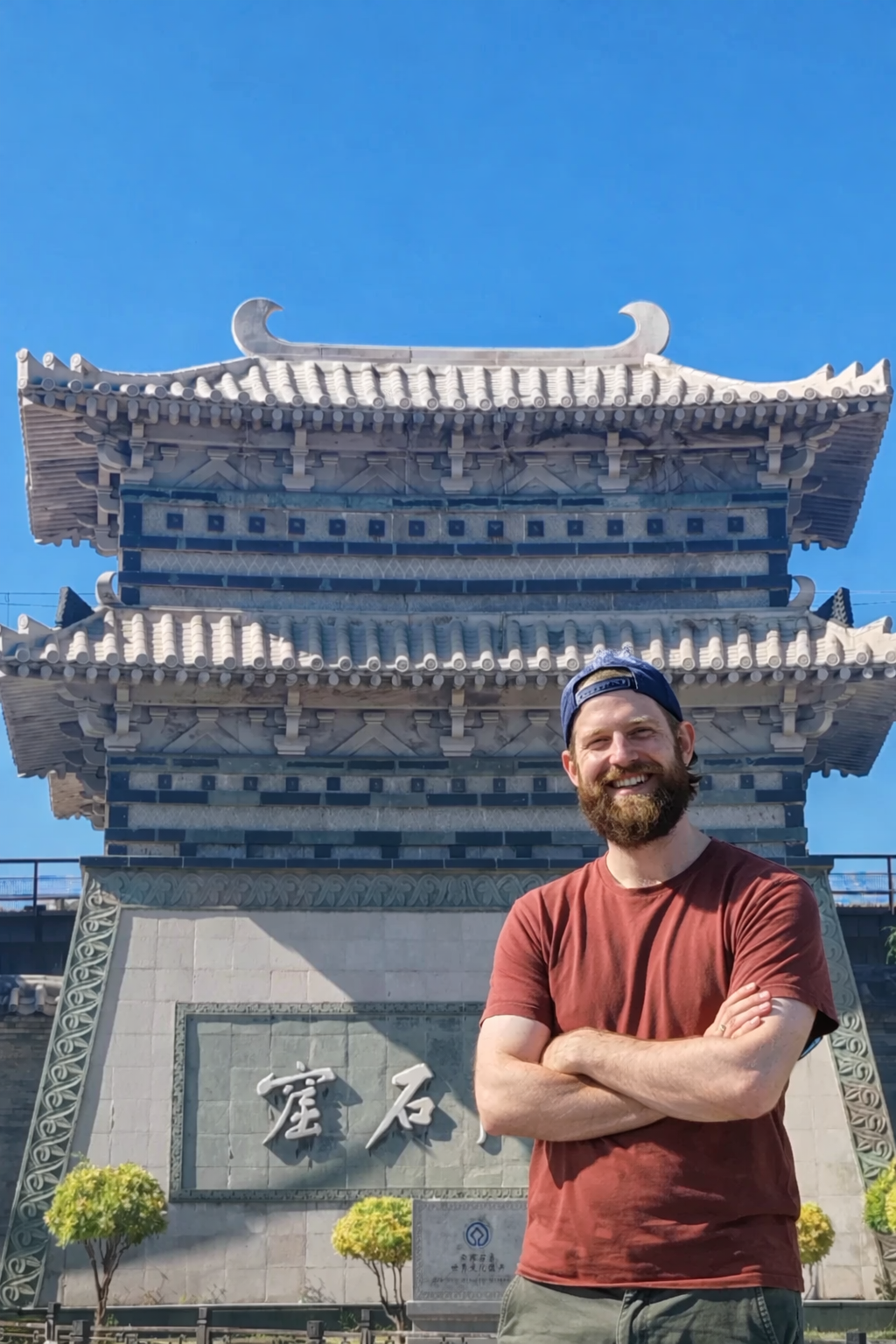
I remember walking through the parking lot, dodging aggressive vendors selling dried dates and souvenirs, feeling slightly skeptical. Another tourist trap, I wondered? But the moment I passed through the main gate and turned the corner toward the cliff face, all cynicism evaporated. There, staring down at me, was a colossal, weathered face carved directly into the sandstone. It wasn’t just a statue; it was a presence.
The Yungang Grottoes are not just a collection of caves; they are a narrative carved in stone, spanning a kilometer of cliffside. As a travel enthusiast who has trekked through much of China, I often feel overwhelmed by crowds. But here, amidst the vastness of these 1,500-year-old reliefs, I found a strange, quieting awe.
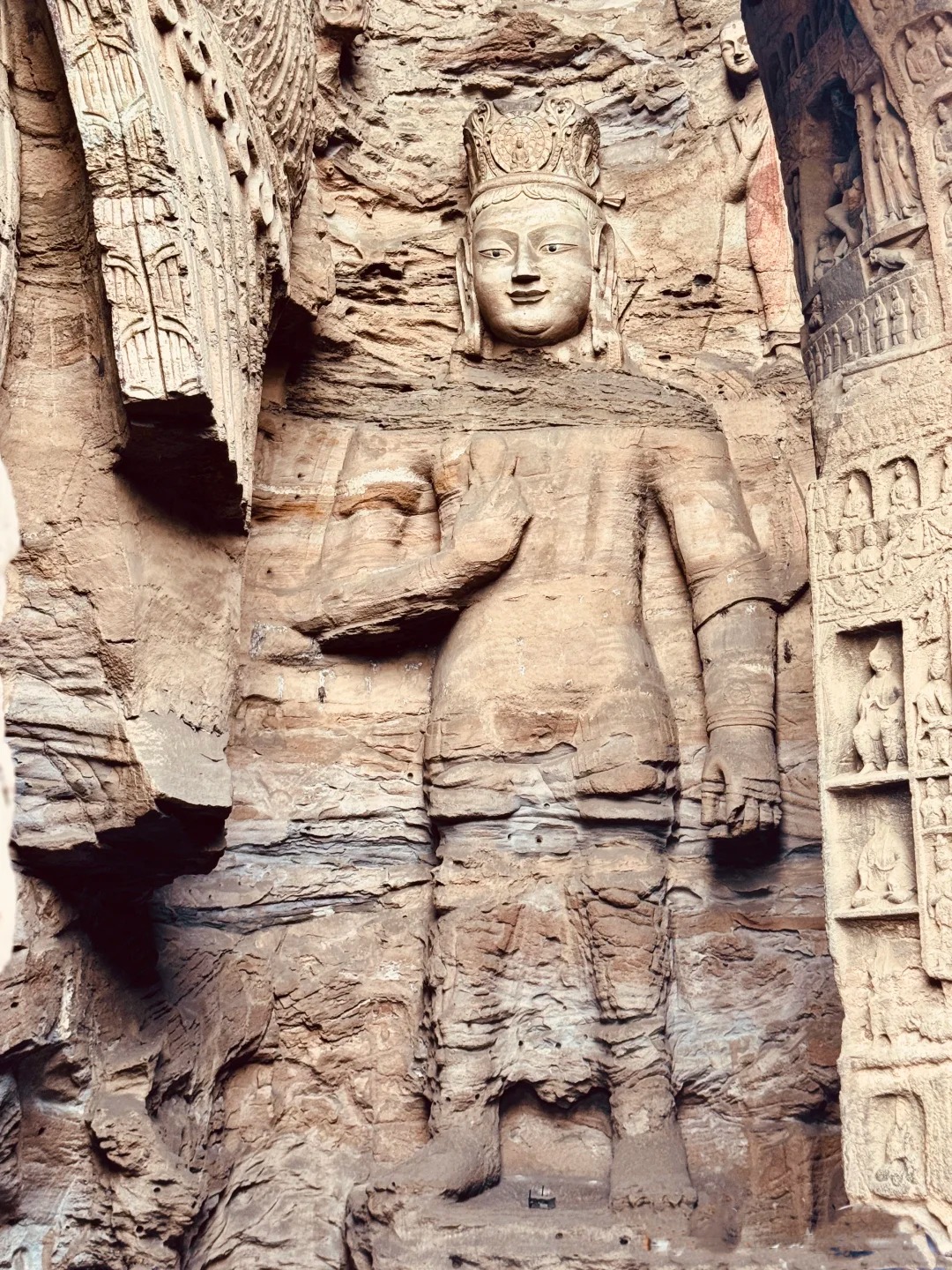
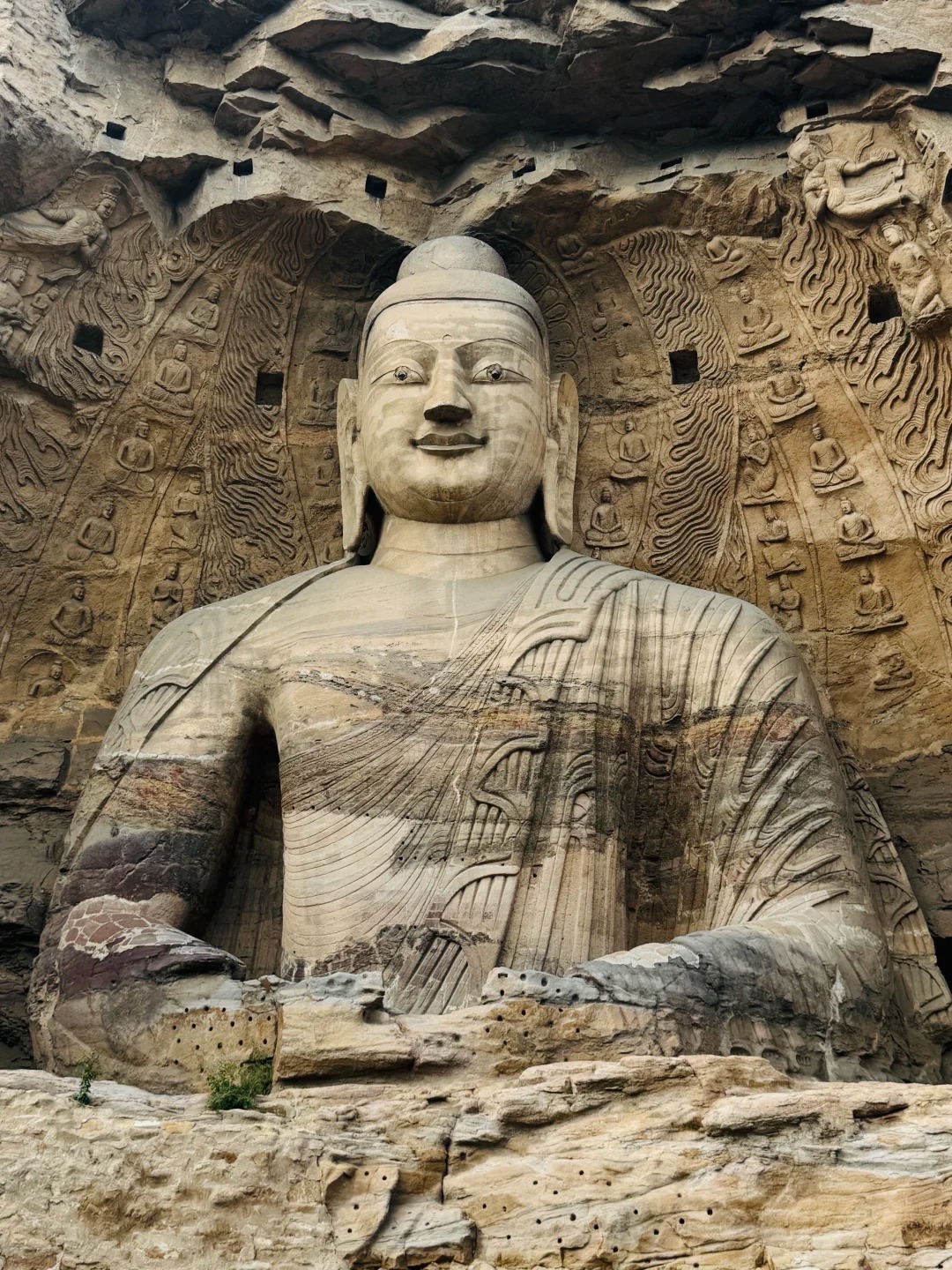
I started my walk at Cave 20, home to the Great Buddha that features so prominently in every travel brochure. Standing at 13.7 meters tall, he represents the transition of art styles—from the Indian-influenced Gandhara style to something distinctly Chinese. I stood there for a long time, just looking at his facial features. The guidebook mentioned that he has broad shoulders and a strong, Western face, a hallmark of the Northern Wei Dynasty’s openness to Central Asian influences. But what the book didn’t convey was the serenity in his eyes. Despite the erosion—parts of his nose and lips worn smooth by time—that expression of deep, meditative calm remains intact.
Moving deeper into the complex, I entered the caves with painted ceilings. This was where the real magic happened for me. Caves 5 through 13 are the architectural marvels. Stepping into Cave 5 felt like entering a different dimension. The air inside was cool and smelled of ancient dust and incense. The sheer scale of the Buddha inside, the largest in the complex at 17 meters, is humbling. I watched as an elderly woman in a thick padded jacket knelt before the statue, her lips moving in silent prayer. It was a scene that hasn’t changed much in fifteen centuries. The devotees change, but the devotion remains.
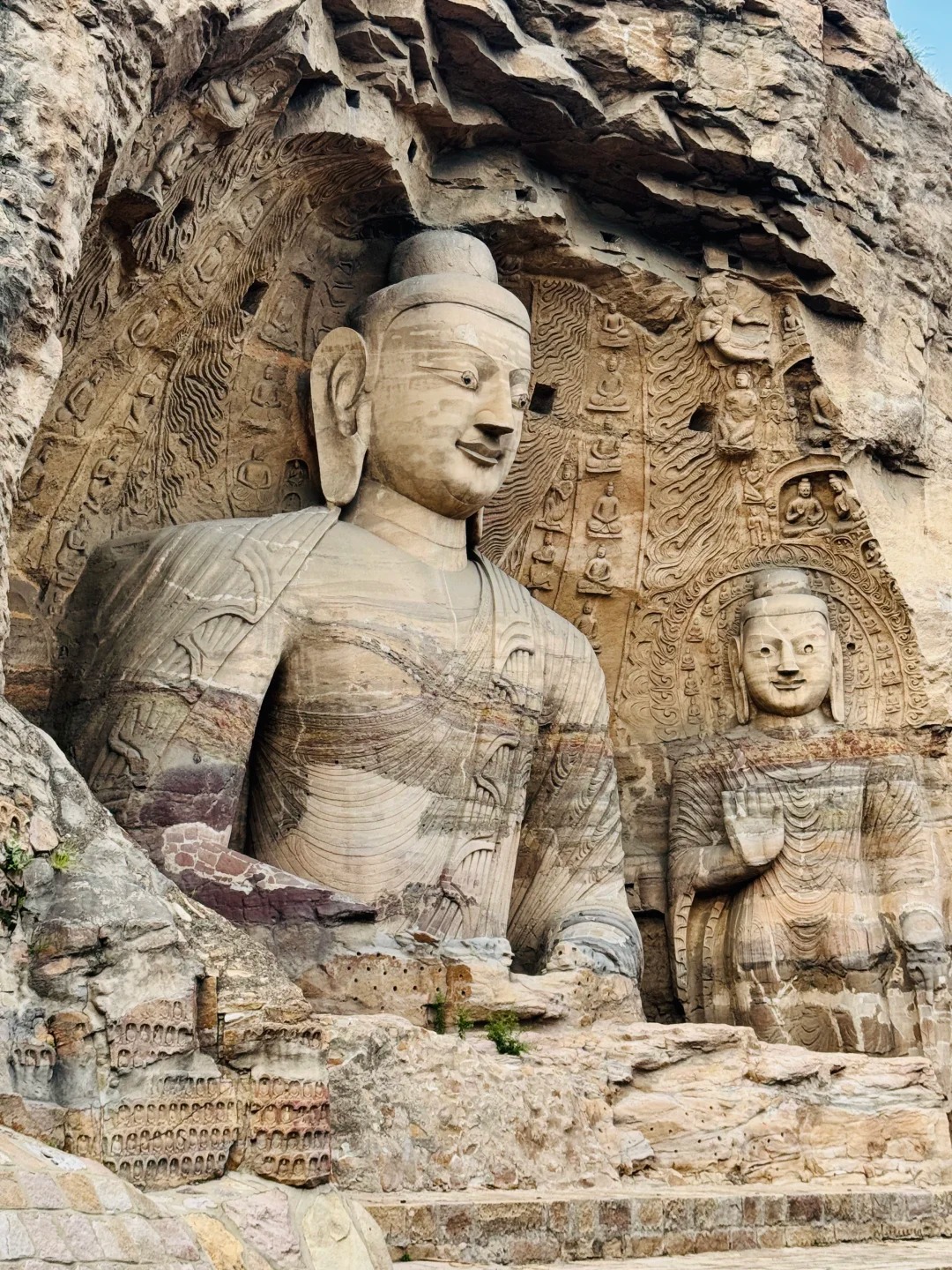
What struck me most about Yungang was the color. We often imagine ancient statues as plain stone, grey and solemn. But here, traces of original pigments—red cinnabar, blue lapis lazuli, green malachite—still cling to the walls and statues in the deeper recesses of the caves. In Cave 12, I saw a three-story wooden pavilion built into the rock face. Inside, the carvings are so intricate it’s hard to believe they were made with chisels and hammers. The musicians carved into the pillars, playing flutes and drums, seem frozen in mid-performance. I found myself listening, half-expecting to hear the music.
I sat on a stone bench near Cave 9, taking a break. A local guard, seeing me catching my breath, came over to chat. He told me about the restoration efforts, how the sandstone here is soft and susceptible to pollution. “We are fighting a war against time,” he said, pointing to the cracks in a nearby Bodhisattva. It made me appreciate the view even more. What I was seeing wasn’t just art; it was a survivor.
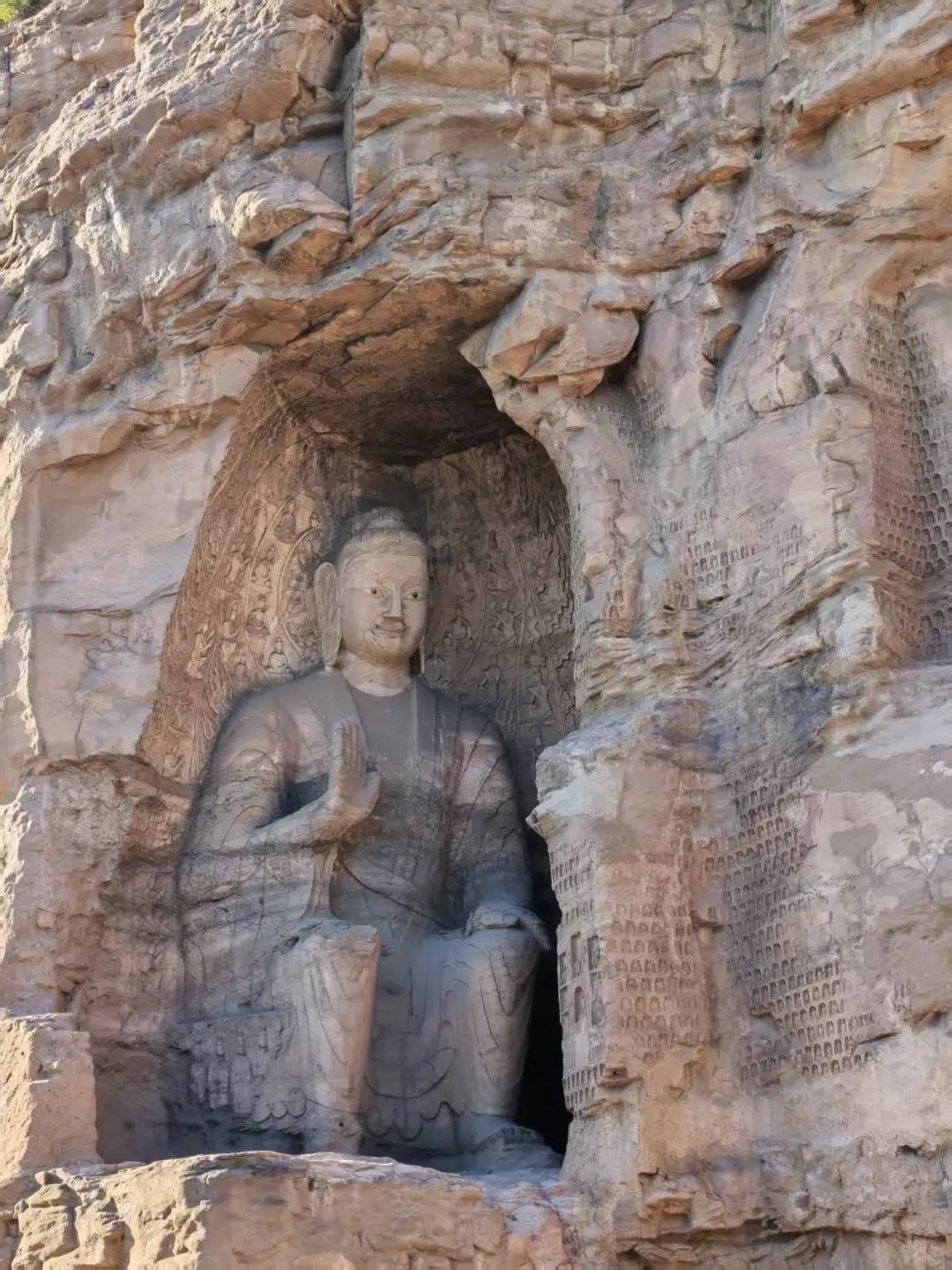
Later in the afternoon, the light hit the cliffside at a slant. I highly recommend visiting late in the day. The setting sun turns the golden sandstone into a fiery orange, and the statues seem to glow from within. It was then that I walked to the far end of the complex, where the smaller caves are located. These are less visited, often overlooked by tour groups rushing back to their buses. I found a small niche featuring a smiling Buddha, barely waist-high. His grin was mischievous, almost human. It felt like a secret joke shared between the sculptor and me, across the centuries.
Leaving Yungang, I felt a heavy sense of gratitude. We live in a world of fleeting digital images, but here is something permanent. These caves were dug by monks and artisans who believed in something greater than themselves. They didn’t sign their work. They didn’t seek fame. They just wanted to create a paradise on earth.
If you are planning a trip to China, do not stick to the coast. Take the high-speed train to Datong. Let the wind mess up your hair. Stand before the giant Buddha and let the silence wash over you. You aren’t just looking at rocks; you are looking at the soul of an empire.