When you type "Great Wall of China" into a search engine, you are usually greeted with images of Badaling: perfectly paved stones, handrails, cable cars, and a sea of tourists bobbing like a colorful tide between the battlements. That is certainly a Great Wall. But as your cultural companion who has traced these fortifications from the Yellow Sea to the Gobi Desert, I can tell you that is not the Great Wall that steals your soul.
My "Great Wall of China tour" wasn't booked through a kiosk in a hotel lobby. It began with a rumpled map, a pair of worn-out hiking boots, and a driver named Mr. Zhang who spoke no English but communicated perfectly through the universal language of cigarette offers and enthusiastic pointing. We were headed to Jinshanling, and further on, to the unrestored, "wild" sections of Gubeikou.
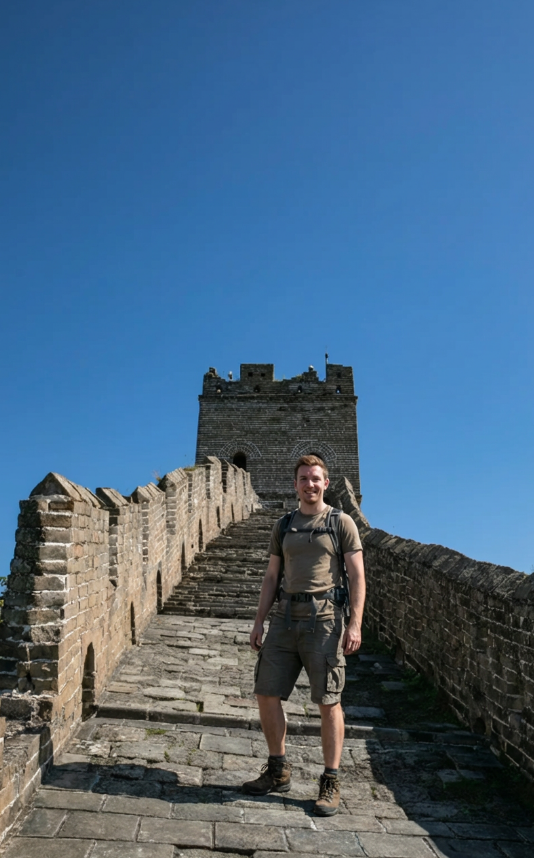
The Drive to the Edge of History
Leaving Beijing is always a process of shedding layers. You shed the ring roads, then the high-rises, and finally the smog. About two hours northeast of the capital, the landscape begins to buckle. The Yanshan Mountains rise up—jagged, brown, and unforgiving.
I remember the moment I first saw it that day. It wasn't a grand reveal. It was a glimpse through the trees—a ribbon of pale stone stitching two peaks together. "Changcheng," Mr. Zhang grunted, pointing with a lit cigarette. The Long Wall.
We arrived at the trailhead of Jinshanling just past noon. Unlike the frenetic energy of the city, here, the air was still. It smelled of dry pine needles and dust. I tightened my backpack straps, filled with water bottles and jianbing (a savory Chinese crepe) I’d bought from a street vendor that morning, and began the ascent.
The Stairmaster of Dynasties
Let’s dispel a myth: walking the Great Wall is not a walk; it is a climb. The steps at Jinshanling are not uniform. Some are ankle-high; others require you to hoist your knee to your chest. They were built to halt Mongol cavalries, not to accommodate leisurely strollers.
As I climbed the first watchtower, my thighs burned, and my breath came in short, sharp gasps. But then I stepped out onto the rampart, and the pain vanished, replaced by a vertigo of awe.
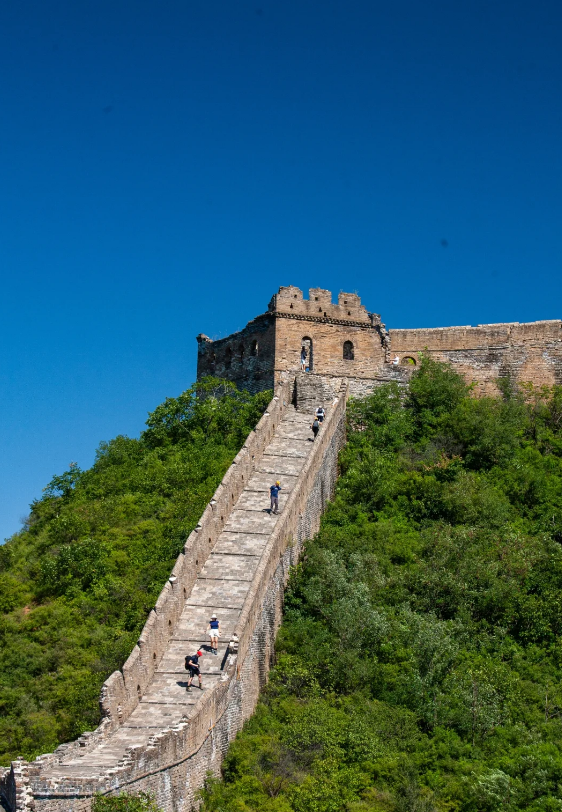
The wall stretched out to the horizon like the spine of a sleeping dragon, undulating over ridges that seemed impossible to conquer. To my left, the sheer drop-off into Mongolia; to my right, the protective embrace of China proper. I ran my hand over the bricks. They were rough, cool to the touch, and etched with markings. Some bricks bore Chinese characters—names of the kilns or military units that made them over 400,000 years ago during the Ming Dynasty. Touching them felt like shaking hands with a ghost.
The Wild Wall: Where Silence Speaks
I hiked for hours, moving from the restored sections of Jinshanling toward the wilder, crumbling grandeur of Gubeikou. The crowds, which were thin to begin with, evaporated completely. For three hours, I was the only human being in sight.
This is the magic of a curated "Great Wall of China tour" that focuses on hiking rather than sightseeing. You hear the wind whistling through the arrow slits. You hear the cry of hawks circling the thermal currents. You hear your own footsteps echoing on stones that have borne the weight of sentries, soldiers, and emperors.
I reached the "General’s Tower" late in the afternoon. The roof had long collapsed, leaving the interior open to the sky. Nature was reclaiming this fortress; shrubs grew from the mortar, and wildflowers bloomed in the corners where archers once stood.
I sat on the edge of a crumbling wall, my legs dangling over a drop of several hundred feet, and unwrapped my jianbing. It was cold now, the crispy wonton cracker inside slightly soggy, but the spicy bean paste and cilantro flavor exploded in my mouth. It was the best meal I had eaten in months. There, eating a street snack atop a world wonder, I watched the light change.
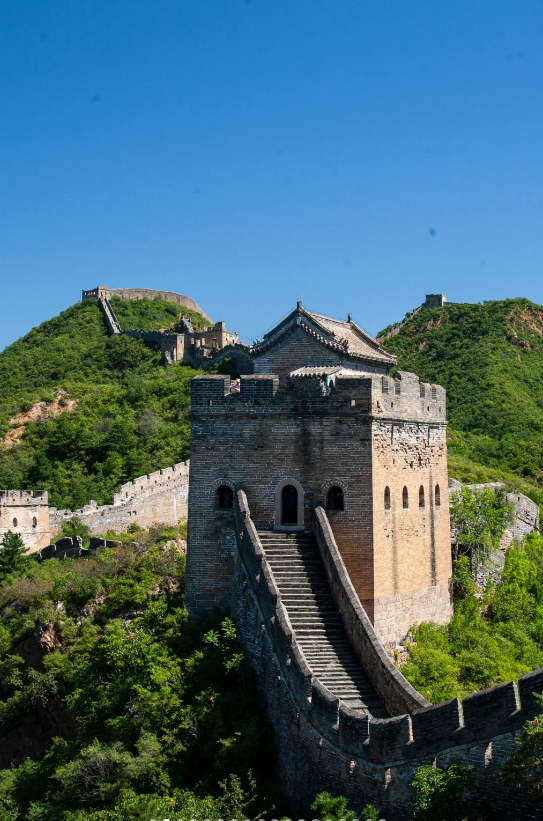
A Sunset of Gold and Blood
The sunset on the Great Wall is not soft. It is dramatic and violent. As the sun dipped below the jagged peaks, the light turned the wall from grey to gold, then to a deep, bruised purple. The shadows of the watchtowers stretched long across the valleys, looking like the teeth of a giant saw.
In that fading light, the wall didn't look like a tourist attraction. It looked like what it was: a scar on the land, a monument to fear and determination. I thought about the soldiers who were stationed here centuries ago—men from the warm rice paddies of the south sent to freeze on these northern ridges. They watched this same sunset, perhaps missing their families, perhaps fearing the darkness.
I didn't just see the view; I felt the weight of it. The wind picked up, biting through my fleece jacket, a reminder of the harsh reality of life on the frontier.
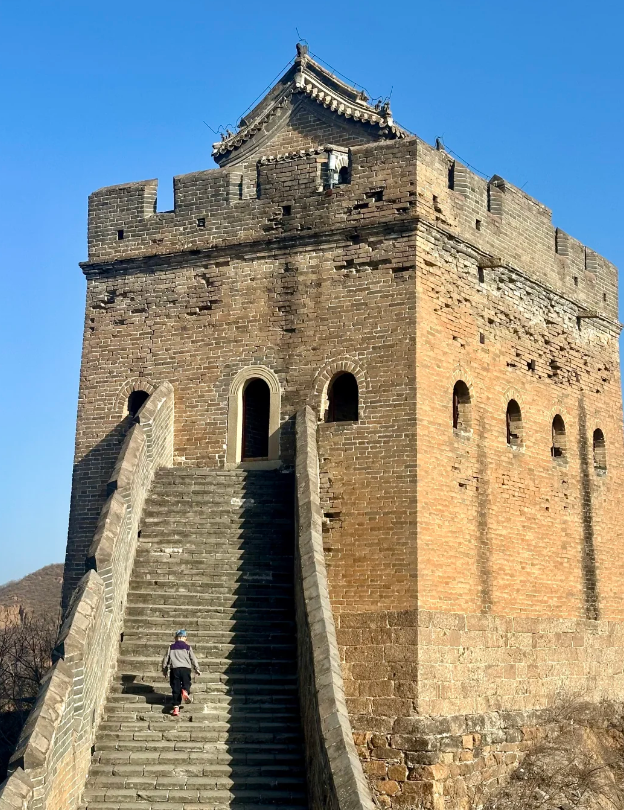
The Descent
Walking down in the twilight required focus. My legs were jelly, vibrating with exhaustion. When I finally reached the parking lot, Mr. Zhang was waiting, the heater in his car blasting. He looked at me, sweaty, dusty, and grinning like a fool.
"Hao?" (Good?) he asked.
"Hen hao," (Very good), I replied.
A "Great Wall of China tour" can be a quick photo op, or it can be a pilgrimage. If you are willing to sweat, to climb until your lungs burn, and to seek out the silence beyond the ticket gates, it will offer you something profound. It offers you a perspective on human scale—how small we are, and yet, what colossal things we can build.
So, when you plan your trip, skip the cable car. Take the hike. The dragon is waiting for you.