As I stood at the foot of Mutianyu Great Wall at dawn, the air was crisp and sharp, carrying the faint scent of pine and damp earth. The first light of day had just brushed the tops of the mountains, turning the stone bricks of the wall from a deep grey to a warm gold, and for a moment, I felt as if I were the only person in the world—no crowds, no chatter, just the quiet hum of nature and the weight of centuries pressing gently against my chest.
I’d dreamed of this moment for years. Not the “checkmark” Great Wall experience, the one you see in postcards with hordes of tourists jostling for photos, but something quieter, more intimate. I wanted to feel the wall, not just see it—to trace the cracks in the bricks, listen to the wind as it whipped through the watchtowers, and try to imagine the lives of the soldiers who once stood here, guarding a empire’s borders. So I’d chosen to visit on a weekday in early autumn, when the crowds thinned and the leaves were just starting to turn from green to burnished red and orange.
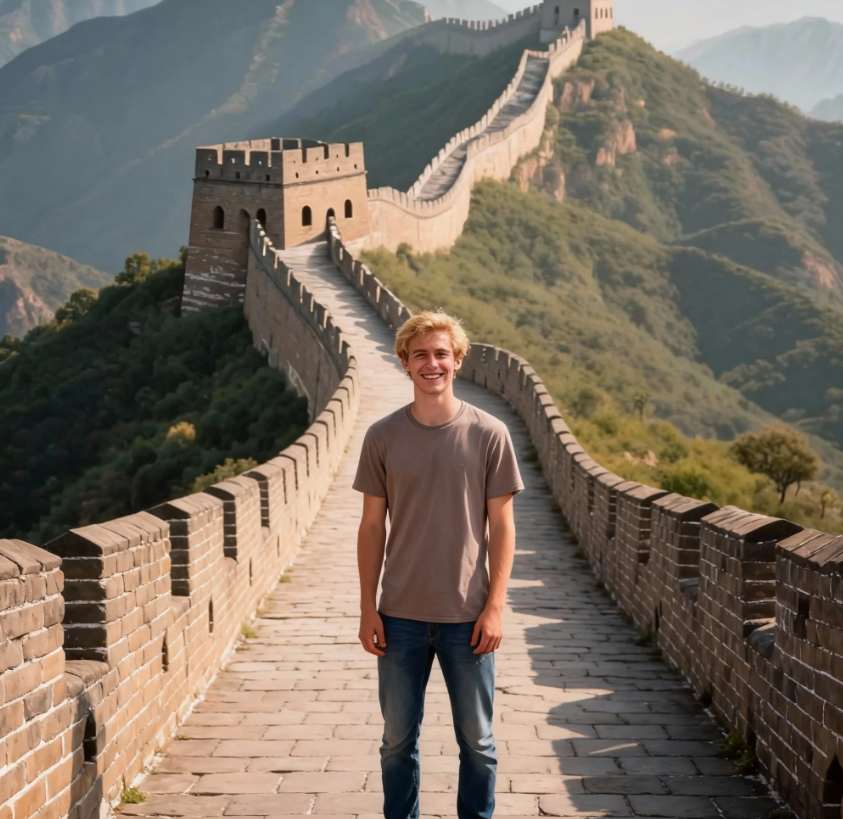
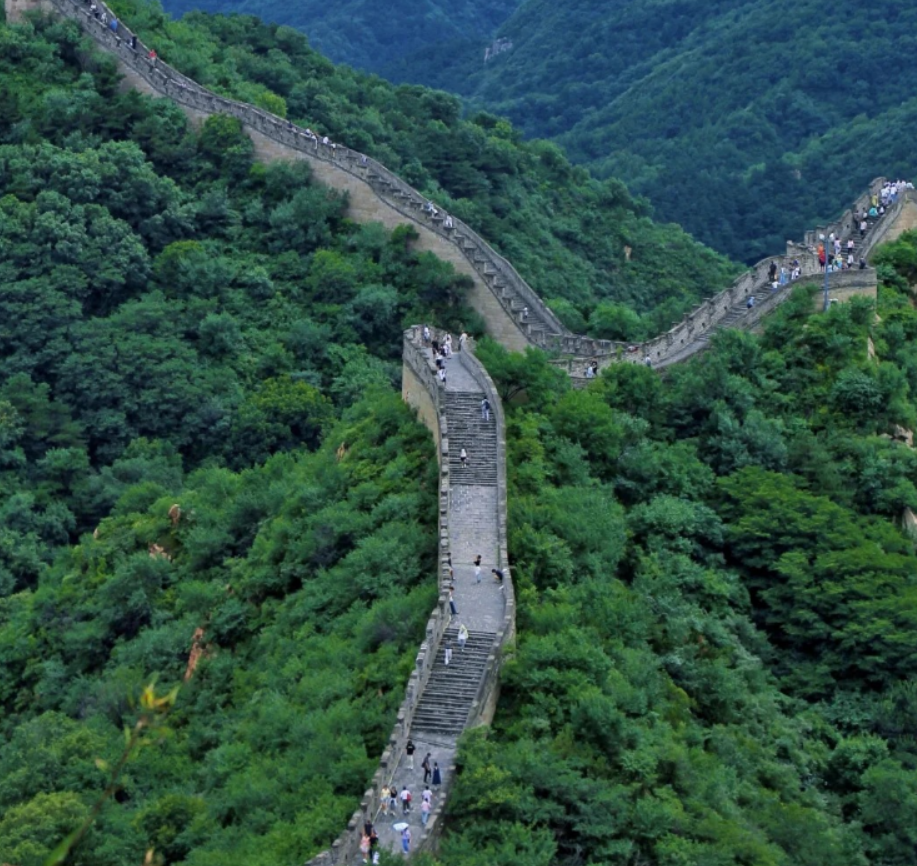
My guide, a local man named Li who’d grown up in the village at the base of the wall, had warned me: “The Great Wall isn’t just a path—it’s a story. Walk slowly, and it will tell you things.” I nodded, but I didn’t fully understand what he meant until I took my first step onto the uneven stones. The path sloped upward immediately, and my boots crunched on loose gravel and fallen pine needles. To my left, the mountains stretched out in layers, their peaks shrouded in a thin mist; to my right, the wall snaked along the ridgeline like a stone dragon, its body rising and falling with the contours of the land.
I paused to catch my breath, leaning against a weathered merlon (the solid upright part of a crenellation). The stone was cool beneath my palm, smooth in places from decades of hands and weather, rough in others where the mortar had crumbled away. I closed my eyes and listened: the chirp of crickets, the rustle of leaves in the breeze, the distant call of a bird of prey. There was no sound of cars, no voices—just the quiet of the mountains and the wall, a silence that felt alive, not empty. This, I thought, is what it must have felt like for the soldiers who patrolled here centuries ago. They weren’t just guarding a wall; they were guarding a way of life, a connection to something bigger than themselves.
Chapter 1: The Watchtower at Sunrise – A Moment of Stillness
After climbing for about an hour, I reached a watchtower that jutted out over a valley, its roof half-crumbled but its stone walls still sturdy. I climbed the narrow, spiral staircase—each step worn hollow at the center from centuries of use—and emerged onto the upper platform. The view took my breath away.
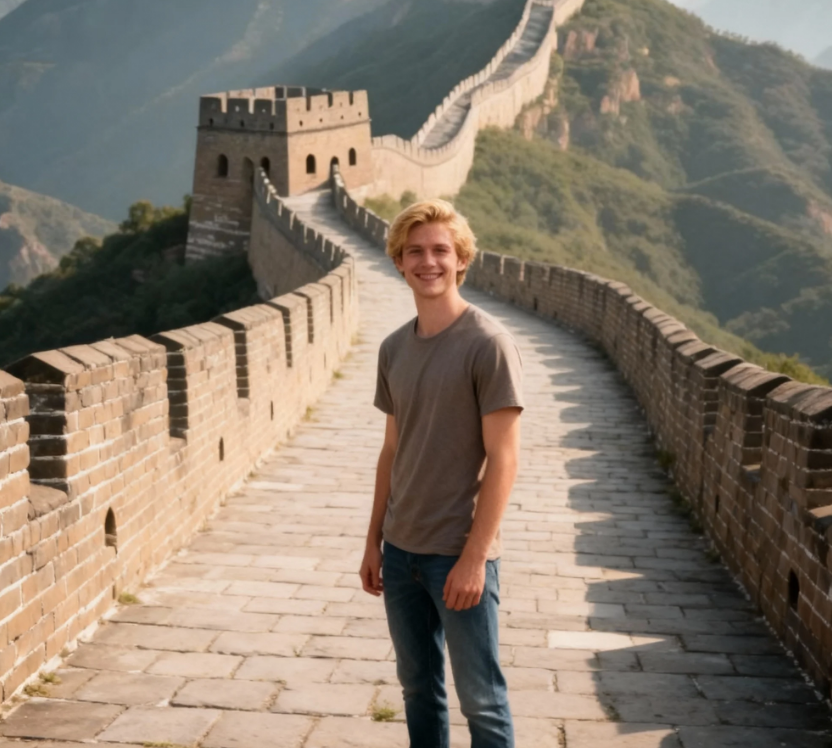
The sun had fully risen now, casting long shadows across the valley below. The Great Wall stretched out in both directions, disappearing into the misty distance, and the mountains were ablaze with autumn color: fiery maples, golden ginkgoes, deep green pines. I could see tiny villages nestled in the valleys, their rooftops curling upward like the wings of birds, and a river winding through the landscape, glinting like silver in the sunlight.
I sat down on a stone ledge, pulling my jacket tighter against the breeze, and let myself just *be*. For the first time in months, I wasn’t checking my phone, wasn’t rushing to the next thing, wasn’t worrying about deadlines or to-do lists. I was just present, in this moment, with this wall that had stood for over 2,000 years.
As I sat there, I thought about the people who built this. Not just the emperors who ordered it, but the millions of laborers—farmers, soldiers, prisoners—who hauled these massive stones up steep mountains with nothing but their hands and simple tools. Some died here, their bones buried beneath the very bricks I was sitting on. It was a sobering thought, but not a sad one. Instead, it felt like a connection—a reminder that we are all part of something larger, that our lives, no matter how small, are threads in the tapestry of history.
A gust of wind picked up, carrying with it the faint sound of a flute from the village below. The melody was slow and mournful, and for a moment, I could almost hear the voices of the past: the chatter of soldiers sharing a meal, the creak of wooden carts hauling supplies, the cries of mothers saying goodbye to sons who would never return. But then the wind died down, and the moment passed, leaving only the quiet and the sun on my face.
I stood up, brushing off my pants, and looked out at the wall again. It wasn’t perfect—parts of it were crumbling, overgrown with ivy, scarred by time and war—but that was part of its beauty. It was a living monument, not a frozen relic. It had seen empires rise and fall, wars fought and won, generations born and died. And here I was, a traveler from a faraway country, adding my own small footstep to its story.
Chapter 2: The Midday Climb – Struggle and Wonder
By midmorning, the mist had burned off, and the sun was high in the sky, warm enough to make me shed my jacket. The path grew steeper, and the stones more uneven—some were loose, others slick with moss, making each step a careful choice. I’d been walking for about three hours now, and my legs ached, my lungs burned, but I didn’t want to stop. Every turn revealed a new view, a new detail that made me gasp: a patch of wild chrysanthemums growing from a crack in the wall, a carving of a dragon (faded but still recognizable) on a watchtower pillar, a pile of ancient arrowheads that Li told me were left by soldiers during the Ming Dynasty.
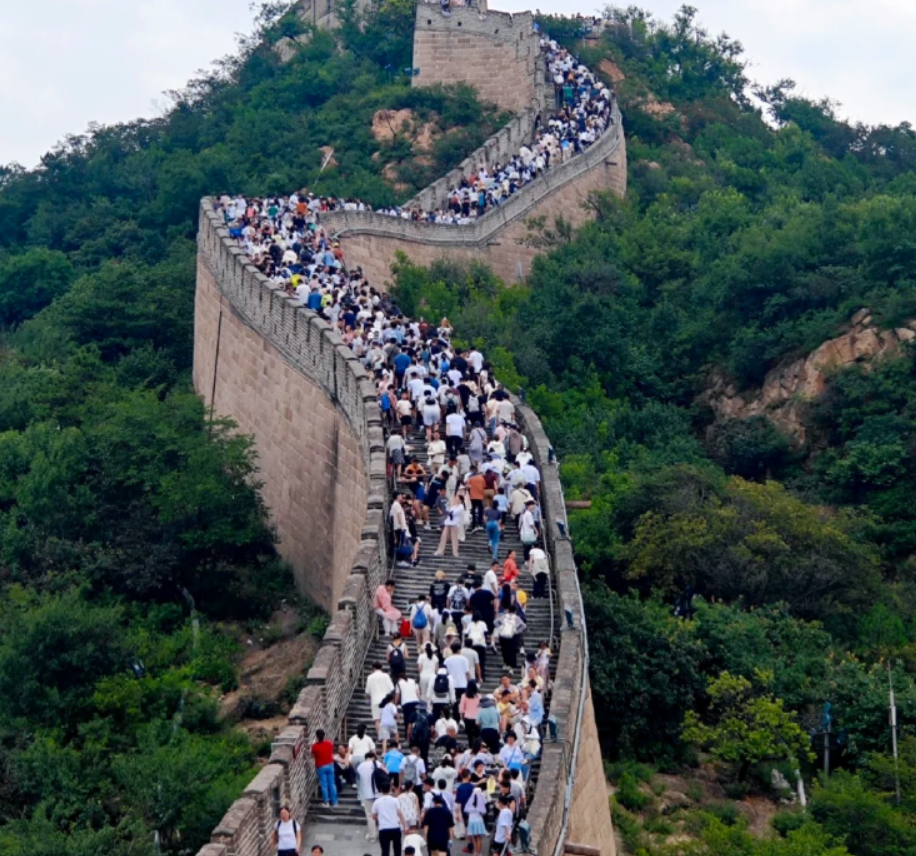
At one point, I rounded a bend and came face-to-face with a section of the wall that had partially collapsed, its stones spilling down the mountainside like a broken necklace. Li explained that this part hadn’t been restored, left as it was to show the wall’s true age and resilience. I knelt down and touched one of the fallen stones, its surface pitted and smooth from centuries of rain and wind. “This wall has been broken many times,” Li said, his voice soft. “But it always comes back. Just like China—just like people.”
His words stuck with me as I continued climbing. I thought about how the Great Wall isn’t just a physical barrier; it’s a symbol. A symbol of strength, of perseverance, of the human desire to protect what we love. It’s easy to see the wall as a cold, imposing structure, but when you walk it, when you feel the effort it took to build, you realize it’s made of something far softer: hope. Hope that the people inside its borders would be safe, hope that their culture would endure, hope that future generations would inherit a world worth protecting.
By noon, I reached a small plateau where a few local vendors had set up stalls, selling water, snacks, and hand-carved wooden souvenirs. I bought a bottle of cold water and a handful of roasted chestnuts, sitting down on a stone bench to rest. A group of elderly Chinese tourists sat nearby, chatting loudly and sharing oranges, and one of them—a woman with silver hair and a warm smile—offered me one. I thanked her, and even though we didn’t speak the same language, we smiled at each other, a small connection across cultures.
As I ate my chestnuts, I watched the other travelers: a family with young children, struggling but laughing as they climbed; a couple taking photos of each other against the backdrop of the mountains; a solo hiker like me, lost in thought as she stared out at the wall. We were all different—different ages, different nationalities, different stories—but in that moment, we were all united by this place. The Great Wall doesn’t care who you are or where you’re from; it just invites you to be present, to appreciate its beauty, to reflect on its meaning.
Chapter 3: The Descent – Reflections on Time and Connection
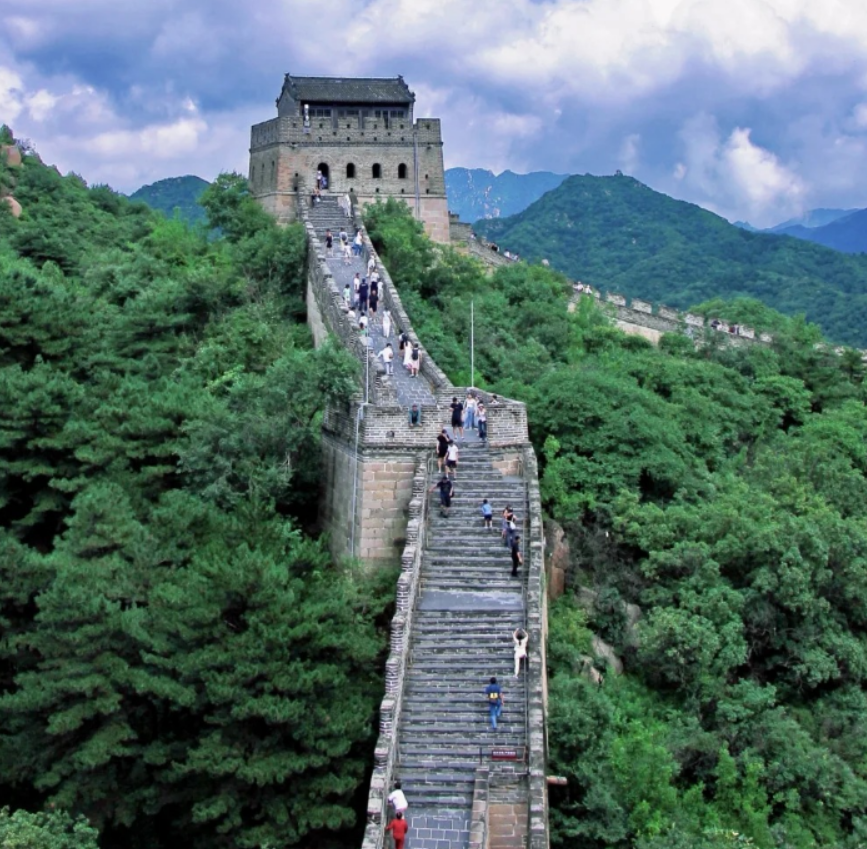
In the afternoon, I began the descent, my legs now shaky from the climb but my heart full. The path down was easier, but I walked just as slowly, not wanting to rush the end of this experience. The sun was lower now, casting long shadows across the wall, and the air was filled with the scent of fallen leaves and woodsmoke from the villages below.
As I walked, I thought about how so many people come to the Great Wall looking for a “grand” experience—something epic, something to post on social media. But the moments that stayed with me weren’t the grand ones. They were the small, quiet moments: the feel of cool stone beneath my hand, the sound of the wind in the watchtowers, the taste of a stranger’s orange, the sight of autumn leaves swirling in the breeze.
These moments made the wall real to me, not just a landmark in a history book. They made me realize that travel isn’t about checking off destinations; it’s about connecting—with a place, with its history, with the people who live there, and with yourself. The Great Wall didn’t just show me China’s past; it made me think about my own life, about what I value, about the things I’m willing to work hard for.
When I finally reached the bottom, Li was waiting for me, leaning against a tree and smiling. “You walked slowly,” he said. “Good. Did the wall tell you anything?”
I thought for a moment, then nodded. “It told me that we’re all part of something bigger,” I said. “That history isn’t just something that happened a long time ago—it’s something we carry with us, in the places we visit, the people we meet, the choices we make.”
Li nodded, his eyes crinkling at the corners. “That’s the real Great Wall,” he said. “Not the stones. The stories. The connections. You don’t just visit it—you become part of it.”
As we walked back to the village, the sun set behind the mountains, painting the sky in hues of pink and purple. I turned to look back at the wall, now silhouetted against the sky, and I knew that this trip would stay with me forever. It wasn’t just a journey along a stone wall; it was a journey into the heart of what it means to be human—to strive, to connect, to honor the past while embracing the present.
Epilogue: Carrying the Wall With Me
We ate dinner that night in a small family-run restaurant in the village, sharing bowls of hot noodle soup and plates of crispy fried tofu. The air was filled with the sound of laughter and clinking bowls, and the warmth of the fire made me forget my sore legs and tired feet. As I ate, I thought about the wall, about the soldiers who had once eaten their meals in cold watchtowers, about the villagers who had lived beside it for generations, about all the travelers who had walked its paths before me.
The next morning, I left the village, heading back to Beijing, but I didn’t feel like I was leaving the Great Wall behind. It was with me now, in the way I saw the world, in the way I appreciated small moments, in the connections I made with the people I met.
Travel writers often talk about “transformative” trips, and I used to think that was a cliché. But this trip to the Great Wall was exactly that. It didn’t change who I was, but it deepened who I was—it made me more present, more grateful, more aware of the beauty and complexity of the world around me.
The Great Wall is more than stones and stories. It’s a reminder that we are all connected, across time and distance, by our shared humanity. And as I boarded the train back to the city, I knew that whenever I felt lost or disconnected, I’d close my eyes and remember that dawn on the wall, the sun on my face, the wind in my hair, and the quiet voice of history whispering: Walk slowly. Listen. Connect.
That’s the true magic of the Great Wall—and of travel itself. It’s not about where you go, but about how you see the world when you get there. And for me, the Great Wall taught me to see it with more wonder, more compassion, and more joy.