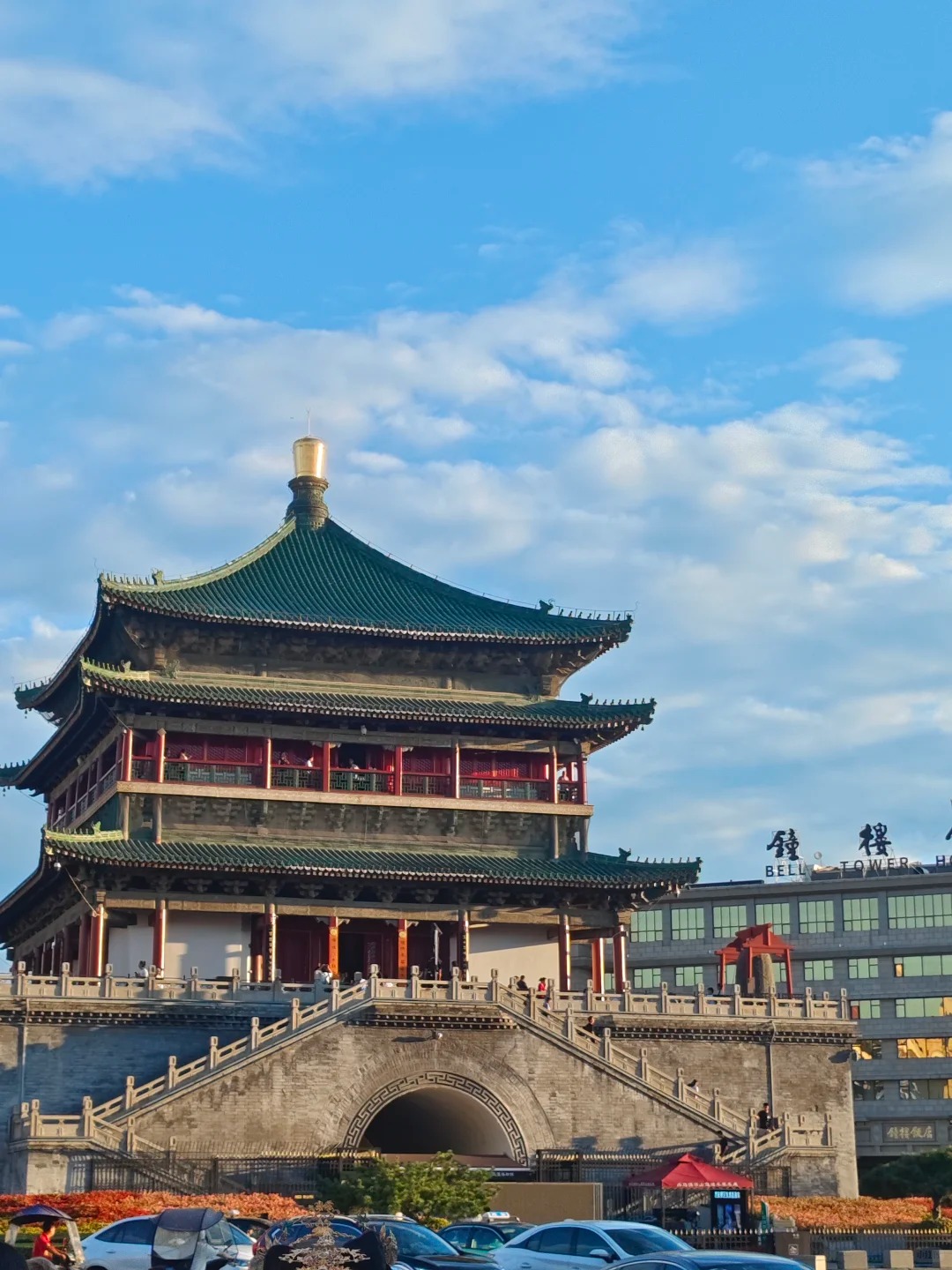
If you look at a map of Xi'an, there is a dot right in the dead center. That’s the Bell Tower (Zhonglou). All roads radiate from here. It’s not tucked away in a park; it’s sitting smack in the middle of a massive, swirling traffic roundabout. It looks like a spaceship from the Ming Dynasty landed in the middle of a modern grid.
I approached it via the underground pedestrian tunnels. The tunnels themselves are a maze, but when you finally pop up into the daylight within the tower’s base, the noise of the traffic fades slightly, replaced by the grandeur of green glazed tiles and red pillars.

The View from the Center of the Universe
I climbed the wooden stairs to the upper deck. The woodwork is intricate—painted with dragons, phoenixes, and flowers that have watched over the city for 600 years. But the real attraction is the balcony.
Walking a 360-degree loop around the tower, I saw the four main streets of Xi'an stretching out to the cardinal points. North to the Railway Station, South to the City Wall, West to the Silk Road, East to the mysteries of the past. From up here, the cars looked like toys. The traffic moved in a chaotic but hypnotic flow around the island.
I leaned against the railing, watching the city pulse. It’s rare to be in the exact geometrical center of a metropolis. You feel like the hub of a wheel. I imagined the bell tolling centuries ago, signaling the opening of the city gates. Clang... Clang... A sound that dictated the lives of hundreds of thousands of people.
The Giant Bell
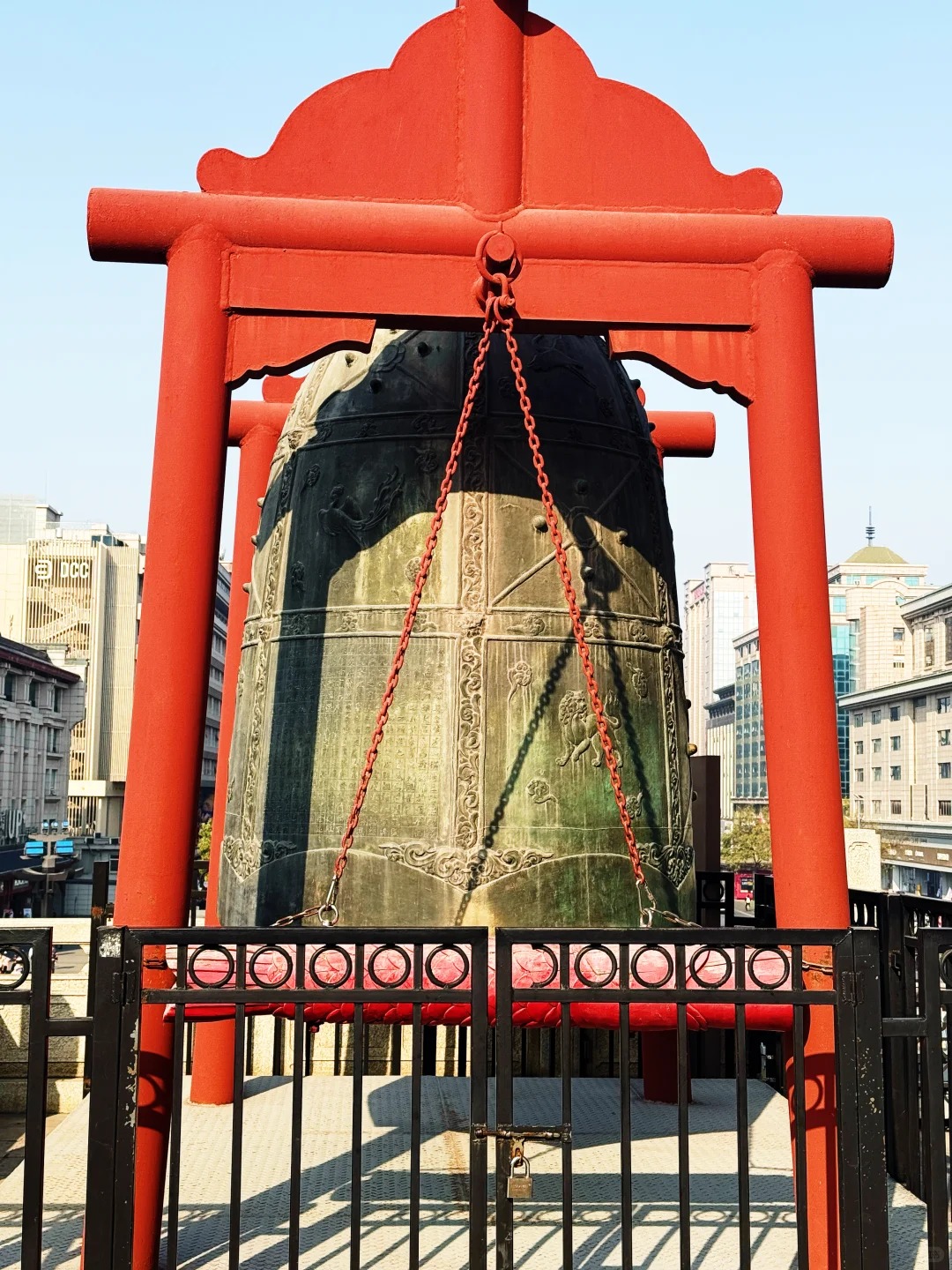
The original Jingyun Bell is now in a museum, but there is a massive replica on the northwest corner. For a small fee, I got to strike it. I held the heavy wooden log, suspended by ropes, and swung it.
BOOM.
The sound wasn't just loud; it was deep. It vibrated through my ribs. It lingered in the air, a long, resonant hum that seemed to push back the noise of the honking cars below. For a second, I felt like a town crier, announcing my existence to the city.
Coffee and Contemplation
After descending, I didn't leave immediately. I went to a Starbucks located in the sunken plaza right next to the tower. Yes, a Starbucks. But sitting there by the window, sipping an iced Americano, I had the most perfect view of the Bell Tower looming above.
The juxtaposition was striking. I was drinking modern coffee, checking my phone, while this 14th-century wooden giant cast its shadow over me. The Bell Tower isn't a dead monument. It’s a functional roundabout. It’s a meeting point ("Meet me at the Bell Tower" is the most common phrase in Xi'an). It has adapted.
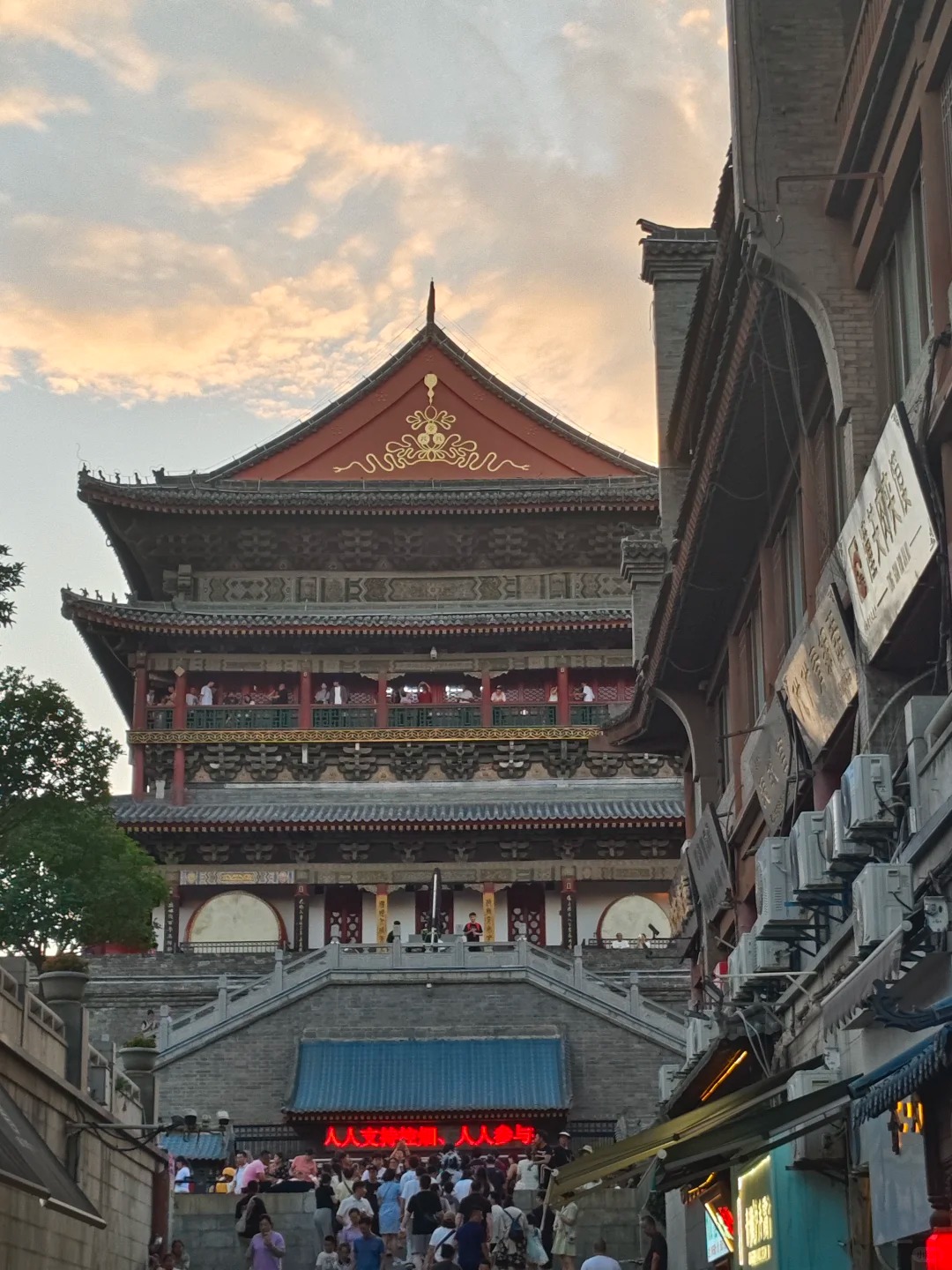
As night fell, the floodlights turned on. The tower began to glow—emerald green roofs and ruby red columns shining against the black sky. It looked regal, unbothered by the rush hour madness swirling around its feet.
The Bell Tower taught me that being "central" isn't just about geography. It’s about being the anchor. No matter how much Xi'an expands, no matter how many subway lines they dig, this wooden tower remains the heart. And standing there, I felt like I had finally touched the pulse of the city.