If Zhangjiajie is about the pillars, then Tianmen Mountain is about the ascent. I’ve traveled all over China, but I have never experienced a journey to the top quite like this. Tianmen Mountain, known as the “Soul of Hunan,” looms over the city of Zhangjiajie like a guardian. To get there, I boarded the Tianmen Shan Cableway. This isn’t just a cable car; it’s a voyage. It is the longest cableway in the world, stretching over 7 kilometers.
For 30 minutes, I suspended in a metal box, climbing from the noisy city streets, past suburban houses, and finally over sheer cliffs that looked like they had been sliced with a knife. The wind rocked the gondola gently, and I watched tiny cars and people shrink into ants below us. It was a serene yet terrifying transition from the human world to the sky world.
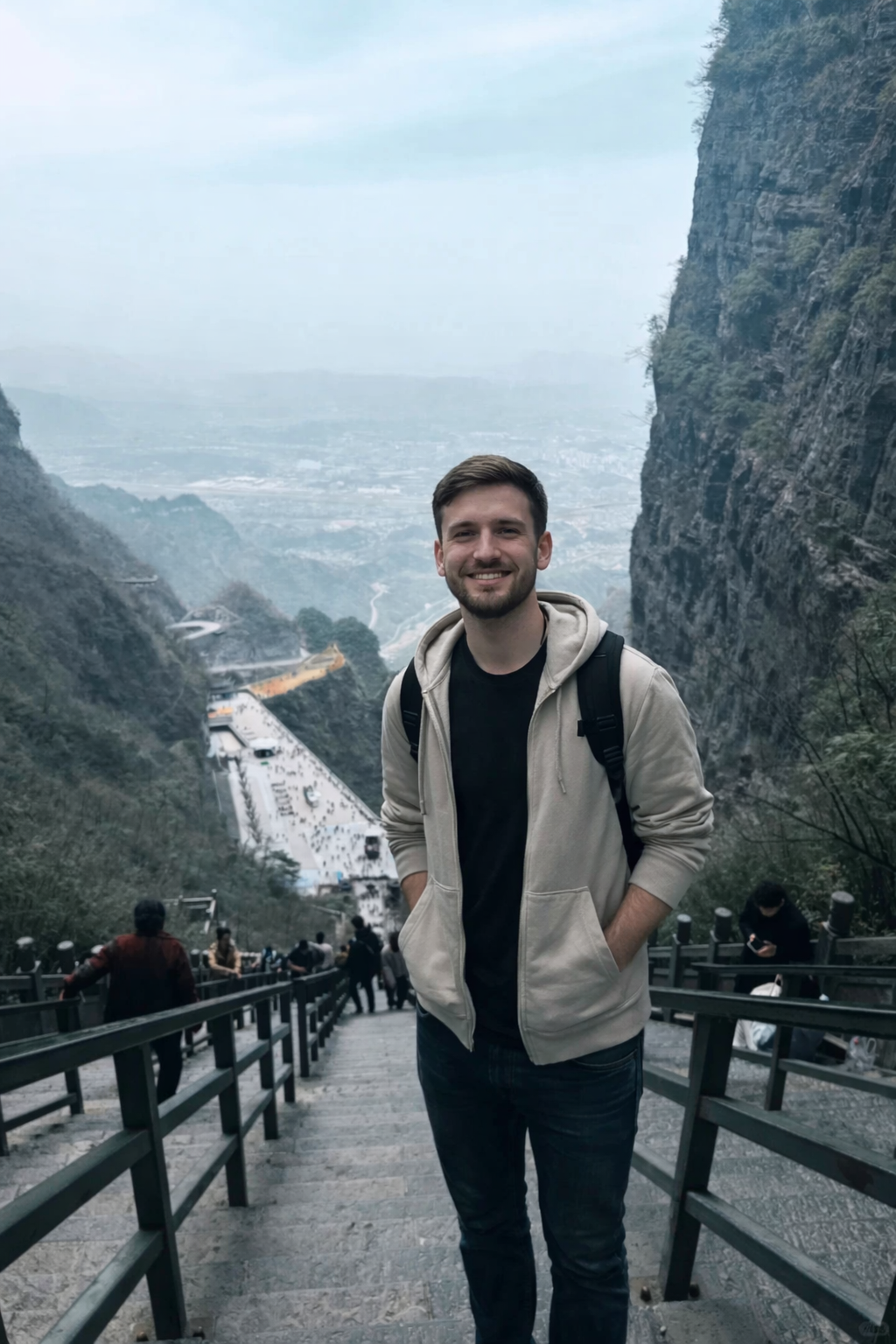
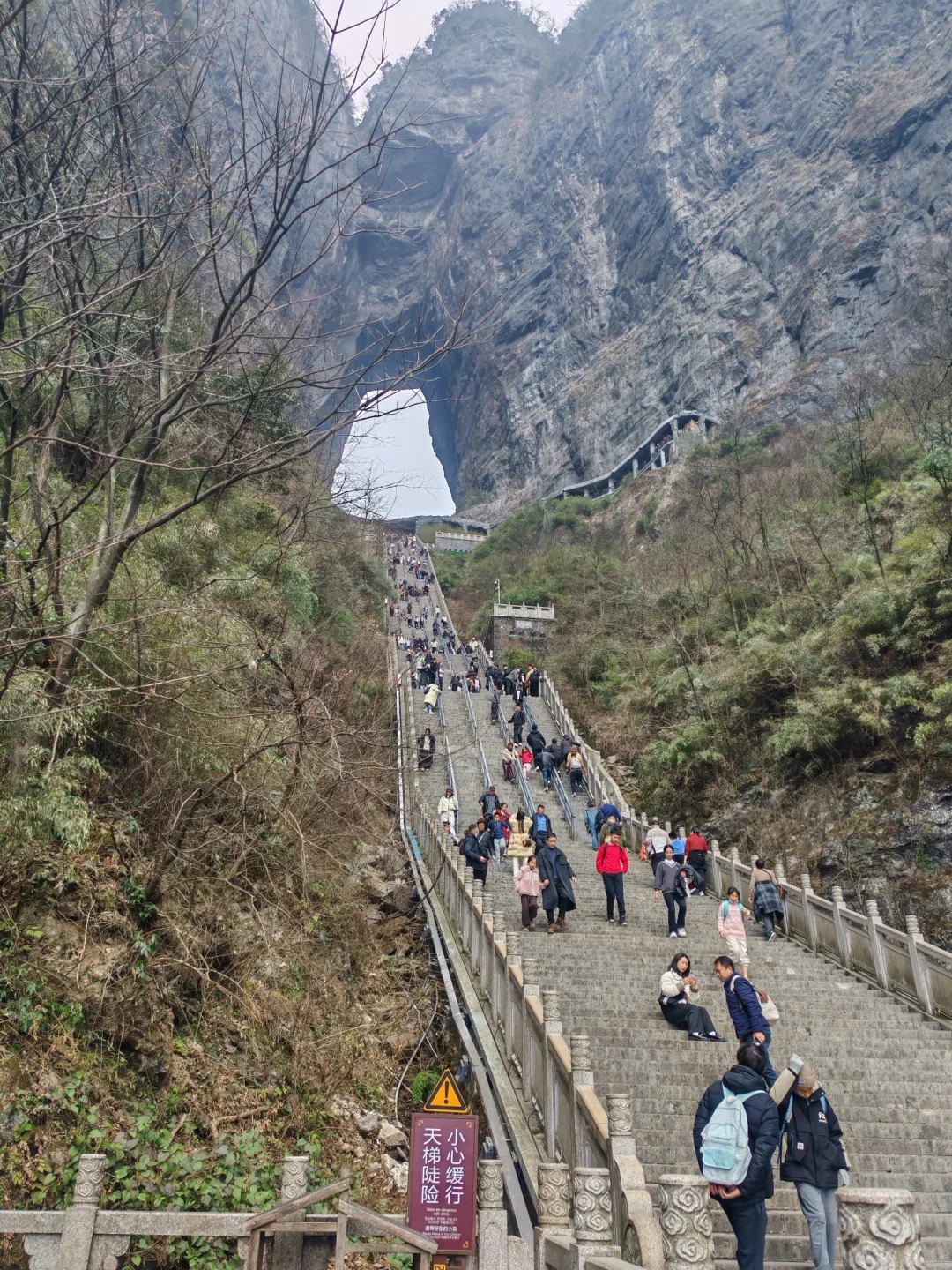
When we disembarked, the temperature had dropped significantly. I was in the clouds, literally. The air was thin and cool. But the real challenge awaited me: the 999 Steps. Leading up to the massive natural hole in the mountain—the Tianmen Cave, or “Heaven’s Door”—is a staircase of 999 steps. In Chinese culture, nine represents longevity and eternity, so 999 symbolizes the heavens and eternal life.
I stood at the bottom, looking up. The stairs disappeared into the mist. I started climbing, legs burning, breath visible in the cold air. It’s a pilgrimage. Around me, people of all ages were climbing—some praying, some chanting, others just gasping for breath. Halfway up, I turned around. The view of the cableway threading through the mountains like a delicate thread was dizzying. Reaching the top of the steps and standing under the massive arch of the cave was a triumph. The wind howls through the hole like a tunnel, a sound that the locals believe connects the earth to the sky.
But the adrenaline wasn’t over. I walked along the Cliff-Hanging Walkway. This is a glass path bolted to the side of a sheer vertical cliff, 1,430 meters above sea level. Walking on glass with nothing but a few millimeters of clear material separating your boots from a fatal drop is a psychological test. I saw people crawling on their hands and knees, paralyzed by fear. I took a deep breath, stepped out, and forced myself to look down. It was terrifying, but also liberating. The valley floor was a patchwork of green and grey, so far down it felt unreal.
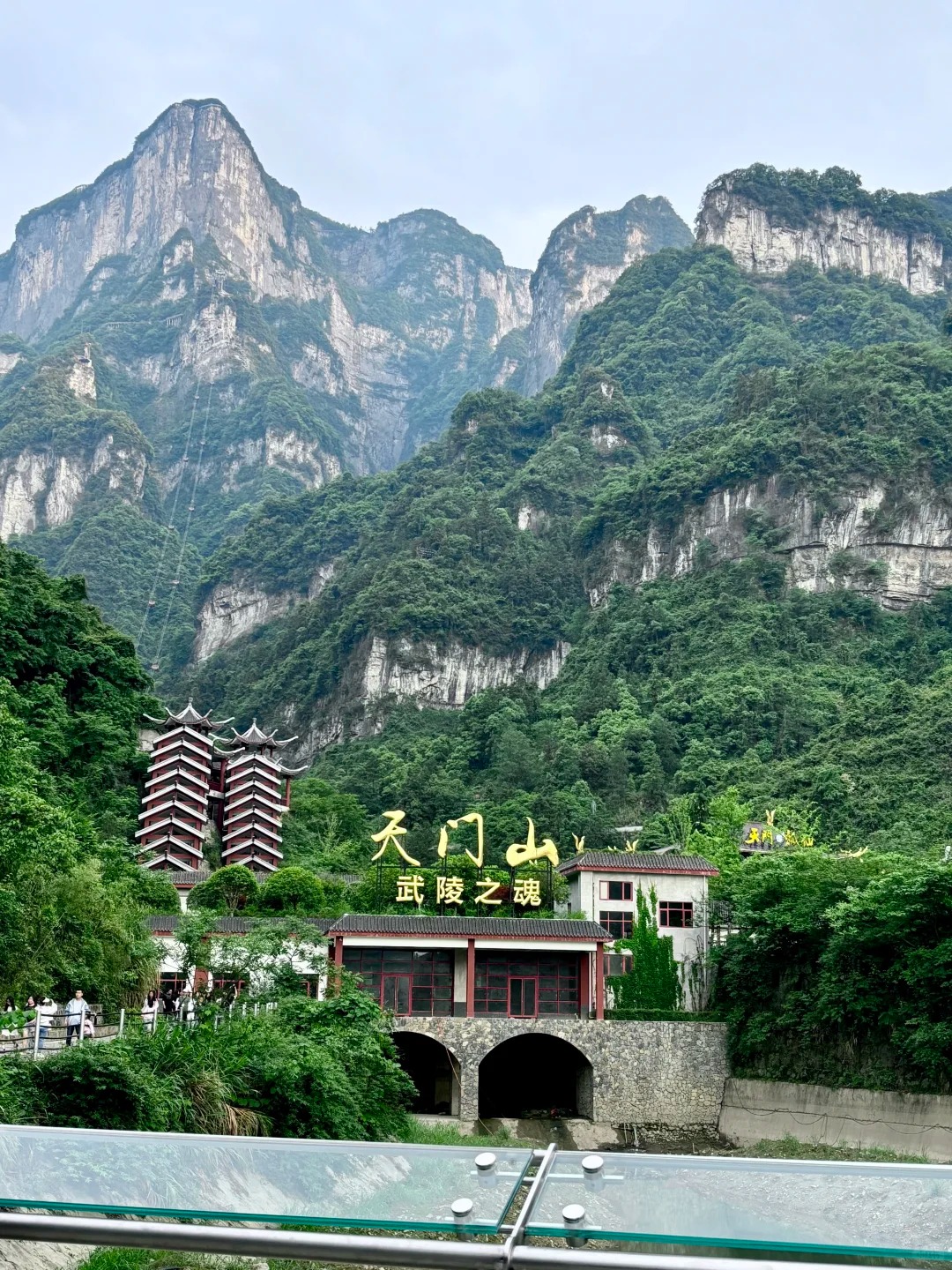
Later, I took the escalator built *inside* the mountain to reach the very peak. Standing at the summit, looking out at the endless sea of clouds, I understood why this place is sacred. It feels like a world where gravity is merely a suggestion. Tianmen Mountain isn’t just a scenic spot; it’s a challenge to your spirit and your fear. It tests you, and if you brave the heights, it rewards you with a view of heaven.