In the far north of Xinjiang, where the Altai Mountains kiss the border with Kazakhstan, Russia, and Mongolia, lies a body of water that defies logic. Kanas Lake. The name itself is mysterious, said to mean “beautiful, rich, and enigmatic” in the local Mongolian language. I had heard the legends before I arrived—stories of a giant monster living in the depths, dragging horses and cattle into the water. I came looking for the monster, but I found something far more profound: a landscape so pure and primal it felt like the first day of creation.
The journey to Kanas is an adventure in itself. The road winds through dense taiga forests of Siberian birch and larch. The air here is so clean it tastes sharp, like menthol. As I climbed higher, the trees thinned out and the lake suddenly appeared through a break in the mist. It was a shock of blue—a deep, dark, forbidding blue that looked like liquid ink.

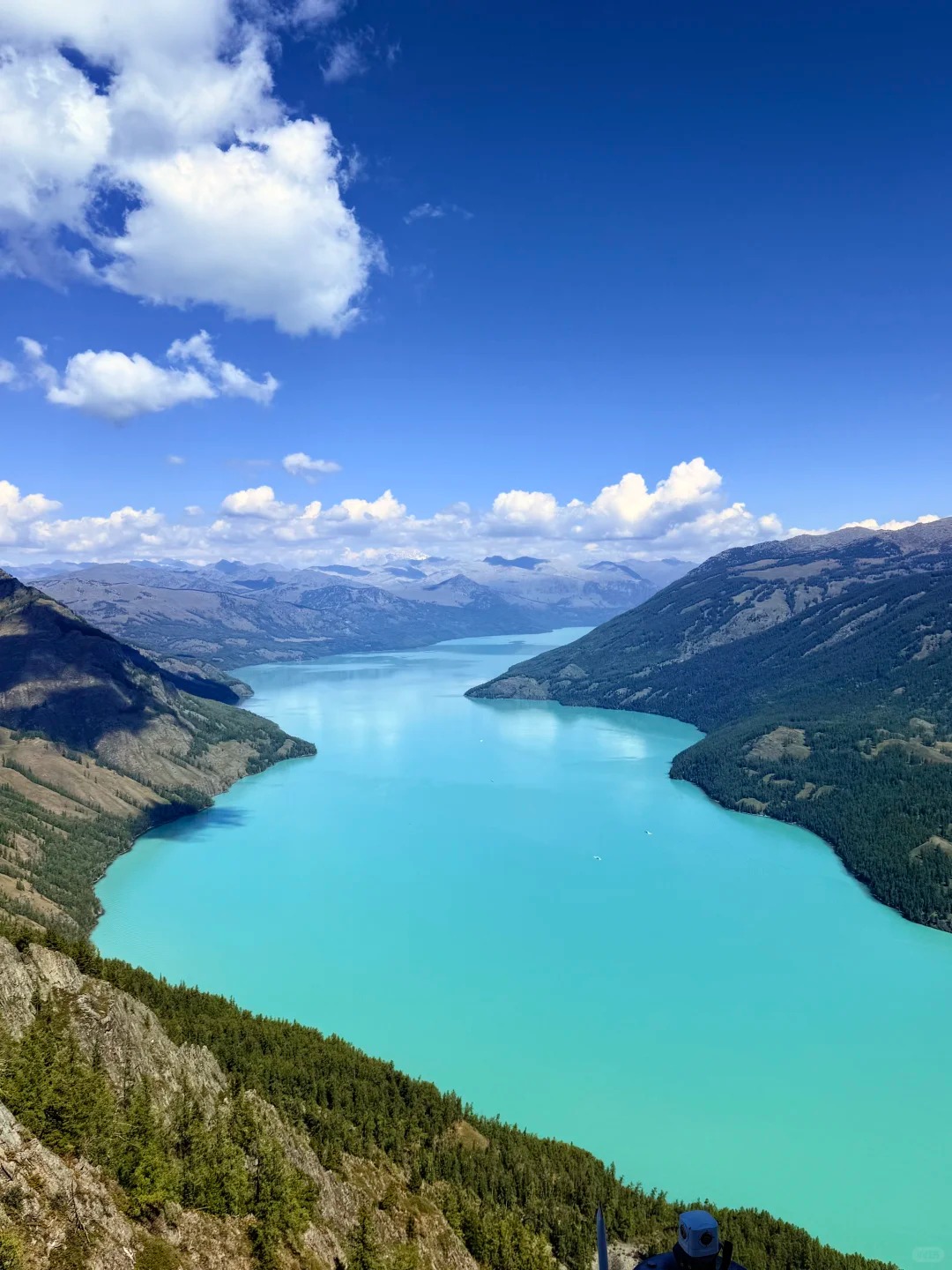
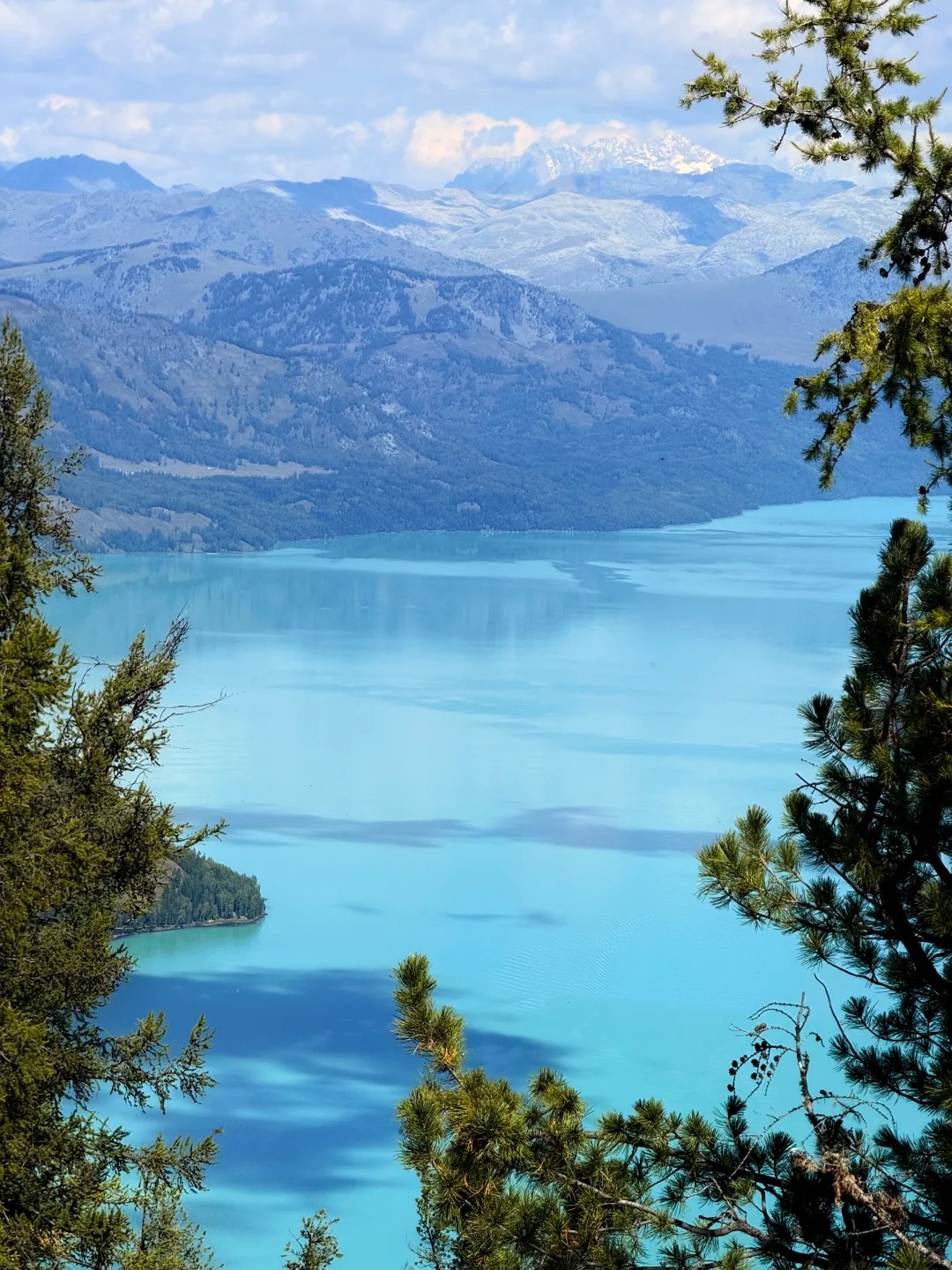
Kanas Lake is a glacial trough lake, formed by the movement of ancient glaciers. The water is crystal clear, yet so deep that it absorbs almost all the light, creating that mysterious dark color. The lake is shaped like a crescent moon, nestled in a valley surrounded by snow-capped peaks that tower over 3,000 meters.
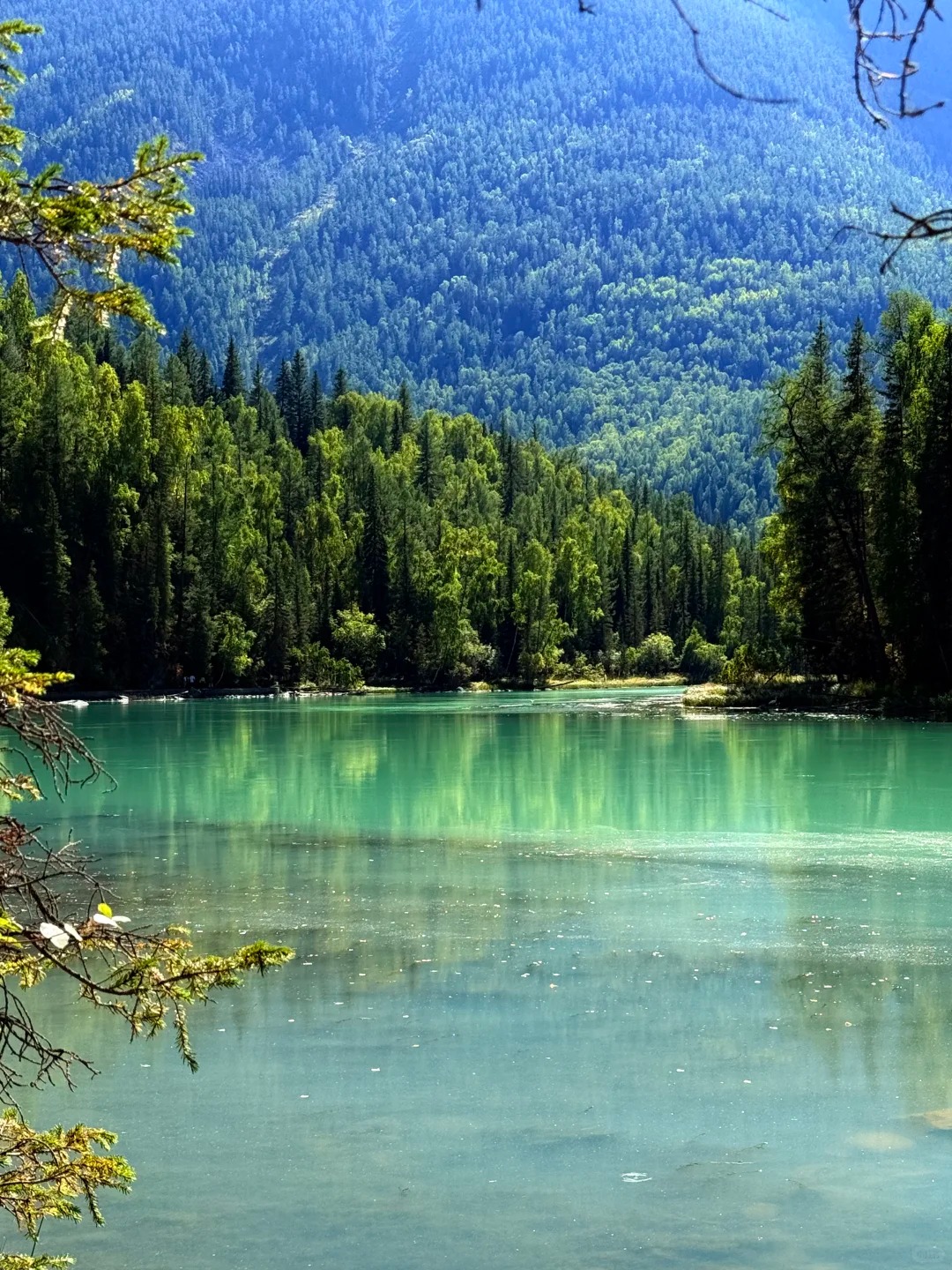
I decided to hike along the “Three Bays” trail. This is a series of boardwalks that connect the Moon Bay, Dragon Bay, and Immortal Bay. Walking here is like walking through a fairy tale. The Moon Bay is perhaps the most famous, with its iconic “footprint” island in the middle. The water is so still that the reflection is perfect—a mirror image of the golden birch trees and the snowy mountains. I stood there for a long time, mesmerized by the silence. The only sound was the distant drip of melting snow.
The Dragon Bay is more dramatic. The water swirls here, creating eddies and ripples that look like the scales of a dragon. The trees on the bank lean precariously over the water, their roots exposed, clinging to the earth. It is a place of raw, untamed beauty.
I took a boat ride to the center of the lake to look for the famous “Kanas Monster.” The water was choppy, and the wind was cold. Our guide pointed to a dark shadow moving in the water—a school of huge *Hucho taimen* (giant trout). Locals say that when these massive fish surface in a group, they look like a legendary sea monster. I didn’t see a monster, but seeing a fish the size of a dolphin was terrifying enough. It was a reminder that this lake is a living ecosystem, wild and unpredictable.
One of the most magical experiences at Kanas is staying in the “Kanas Village” (Tuvan Village). This is a settlement of the Tuvan people, an ethnic minority group who have lived in these mountains for centuries. Their houses are built entirely of logs, sturdy and warm, designed to withstand the harsh winters.
I stayed in a log cabin owned by a Tuvan family. The interior was cozy, heated by a wood stove. The walls were hung with hunting trophies and traditional instruments. My host, a man named Alexey, played the *shanter* (a traditional stringed instrument) for us. The music was haunting and melancholic, reflecting the solitude of the mountains.
That night, I stepped out of the cabin. The sky was a canvas of stars. Kanas is located in a dark sky reserve, meaning there is virtually no light pollution. The Milky Way was a bright river of light stretching across the heavens. I have never seen so many stars. It felt like I could reach up and touch them. Standing there, in the freezing cold, under the gaze of the universe, I felt incredibly small.
The next morning, I climbed the 1,068 steps to the Guanyu Pavilion. This viewing platform offers the best panoramic view of the lake. From the top, I could see the lake changing colors. In the morning light, it was a brilliant turquoise. By noon, it turned deep blue. And in the evening, it becomes dark green. This Color-changing Lake phenomenon is famous. The view from the pavilion is one of the most spectacular in China. You can see the lake winding like a jade ribbon, surrounded by the golden autumn colors of the forest (I visited in September, the peak season).
I met a group of photographers at the top who had been waiting for days for the clouds to lift. “When the sun hits the water and the mist rises,” one of them told me, “it looks like the heavens have opened.” We waited, and finally, the mist parted. A beam of golden light hit the water, illuminating a rainbow that arced over the lake. It was a spiritual moment, a display of nature’s grandeur that brought tears to my eyes.
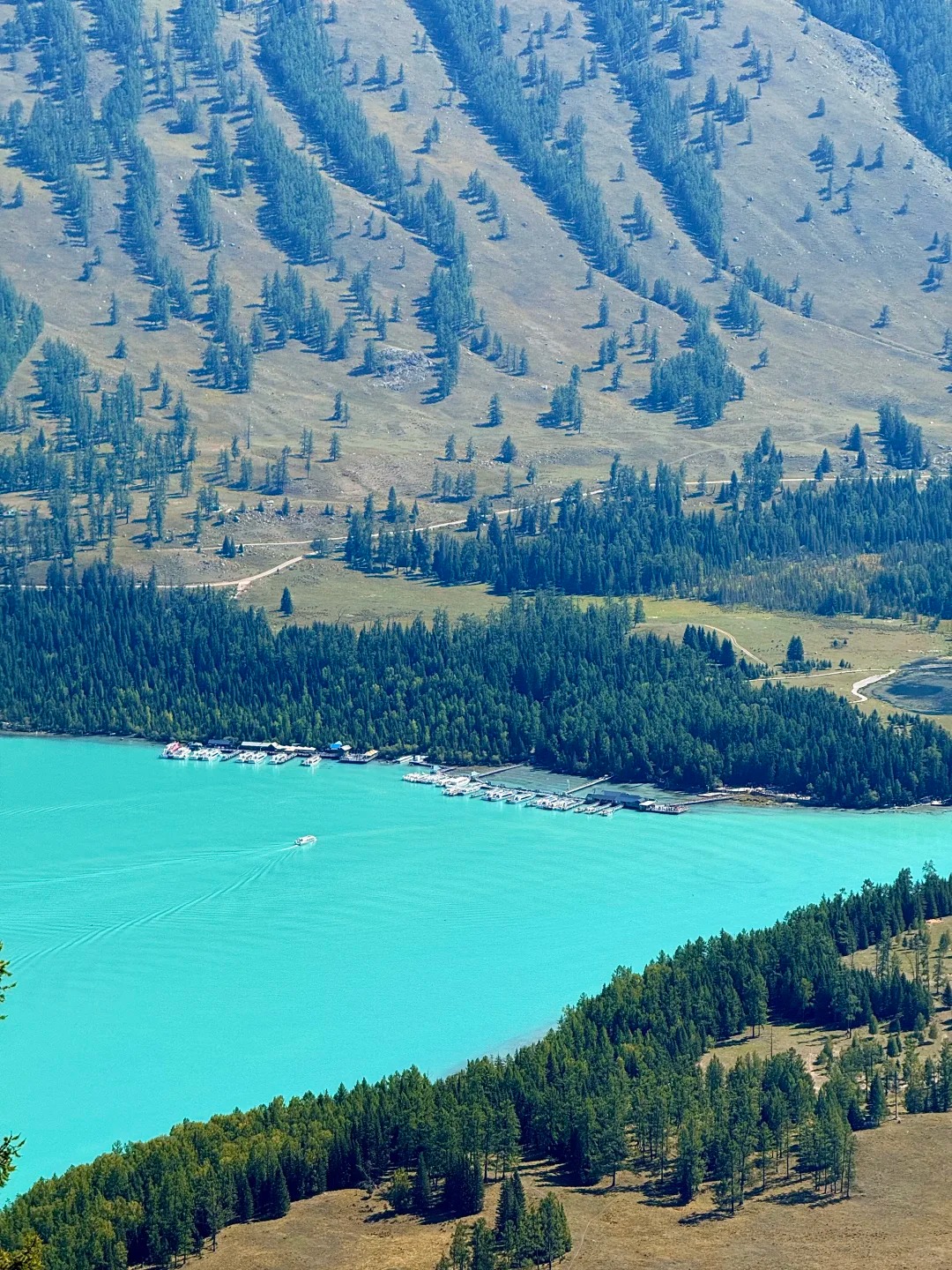
Kanas is not just a lake; it is a sanctuary. It is a place where the modern world has not yet intruded. There are no high-rises, no neon signs, just the mountains, the forest, and the water.
Leaving Kanas was difficult. I felt like I was leaving a holy place. The “monster” in the lake is not a beast; it is the mystery of nature itself. It is the feeling that there are still wild places on this planet where humans are not in control.
If you travel to Xinjiang, Kanas must be on your list. But do not rush it. Take the boat, hike the trails, stay in the Tuvan village, and look up at the stars. Let the beauty of the Altai Mountains seep into your bones. You will leave with a heart full of wonder and a mind cleared of all the noise of the city. Kanas is not just a place you visit; it is a place you experience.