They call it the "Small Seven Arches" (Xiaoqikong), but the name feels too modest for what is essentially a sprawling, emerald dreamscape. I came to Libo in southern Guizhou expecting another generic park with a nice bridge. What I found was a place where water isn’t just a feature; it’s the entire personality of the landscape.
I arrived early in the morning, the mist still clinging to the karst peaks that surround the narrow valley. The humidity here is different from Fanjingshan or Huangguoshu. It feels sweeter, heavier with the scent of wet moss and decaying leaves. The entrance to the scenic area is marked by the namesake bridge itself—the Xiaoqikong Bridge. Built during the Qing Dynasty, it’s a small, moss-covered stone archway spanning the Xiangshui River. It’s pretty, undeniably. The way the ivy drapes over the ancient stones and reflects in the turquoise water creates a perfect circle, a gateway into another world. But frankly, the bridge is just the appetizer.

The real magic happens when you venture deeper.
I decided to skip the shuttle bus for the first leg and walk along the 68-Step Waterfall. This isn't a single vertical drop but a cascading staircase of water stretching over a kilometer. The river tumbles over layer after layer of riverbed rocks, creating a rhythmic, rushing white noise that follows you everywhere. I walked on the wooden boardwalk, the canopy of ancient trees filtering the sunlight into dappled patterns on the water. The color of the water here is unreal—a shade of blue-green that looks like someone spilled millions of gallons of paint. It’s rich, saturated, and incredibly clear.
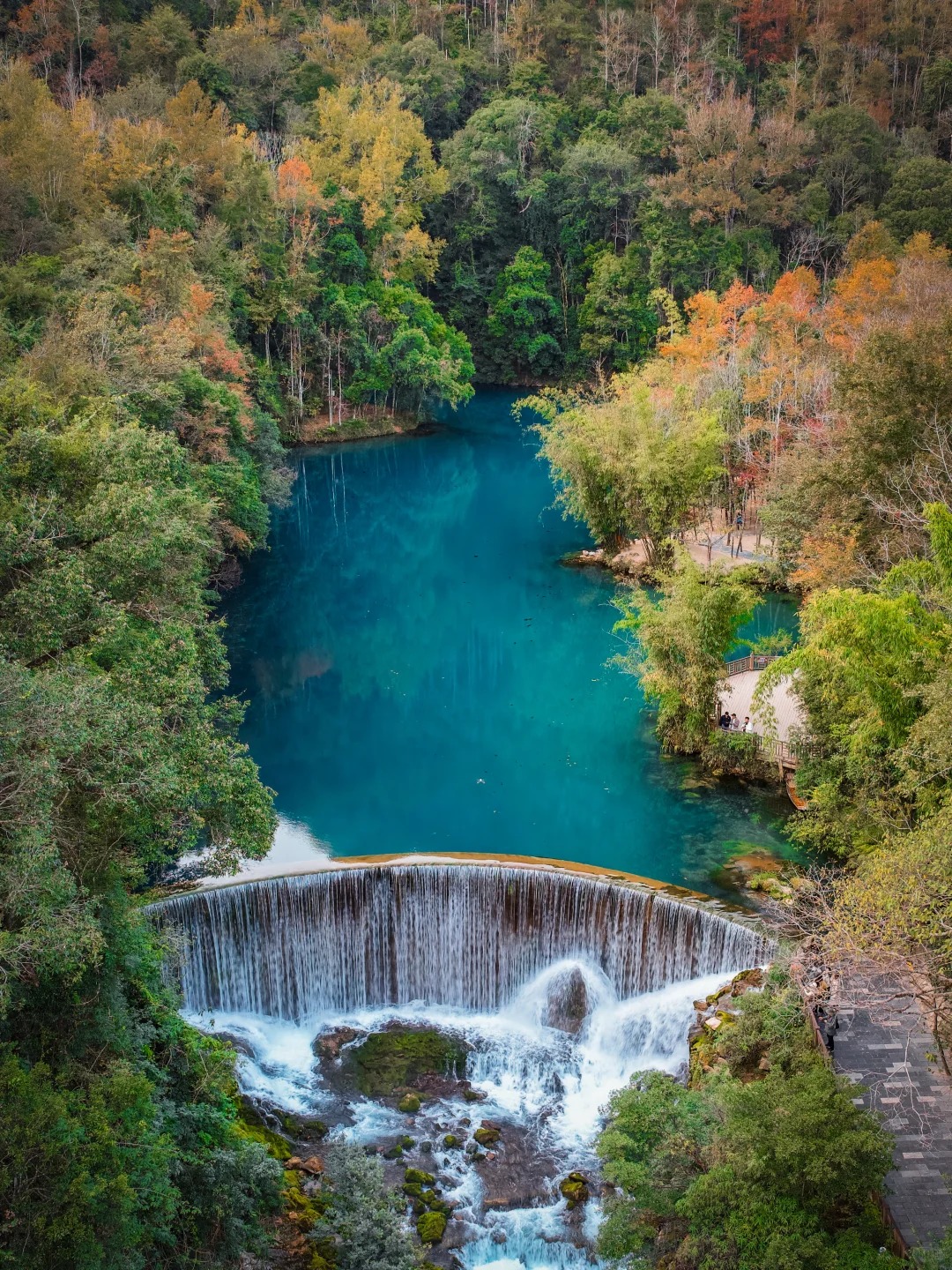
At one point, I sat on a rock near the water's edge to rest. A dragonfly, neon blue like the water, landed on my knee. I watched a leaf float down the tiers of the falls, getting caught in eddies, spinning, and then rushing forward. Time feels slower here. The rushing water doesn't make you feel rushed; paradoxically, it makes you want to stop.
My favorite spot, however, was the Water Forest (Shuishang Senlin). This place defies logic. It’s a literal forest growing directly out of the riverbed. The roots of the trees plunge into the water, gripping the rocks below, while the river flows swiftly around their trunks. There is no separation between land and water here. I took off my shoes and waded in. The water was shockingly cold, a sharp contrast to the warm, sticky air. The stones underfoot were smooth, polished by centuries of flow. I saw families splashing each other, laughter echoing through the trees, but I found a quiet spot upstream, leaning against a tree trunk that was submerged up to my calves. Standing there, rooted in the river like the trees themselves, I felt a profound sense of connection. This ecosystem is a fragile, beautiful negotiation between the solid and the fluid.
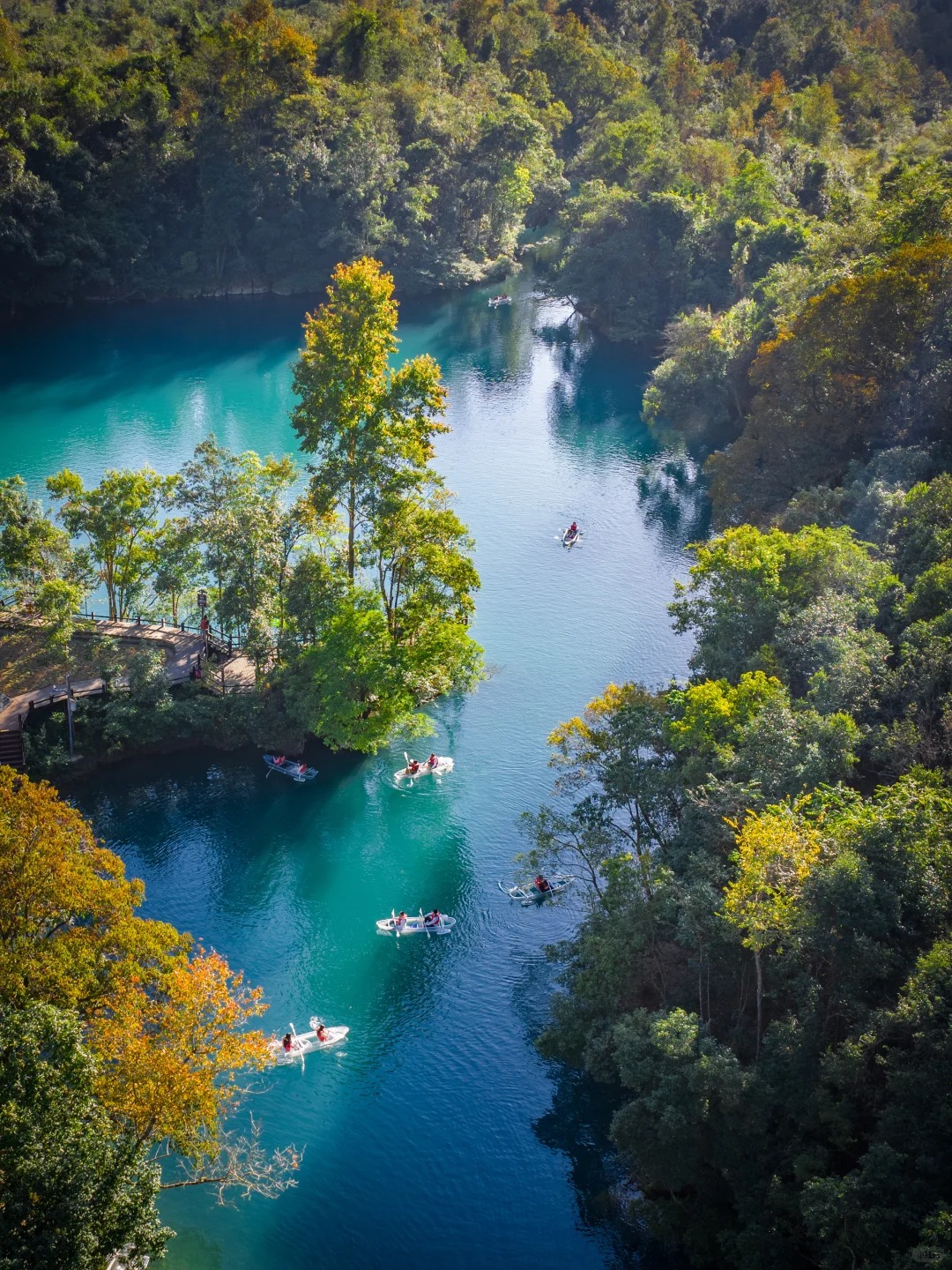
Further in lies Wolong Tan (Crouching Dragon Pond). If the rest of the park is active and rushing, this pond is a deep, silent meditation. A dam creates a crescent-shaped waterfall at one end, but the pond itself is a mirror. The water is deep blue, reflecting the surrounding mountains so perfectly that it’s hard to tell where the cliff ends and the water begins. I rented a small bamboo raft (well, a plastic one made to look like bamboo) and paddled out. Drifting in the middle of that silence, surrounded by towering green peaks, I felt like a character in a wuxia novel, waiting for a master to fly down from the cliffs.
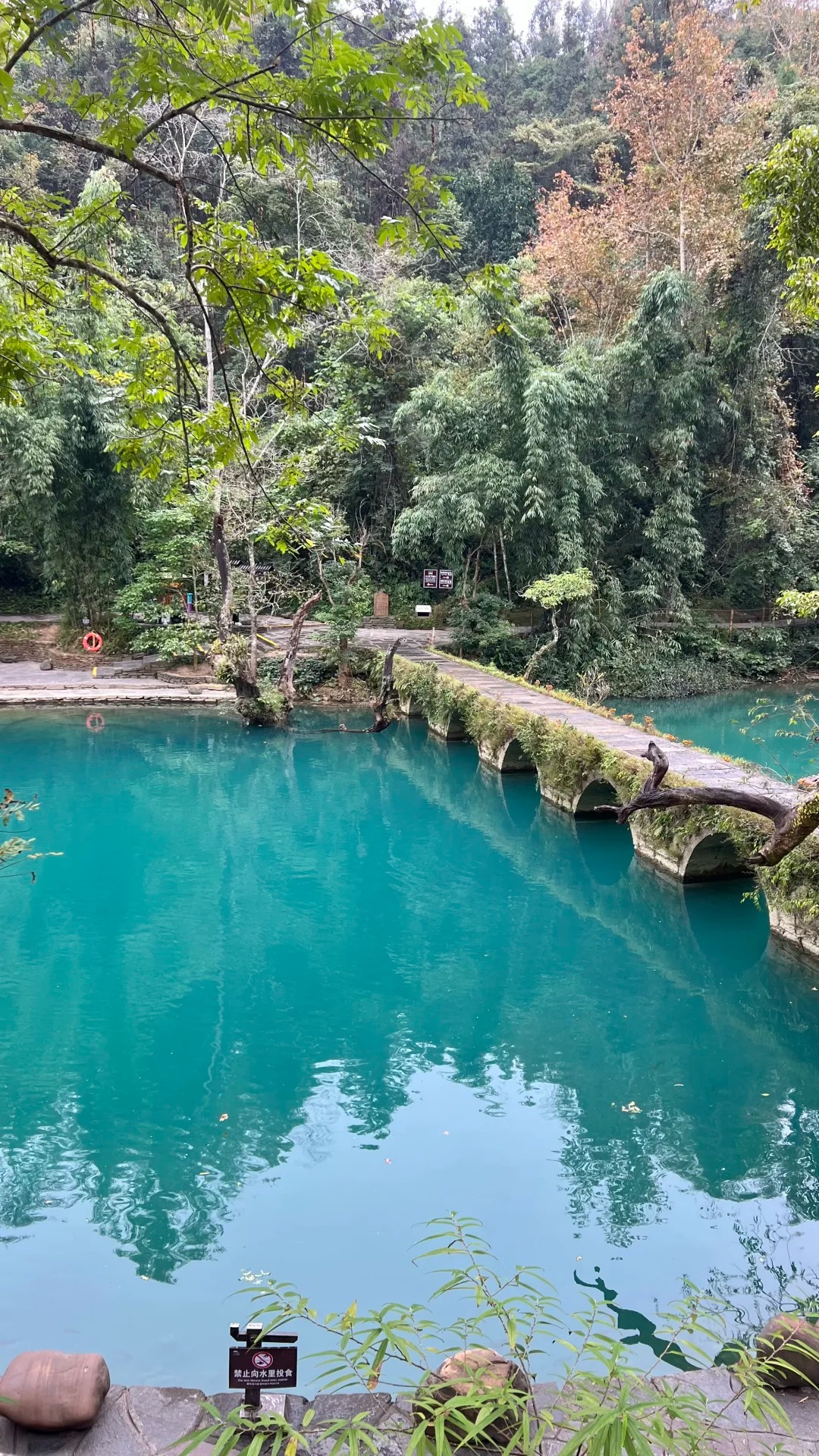
By the time I left, the sun was setting, casting long shadows across the valley. My feet were wet, I was tired, and I was hungry. But I felt "clean"—not just physically washed by the river, but mentally scrubbed. Libo Xiaoqikong isn’t about conquering a peak or seeing a massive spectacle. It’s about immersion. It’s about walking through a world where green and blue are the only colors that matter, and where the sound of water becomes the soundtrack of your thoughts.