If you want to understand the pulse of modern China, do not look at its temples; look at its train stations.
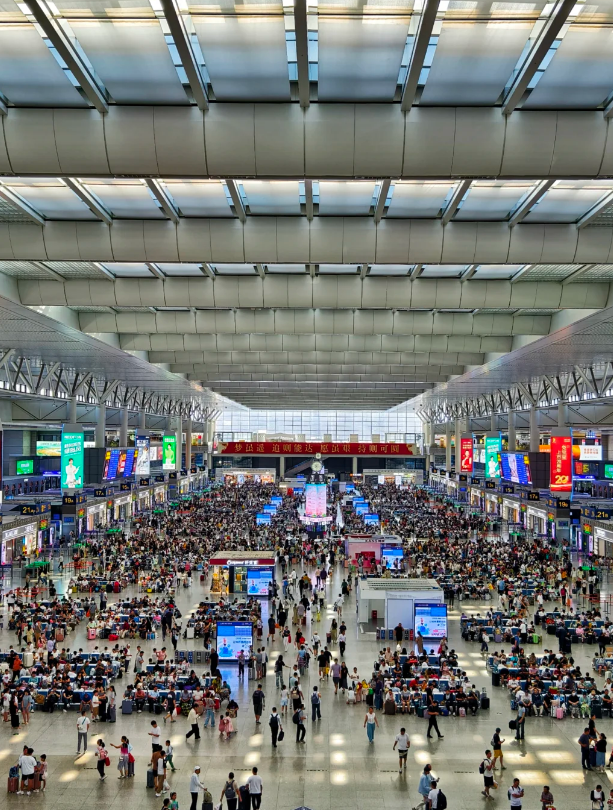
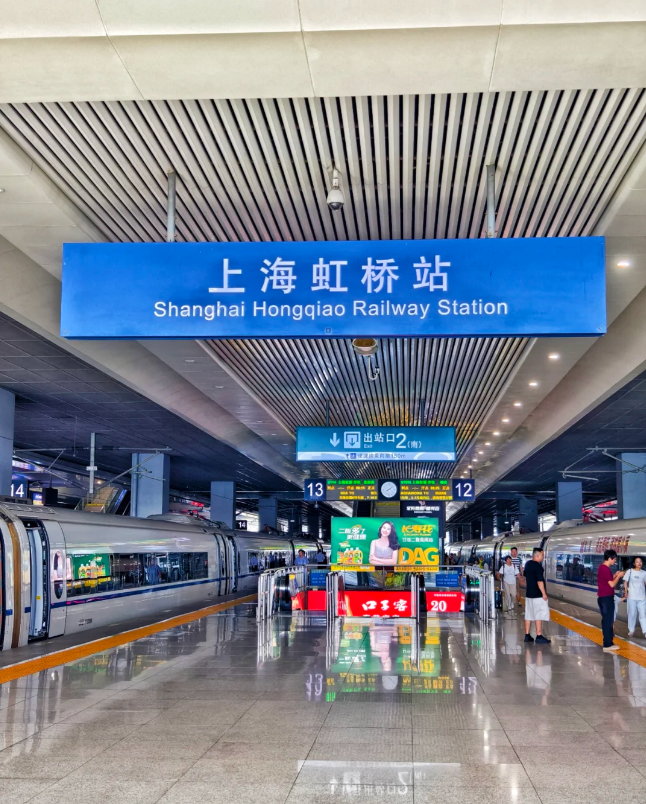
My journey began at Shanghai Hongqiao Railway Station, a structure so vast it has its own weather system. Standing in the departure hall feels less like waiting for a train and more like waiting for a spaceship launch. The ceiling soars high above, a lattice of steel and glass filtering the grey Shanghai light. Below, a river of humanity flows with terrifying efficiency.
I was taking the G2, one of the flagship "Fuxing" (Rejuvenation) high-speed trains. My mission? To travel from the futuristic skyline of Shanghai to the imperial heart of Beijing—a distance of 1,318 kilometers (819 miles)—in just 4 hours and 18 minutes.
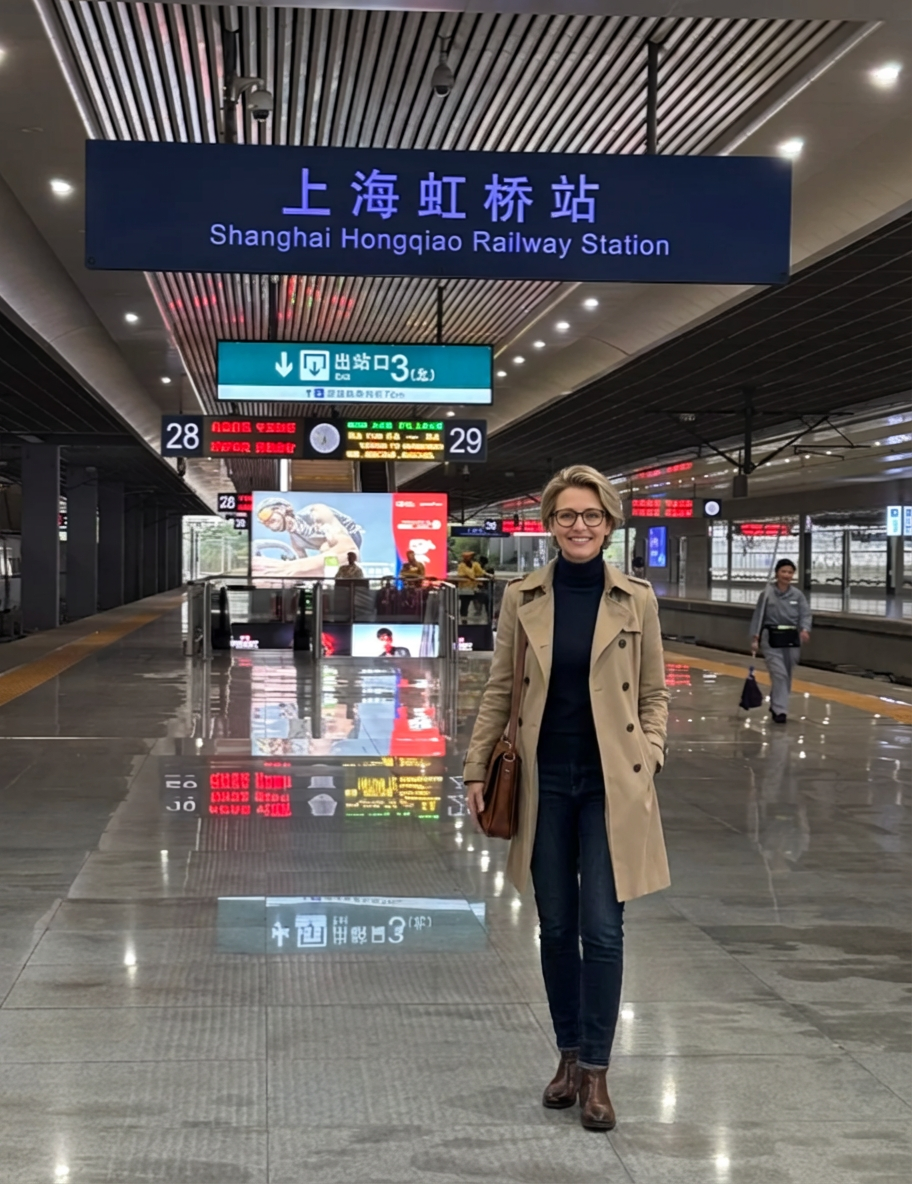
The Departure: Silent Precision
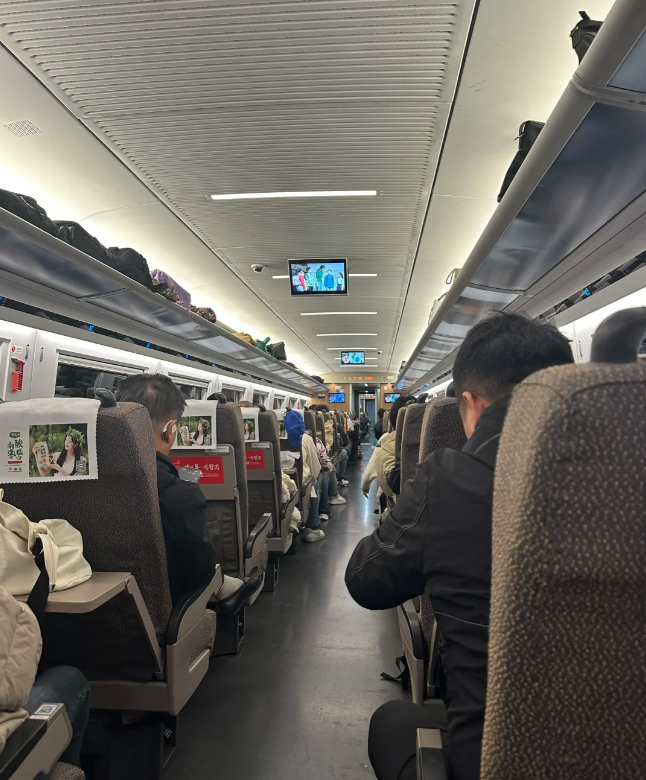
Boarding the train is a study in order. There is no shoving, no chaos. The train glides into the station like a sleek white python, silent and predatory. I found my seat in Second Class (which, frankly, offers more legroom than First Class on most airlines). The cabin smelled faintly of sanitizer and tea.
At exactly 09:00 AM, without a lurch or a bump, the platform began to slide backward. We were moving.
I placed a coin on the windowsill—a classic trick travelers do to test the stability. As the digital speedometer at the front of the carriage ticked up—100 km/h, 200 km/h, 300 km/h—the coin didn't even tremble. At 350 km/h (217 mph), the world outside became a blur of motion, but inside, my cup of green tea didn't produce a single ripple.
A Window into the Heartland
The "Shanghai to Beijing train" is not just a mode of transport; it is a cross-section of China’s geography and economy.
For the first hour, we sliced through the Yangtze River Delta. This is the factory of the world. Endless industrial parks flashed by, interspersed with water towns where canals reflected the grey sky. I saw two-story farmhouses that looked like mansions, a testament to the rural wealth of Jiangsu province.
Then, we crossed the Yangtze River via the Nanjing Dashengguan Bridge. The river below was a wide, brown muscular beast, carrying barges laden with coal and sand. It was a fleeting glimpse, gone in seconds, but the scale was undeniable.
As we pushed north into Shandong province, the landscape changed. The lush, wet greens of the south gave way to the dusty golds and browns of the North China Plain. This is the wheat belt. I saw lonely tractors tilling vast fields, and small burial mounds topped with flying prayer flags in the middle of farmlands—ancestors watching over the harvest.
The Taste of the Rails
Around noon, the food trolley lady arrived. "Box meal! Fresh fruit! Hot tea!" she chanted in a rhythmic cadence.
I bought a standard 45 RMB bento box: Braised beef brisket, wood ear mushrooms, steamed bok choy, and a generous scoop of rice. Is it Michelin-star food? No. But there is a specific comfort to eating hot, savory beef while hurtling across a continent at ground level. The beef was tender, soaked in a rich soy-anise sauce that I soaked up with the rice.
I paired it with a bottle of Nongfu Spring tea. Around me, the carriage was a microcosm of society. A businessman in a sharp suit was on a video call, shouting about supply chains. A grandmother was peeling oranges for her grandson. A group of students were playing a mobile game together. This shared space, moving at impossible speeds, felt strangely intimate.
Crossing the Yellow River
The highlight of the journey came near Jinan. The announcer’s voice chimed: "We are crossing the Yellow River."
I pressed my forehead to the glass. The Mother River of Chinese civilization sprawled out below us. Unlike the Yangtze, the Yellow River looked ancient and weary, its waters a thick, opaque ochre, carrying the silt of the Loess Plateau. Seeing it from this high-speed marvel felt like a collision of eras—the ultra-modern engineering of the bridge spanning the cradle of 5,000 years of history.
Arrival: The Northern Capital
As we neared Beijing, the light changed again. The sky became a harder, clearer blue. The vegetation became sparser, dominated by poplars and willows.
We pulled into Beijing South Station at 1:18 PM. The doors hissed open. The air that rushed in was drier, crisper than the humid breath of Shanghai.
I stepped onto the platform and heard the local accent immediately—the famous Beijing Erhua (retroflex R) that adds a rolling growl to the end of words. "Jie guang, jie guang!" (Excuse me, make way!) a porter shouted.
I had breakfast in the Paris of the East and would have dinner in the shadow of the Forbidden City. The "Shanghai to Beijing train" had collapsed distance and time, but more than that, it had given me a front-row seat to the changing face of a nation. It is a journey I recommend to every traveler, not just for the convenience, but for the sheer spectacle of a country on the move.