By Emma, an American history student specializing in East Asian imperial history
As someone who’s written two papers on the Ming Dynasty’s imperial system, stepping into Beijing felt like stepping into the pages of my textbooks. My 14-hour flight from New York to Beijing Daxing International Airport left me jet-lagged, but the moment I saw the airport’s traditional roof curves merged with modern glass walls, I knew the fatigue would fade fast. My Airbnb host, Mr. Li, picked me up in his electric car, and as we drove toward the city center, he pointed out landmarks through the window: the CCTV Tower’s twisted silhouette, the sleek skyscrapers of the Central Business District, and in the distance, the hazy outline of the Great Wall. “Beijing is two cities in one,” he said, handing me a bottle of jujube juice. “The imperial past and the modern present—you’ll taste both tonight.”
My first stop, after a quick nap at the Airbnb in Nanluoguxiang (a historic hutong area), was Tiananmen Square. Standing at the southern edge of the square, I craned my neck to take in the Monument to the People’s Heroes, its marble reliefs depicting China’s modern history, and the Great Hall of the People with its imposing colonnades. Mr. Li explained that the square covers 440,000 square meters—big enough to hold a million people. “But come back at sunrise,” he said, “when the flag-raising ceremony happens. It’s a powerful mix of tradition and national pride.” We walked north to the Tiananmen Gate, where the iconic portrait of Mao Zedong hangs above the entrance. I paused to take photos, noting the intricate dragon carvings on the marble columns—details I’d only seen in my history books. A group of schoolchildren walked past, their teachers explaining the gate’s history in Mandarin, and one little girl waved at me. “Hello!” she shouted. I waved back, suddenly feeling more connected to this place than I ever had through textbooks.
and resilience.” I ran my finger gently over the glass case, imagining the princess wearing it to a imperial banquet—suddenly, the 300-year-old artifact felt alive.
By mid-afternoon, we reached the Hall of Supreme Harmony, the largest and most important building in the Forbidden City. Its roof, covered in yellow glazed tiles (a color reserved for emperors), curved upward at the edges like wings, and the eaves were decorated with 10 mythical creatures—each symbolizing a different imperial virtue. Inside, the golden dragon throne sat on a three-tiered platform, flanked by pillars wrapped in silk dragon tapestries. A group of international tourists listened to a guide explain that the hall was used for grand ceremonies: coronations, imperial weddings, and the emperor’s birthday. I stepped to the side to avoid the crowd, and noticed a small plaque detailing the hall’s reconstruction after a fire in the Qing Dynasty. As a history student, I appreciated that the Forbidden City wasn’t just a frozen museum—it had endured disasters and been restored, a testament to China’s commitment to preserving its heritage.
By the time we exited the Forbidden City through the Gate of Divine Prowess, the sun was setting, painting the sky in shades of orange and pink. Mr. Li suggested we walk to Nanluoguxiang for dinner, and I gladly agreed—my feet ached from hours of walking, but my curiosity was still sharp. Nanluoguxiang, a 800-year-old hutong (alleyway) lined with traditional courtyard houses, had been transformed into a vibrant mix of old and new: street food stalls next to boutique cafes, calligraphy shops beside vintage clothing stores. We stopped at a stall run by Granny Wang, who’d been selling jianbing (a savory crepe) here for 40 years. “One jianbing, with extra chili?” she asked, grinning. I nodded, and watched as she spread batter on a hot griddle, added an egg, and sprinkled scallions, cilantro, and crispy fried dough. The smell of sesame and chili filled the air, and when she handed me the warm crepe, I took a bite—crunchy, savory, and slightly spicy, it was the best street food I’d ever tasted. “This is real Beijing,” Mr. Li said, watching me eat. “Not just palaces—food made with care, passed down through families.”
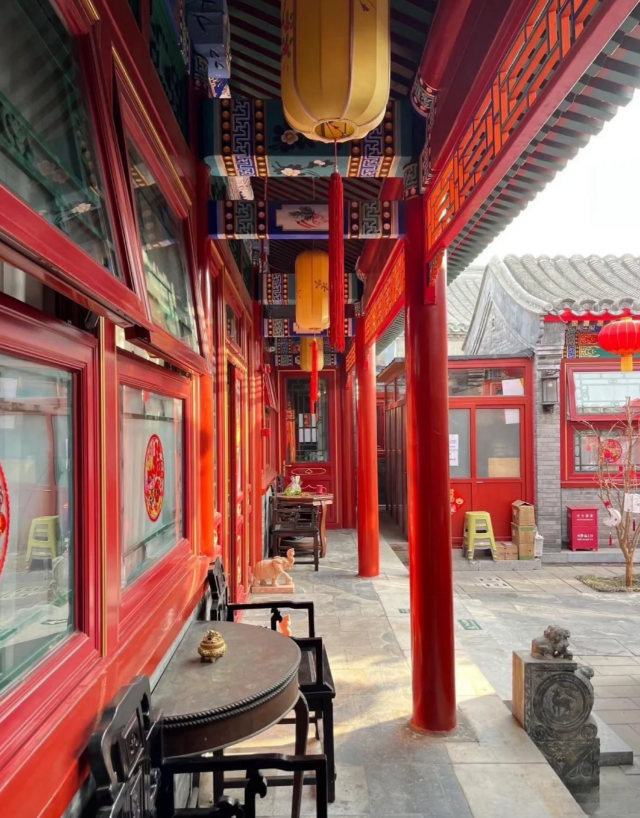
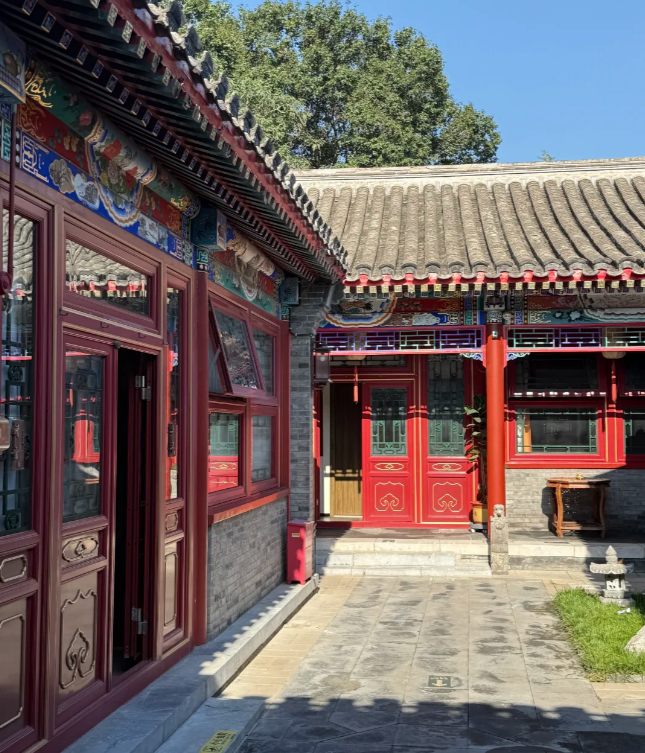
After dinner, we wandered deeper into the hutongs, away from the main tourist strip. Mr. Li pointed out the “siheyuan” (courtyard houses) with their gray brick walls and red wooden doors, each door decorated with couplets (poetic phrases) for good luck. We passed an old man playing erhu (a two-stringed fiddle) under a ginkgo tree, his music mixing with the laughter of children chasing fireflies. A cat napped on a stone step, and a woman hung laundry on a bamboo pole strung between two houses. “Most people think Beijing is just skyscrapers and palaces,” Mr. Li said, “but this is where the city breathes. These hutongs have been home to generations—my grandparents lived in one just like this.” We stopped at a small tea house, where the owner served us jasmine tea in tiny porcelain cups. The tea was fragrant and light, a perfect contrast to the spicy jianbing. As we sipped, locals played mahjong at a nearby table, their voices rising and falling in friendly debate. I didn’t understand a word, but the warmth of the room—lit by paper lanterns and filled with the smell of tea—made me feel welcome.
The next morning, I woke up at 5:30 AM to join Mr. Li for the flag-raising ceremony at Tiananmen Square. When we arrived, thousands of people had already gathered, from elderly veterans to young students. At 6:10 AM, the sound of a military band filled the square, and a contingent of honor guards marched in perfect formation from the Tiananmen Gate to the flagpole. The crowd fell silent as the national flag was raised, and the Chinese national anthem played. I watched as people around me sang along, their faces serious and proud. Even though I wasn’t Chinese, I felt a lump in my throat—there was something powerful about seeing so many people united by shared history and identity. After the ceremony, Mr. Li and I walked to a nearby breakfast shop for youtiao (fried dough sticks) and doujiang (soy milk). “The flag-raising ceremony is a new tradition,” he said, “but it’s rooted in the old—respect for country, for history, for those who came before.”
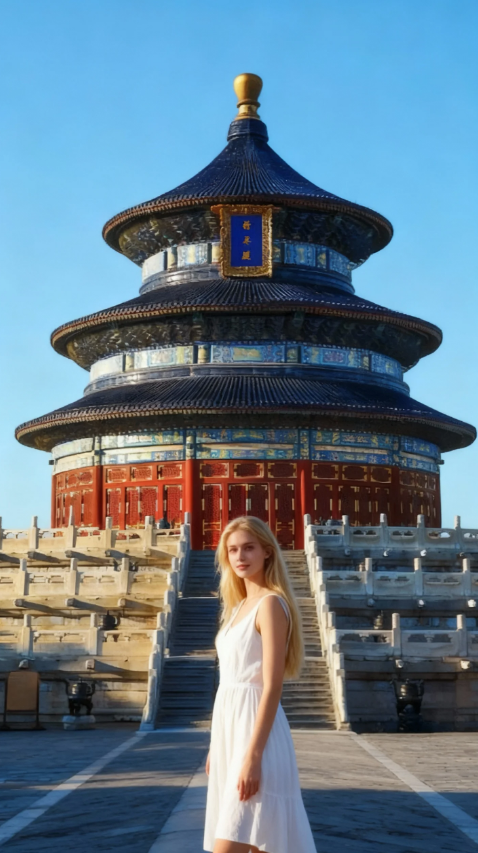
Our next stop was the Temple of Heaven, a complex built for imperial ceremonies to worship heaven. Unlike the Forbidden City’s imposing red and gold, the Temple of Heaven was a serene mix of blue and white, its roof tiles matching the sky. The most striking building was the Hall of Prayer for Good Harvests, a circular structure with three tiers of blue glazed tiles, supported by 28 wooden pillars (24 representing the seasons and four representing the cardinal directions). Inside, the ceiling curved upward like a dome, decorated with a golden dragon and phoenix. Mr. Li explained that the emperor would come here every winter to pray for a good harvest—an important ritual, as agriculture was the backbone of imperial China. We walked along the Echo Wall, a circular wall that amplifies sound; I whispered a phrase at one end, and Mr. Li heard it clearly 30 meters away. A group of locals was doing tai chi in the courtyard, their movements slow and graceful. I joined in for a few minutes, copying their gestures, and felt my body relax after the early morning wake-up.
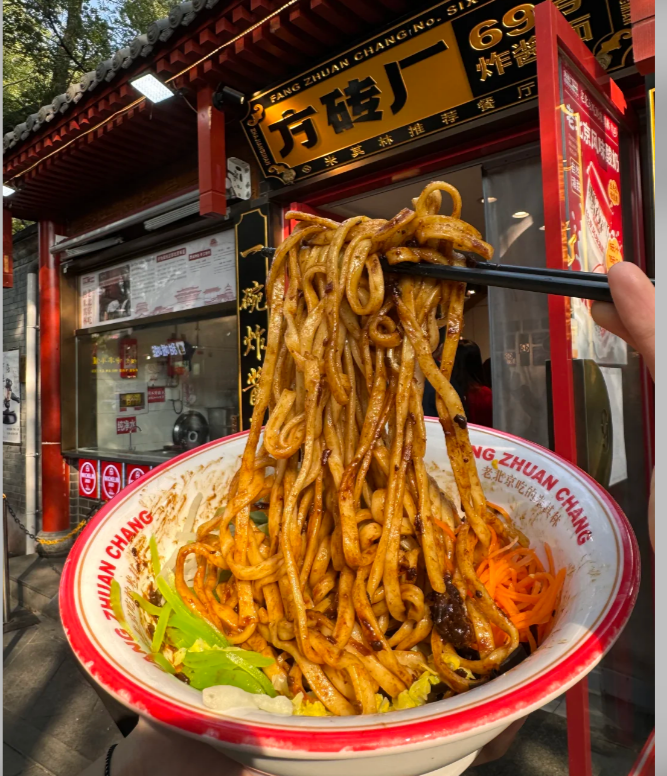
For lunch, we went to a “xiao chi” (snack) restaurant in Wangfujing, a busy shopping street. We ordered a feast: Peking duck (carved at the table, with thin pancakes, scallions, and sweet bean sauce), zhajiangmian (noodles with fermented bean paste), and lvdagunr (a sweet dessert made with glutinous rice and red bean paste). The Peking duck was crispy on the outside and tender on the inside—Mr. Li showed me how to wrap it in a pancake with scallions and sauce. “Peking duck has been a imperial dish since the Ming Dynasty,” he said. “The emperors loved it because it’s crispy but not greasy.” I ate three wraps before I slowed down, savoring the combination of flavors. The waiter, noticing I was a foreigner, brought me a small plate of pickled vegetables to balance the richness. “Welcome to Beijing,” he said with a smile. “Eat well.”
In the afternoon, we took the subway to the Summer Palace, a imperial garden on the shores of Kunming Lake. The Summer Palace was a stark contrast to the Forbidden City—instead of grand halls, there were winding paths, lotus ponds, and pavilions overlooking the lake. We took a dragon boat across Kunming Lake to Nanhu Island, where we climbed the Longevity Hill to get a panoramic view. From the top, I could see the entire garden: the Seventeen-Arch Bridge stretching across the lake, the marble boat (a symbol of imperial stability) moored at the shore, and willow trees lining the banks. Mr. Li told me that the Summer Palace was built by Empress Dowager Cixi in the late Qing Dynasty, and that it was designed to mimic the natural landscapes of southern China. “Emperors wanted to escape the formality of the Forbidden City here,” he said. “They could fish, paint, and enjoy the quiet.” We sat on a stone bench by the lake, watching locals fly kites—one kite, shaped like a dragon, soared high above the trees. I took a photo, capturing the dragon kite against the blue sky and the marble boat below—it was a perfect blend of tradition and leisure.
That evening, Mr. Li took me to什刹海 (Shichahai), a lake area surrounded by hutongs and bars. We rented bicycles and rode around the lake, passing street performers, seafood stalls, and locals walking their dogs. We stopped at a rooftop bar with views of the lake, where we ordered Tsingtao beer and watched the sun set. “What do you think of Beijing?” Mr. Li asked. I thought for a moment—of the Forbidden City’s golden thrones, the jianbing’s spicy crunch, the sound of erhu under a ginkgo tree, the unity of the flag-raising ceremony. “It’s more than I expected,” I said. “It’s not just history—it’s alive. The past and present aren’t separate here; they’re part of each other.” Mr. Li nodded. “That’s Beijing,” he said. “It’s been the capital for 800 years, but it’s always changing. It holds onto its roots while reaching for the future.”
As we rode back to the Airbnb, the city lights twinkled around us—skyscrapers in the distance, paper lanterns in the hutongs, car headlights on the main roads. I thought about my history papers, and how they’d only told part of the story. Beijing wasn’t just a collection of imperial buildings or historical events—it was the jianbing seller who’d been working the same stall for 40 years, the tai chi practitioners in the Temple of Heaven, the children chasing fireflies in the hutongs. It was a city of stories, and I’d only just begun to hear them.
Travel Guide: Explore Beijing’s Imperial Past & Local Present
1. Transportation: Getting to & Around Beijing
- Getting to Beijing: Beijing has two major airports—Beijing Daxing International Airport (PKX) and Beijing Capital International Airport (PEK). Both have direct flights to major cities worldwide: New York (14 hours), London (10 hours), Tokyo (3 hours), and Singapore (6 hours). High-speed trains connect Beijing to other Chinese cities: Shanghai (4.5 hours), Xi’an (4 hours), and Chengdu (7 hours) from Beijing South Railway Station.
- Getting Around Beijing:Subway: Beijing’s subway is the most efficient way to travel—19 lines cover all major attractions. Download the “Beijing Subway” app (English available) or use Alipay/WeChat Pay: search for “Beijing Subway Electronic Card” to get a QR code. Single rides cost 3-10 yuan based on distance. Avoid rush hour (7:30-9:30 AM, 5:30-7:30 PM) when trains are extremely crowded.
- Taxi: Taxis are affordable and convenient for short trips. Look for green (city center) or blue (suburbs) taxis with meters. Starting fare is 13 yuan for the first 3 kilometers, plus 2.3 yuan per additional kilometer. Drivers rarely speak English, so have your destination written in Chinese (your hotel can help).
- Ride-Hailing: Apps like Didi Chuxing (English version available) are cheaper than taxis. Enter your destination in English, and the app will show the fare upfront. Drivers can contact you via the app’s translation feature.
- Bicycles: Shared bikes (Mobike, Hellobike) are perfect for exploring hutongs. Download the app, register with your passport, and scan the QR code. Rates are 2 yuan per 30 minutes. Park only in designated areas to avoid fines.
2. Top Attractions: Imperial & Local Highlights
- Forbidden City (Palace Museum)Highlights: Hall of Supreme Harmony (imperial throne), Hall of Mental Cultivation (emperor’s living quarters), Palace of Compassion and Tranquility (imperial jewelry exhibit), and the Imperial Garden. Don’t miss the “Treasures of the Palace Museum” exhibit for jade, gold, and porcelain artifacts.
- Tickets: 60 yuan (peak season, April-October), 40 yuan (off-season, November-March). Must book online 7 days in advance via the “Palace Museum” official website or WeChat mini-program (English available). Bring your passport—you’ll need it to enter.
- Hours: 8:30 AM-5 PM (peak season, last entry 4 PM), 8:30 AM-4:30 PM (off-season, last entry 3:30 PM). Closed on Mondays (except public holidays).
- Pro Tip: Enter via the Meridian Gate and exit via the Gate of Divine Prowess to follow the historical flow. Hire a local guide (200-300 yuan for 2 hours) to learn the stories behind the buildings—much more informative than a guidebook.
Temple of HeavenHighlights: Hall of Prayer for Good Harvests (iconic blue roof), Echo Wall (sound amplification), and Circular Mound Altar (where emperors worshipped heaven). Watch locals do tai chi or kite flying in the morning.
Tickets: 15 yuan (park entry), 20 yuan (combined ticket for Hall of Prayer + Echo Wall + Circular Mound Altar). Can buy tickets on-site or online.
Hours: 6:00 AM-10:00 PM (park), 8:00 AM-6:00 PM (attractions, peak season), 8:00 AM-5:00 PM (attractions, off-season).
Pro Tip: Visit at 7-8 AM to avoid crowds and see locals practicing traditional activities. The Echo Wall works best when it’s quiet—go early!
Summer PalaceHighlights: Hall of Prayer for Good Harvests, Kunming Lake (rent a dragon boat), Seventeen-Arch Bridge, and Longevity Hill (panoramic views). Don’t miss the Marble Boat, a symbol of imperial power.
Tickets: 30 yuan (park entry), 60 yuan (combined ticket for all attractions). Buy on-site or online.
Hours: 6:30 AM-8:30 PM (peak season), 7:00 AM-7:00 PM (off-season).
Pro Tip: Take the dragon boat across Kunming Lake (60 yuan per person) to avoid walking around the entire lake. Climb Longevity Hill in the afternoon for sunset views over the lake.
NanluoguxiangHighlights: 800-year-old hutong with street food stalls, boutique shops, and traditional courtyard houses. Must-try foods: jianbing (Granny Wang’s stall), stinky tofu, and candied hawthorns.
Hours: Most shops 10 AM-10 PM, street food stalls 8 AM-midnight.
Pro Tip: Wander the side hutongs (like Jiaodaokou East) to escape the tourist crowds—you’ll find local families, small tea houses, and hidden art galleries.
ShichahaiHighlights: Scenic lake area with hutongs, bars, and seafood stalls. Rent a bicycle (30 yuan per hour) to ride around the lake, or take a boat tour (80 yuan per person).
Pro Tip: Visit in the evening for rooftop bars with lake views (try “The Roof” bar) or street food (freshly grilled seafood by the lake).
3. Food: Must-Try Beijing Dishes & Where to Eat
Beijing’s cuisine (Jingcai) is rooted in imperial and local traditions—rich, flavorful, and often with a savory-sweet balance. Here are the essentials:
| Dish Name (Pinyin) | Description | Where to Eat | Price (Yuan) |
| Peking Duck (Beijing Kaoya) | Crispy duck skin wrapped in thin pancakes with scallions, cucumber, and sweet bean sauce | Quanjude (historic, Wangfujing branch) or Da Dong (modern, better for non-greasy duck) | 200-300 per duck |
| Jianbing (Savory Crepe) | Batter, egg, scallions, cilantro, crispy dough, and chili sauce (customizable) | Granny Wang’s Stall (Nanluoguxiang) or Jianbing Wang (multiple locations) | 8-12 per crepe |
| Zhajiangmian (Noodles with Bean Paste) | Wheat noodles with fermented bean paste, minced pork, and pickled vegetables | Lao Beijing Zhajiangmian (Hutong near Shichahai) | 25-35 per bowl |
| Lvdagunr (Glutinous Rice Dessert) | Sweet glutinous rice rolled in red bean paste and soybean powder | Daoxiangcun (traditional pastry shop, multiple locations) | 3-5 per piece |
| Youtiao & Doujiang (Fried Dough & Soy Milk) | Classic breakfast: crispy fried dough with savory or sweet soy milk | Xianyukou Breakfast Shop (near Tiananmen Square) | 10-15 per person |
4. Accommodation: Where to Stay
- Hutong Area (Nanluoguxiang/Shichahai): Perfect for experiencing local life. Try “The Orchid Hotel” (luxury, 1,200+ yuan/night)—a restored courtyard house with modern amenities. For budget travelers, “Hutong Hostel” (200-300 yuan/night) has clean dorms and organizes hutong tours.
- Wangfujing Area: Great for shopping and central access. “Grand Hyatt Beijing” (luxury, 1,500+ yuan/night) is steps from Wangfujing Street and has a Michelin-starred restaurant. “Home Inn Wangfujing” (budget, 300-400 yuan/night) is clean and close to the subway.
- CBD Area: For modern comfort and business travelers. “China World Summit Wing” (luxury, 2,000+ yuan/night) has panoramic city views and a rooftop bar. “CitizenM Beijing CBD” (mid-range, 600-800 yuan/night) is trendy and family-friendly.
5. Cultural Etiquette & Practical Tips
- Forbidden City & Temple Etiquette: No running or loud talking in sacred areas. Don’t touch artifacts or climb on buildings. When taking photos, turn off the flash (it damages ancient artifacts).
- Flag-Raising Ceremony: Arrive 1-2 hours early for a good spot. Dress warmly in winter—it’s freezing at dawn. Be respectful: stand quietly during the ceremony, don’t push or cut in line.
- Hutong Etiquette: Hutongs are residential areas—keep noise down, especially after 10 PM. Ask permission before taking photos of locals or their homes. Don’t litter—use the trash cans provided.
- Payment: Most shops, restaurants, and attractions accept Alipay or WeChat Pay. Carry 200-300 yuan in cash for small street stalls or rural areas. ATMs are widely available for cash withdrawals (Visa/Mastercard accepted).
- Weather & Clothing:Spring (March-May): Mild (10-20°C), windy. Bring a light jacket and scarf.
- Summer (June-August): Hot and humid (30-35°C), rainy. Bring sunscreen, hat, and umbrella.
- Autumn (September-November): Cool and dry (10-25°C)—best time to visit. Bring a sweater and jacket.
- Winter (December-February): Cold and dry (-5-10°C), snowy. Pack a down jacket, gloves, hat, and thermal underwear.
Language: Most tourist attractions and hotels have English signs. Young people and service staff speak basic English. Download “Google Translate” with offline Chinese pack for communication—you can type or speak, and it will translate.
6. Three-Day Itinerary for Beijing
Day 1: Imperial Beijing
- 1. 6:00 AM: Flag-raising ceremony at Tiananmen Square (arrive early).
- 2. 7:30 AM: Breakfast at Xianyukou Breakfast Shop (youtiao + doujiang).
- 3. 9:00 AM: Tour Forbidden City (focus on Hall of Supreme Harmony, Hall of Mental Cultivation).
- 4. 12:30 PM: Lunch at Quanjude (Peking duck) near Tiananmen Square.
- 5. 2:30 PM: Visit Temple of Heaven (Hall of Prayer, Echo Wall).
- 6. 5:30 PM: Walk to Wangfujing Street for shopping and snacks (try candied hawthorns).
- 7. 7:30 PM: Dinner at Lao Beijing Zhajiangmian (zhajiangmian + pickled vegetables).
Day 2: Local Beijing
- 1. 8:30 AM: Breakfast at Granny Wang’s Stall (jianbing) in Nanluoguxiang.
- 2. 9:30 AM: Explore Nanluoguxiang and side hutongs (Jiaodaokou East).
- 3. 12:00 PM: Lunch at a local hutong restaurant (try braised pork ribs with sweet potato).
- 4. 2:00 PM: Visit Shichahai—rent a bicycle and ride around the lake.
- 5. 4:30 PM: Tea ceremony at a traditional tea house (try jasmine tea).
- 6. 7:00 PM: Dinner at seafood stalls by Shichahai Lake (grilled fish + shrimp).
- 7. 9:00 PM: Rooftop bar at Shichahai for lake views and Tsingtao beer.
Day 3: Garden & Culture
- 1. 8:30 AM: Breakfast at hotel (try congee + pickled vegetables).
- 2. 9:30 AM: Tour Summer Palace (dragon boat ride, Longevity Hill).
- 3. 12:30 PM: Lunch at Summer Palace’s lakeside restaurant (sweet and sour fish).
- 4. 2:30 PM: Visit National Museum of China (free, book online) to see ancient Chinese artifacts.
- 5. 5:30 PM: Buy souvenirs at Daoxiangcun (lvdagunr, peanut candy).
- 6. 7:30 PM: Farewell dinner at Da Dong (modern Peking duck) before departure.