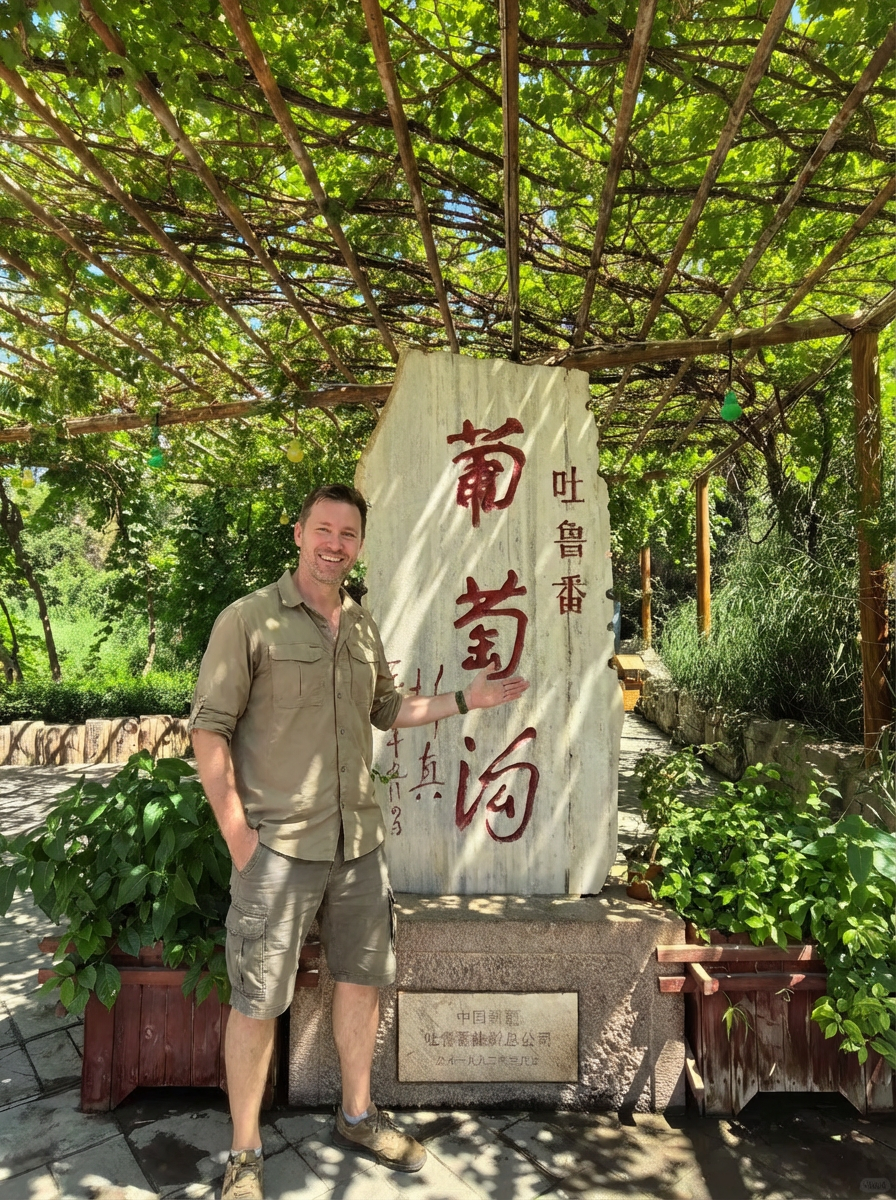
When you hear the name Turpan, the first word that comes to mind is “heat.” Turpan is the hottest place in China, a depression in the earth’s crust where temperatures often soar above 50°C in the summer. It is a place of extremes. Yet, hidden in the Flaming Mountains, like a cool, emerald secret, lies the Grape Valley. I was skeptical—could a valley really be cool in such an inferno? But as I descended from the scorching, barren ridges into the embrace of the valley, I felt the temperature drop instantly. It was as if I had stepped through an invisible door into a different world.
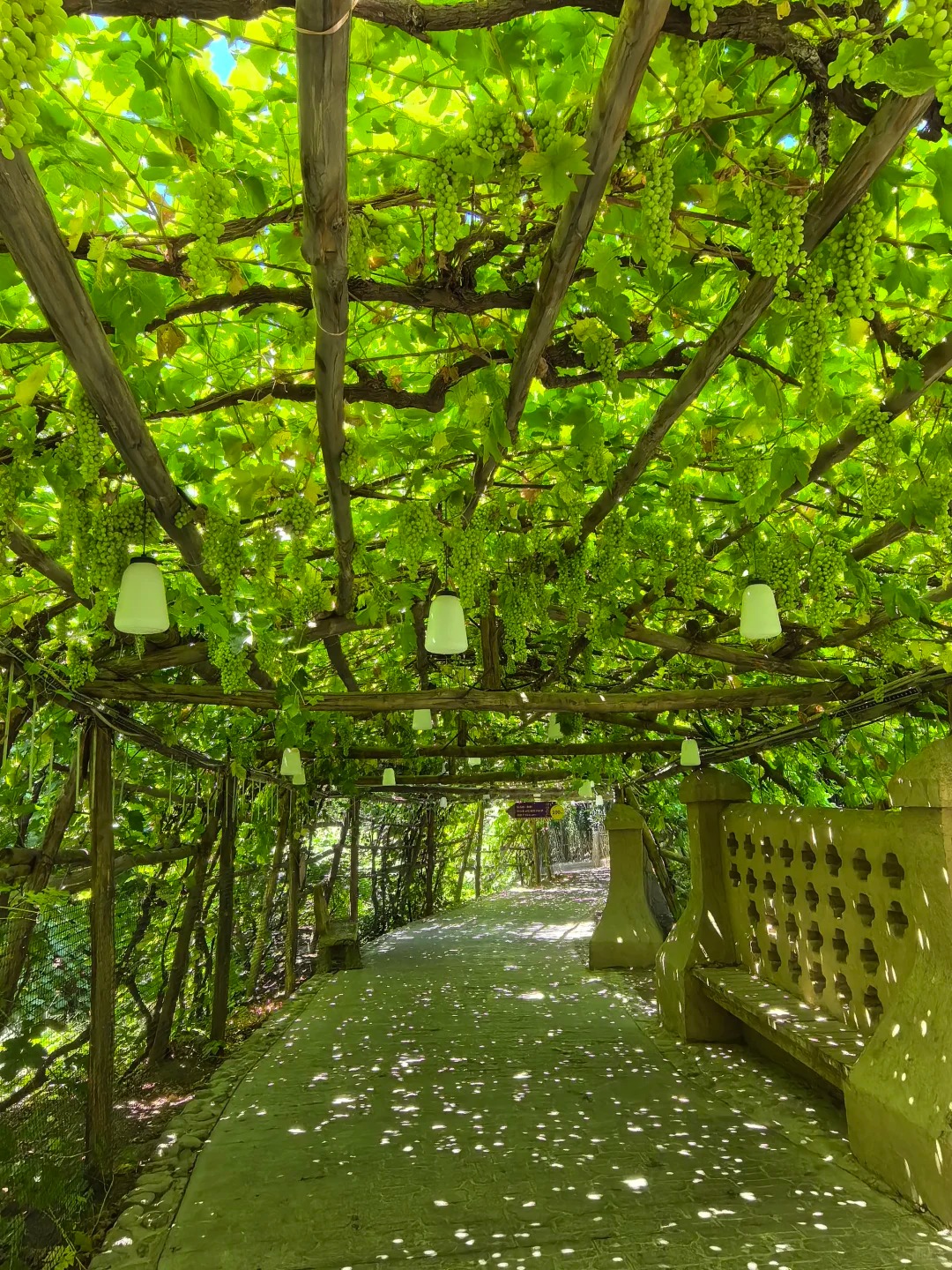
The Grape Valley is not just a tourist attraction; it is the lifeblood of Turpan. It is a lush strip of greenery, 8 kilometers long and half a kilometer wide, fed by the crystal-clear waters of the melted snow from the Tianshan Mountains. As I walked along the shaded paths, the contrast was overwhelming. On one side, the fiery red, dry mountains baked in the sun. On the other, a canopy of grape leaves filtering the light into a soft, dappled shade.
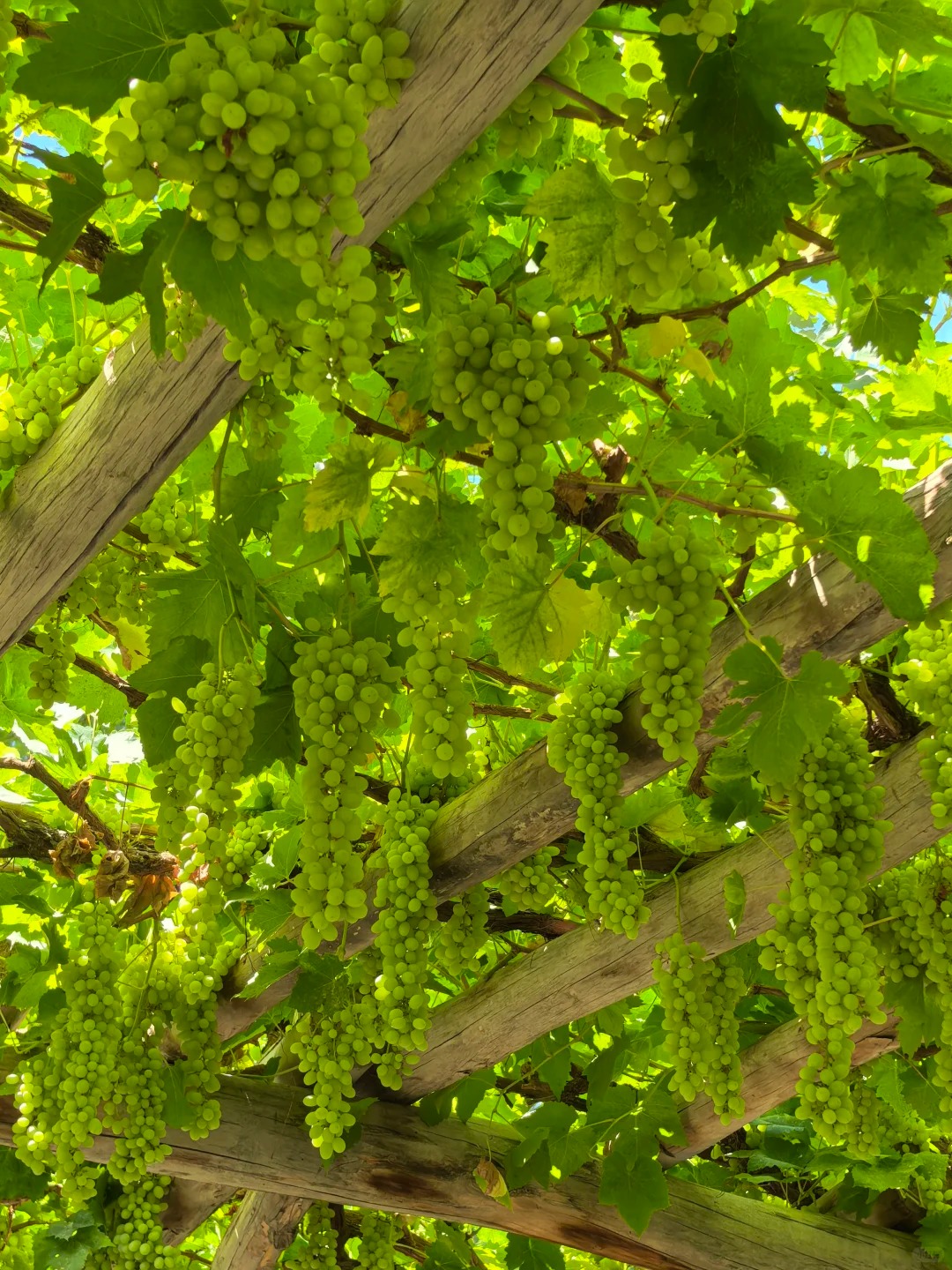
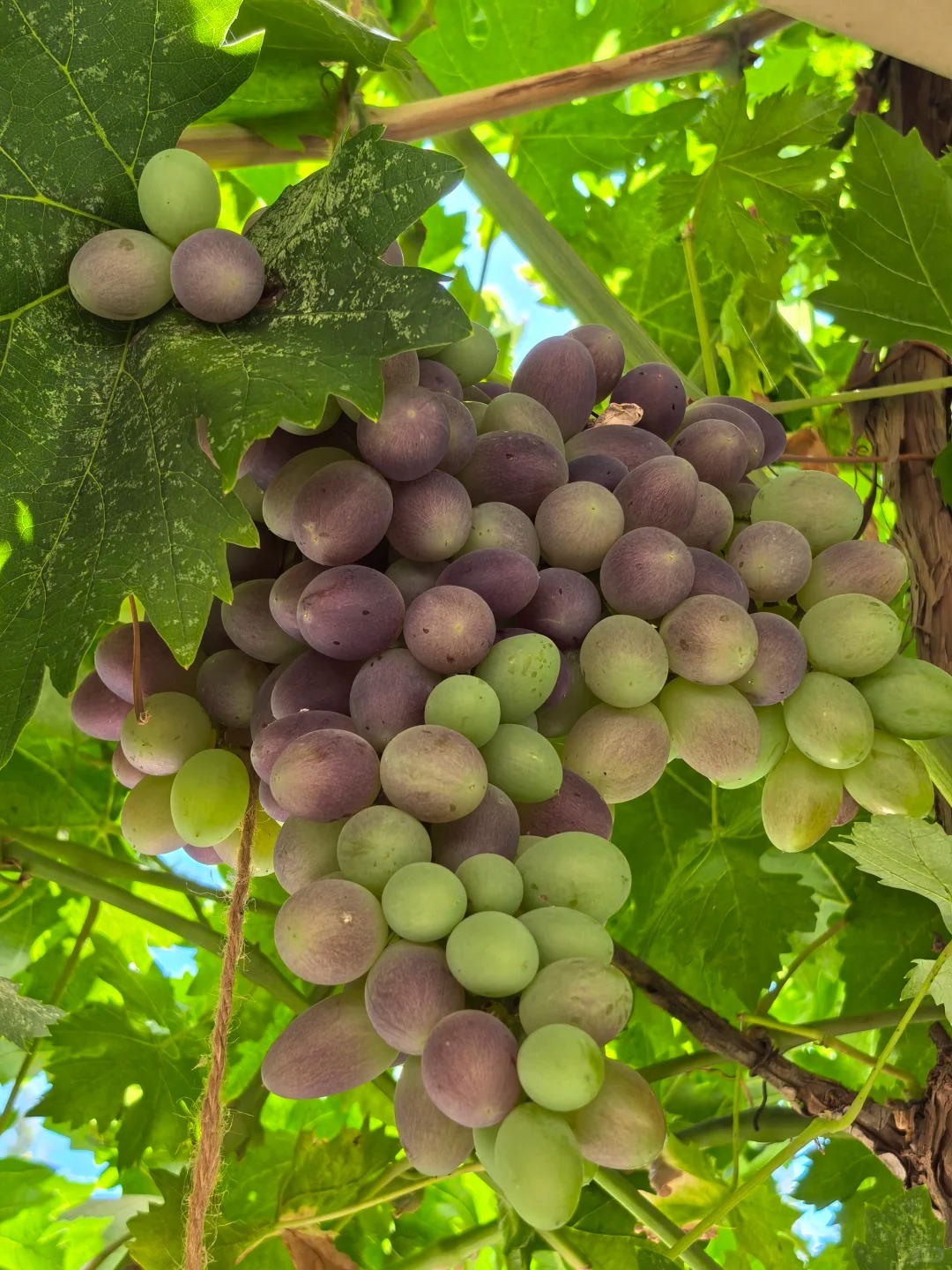
The air here is thick with the scent of sweetness. It is the smell of ripening fruit, of damp earth, and of flowing water. The grapes are the kings of this valley. There are over a hundred varieties here. I saw bunches of white Thompson seedless grapes, dark purple Manaizi grapes, and the famous red Wuhebai grapes. They hang heavy on the vines, covered with white paper bags to protect them from the birds and the intense sun.
I stopped at a vineyard owned by a Uighur family named Rehman. They invited me into their courtyard, which was built in the traditional style with high walls to keep the heat out and the cool in. The courtyard was shaded by a trellis of grapevines. Sitting under the green canopy, sipping a glass of freshly squeezed grape juice, I felt a profound sense of relaxation.

Rehman, the grandfather, was pruning the vines. He had skin like old leather, tanned by years of working in the sun, but his eyes were bright and youthful. He told me that the family has been growing grapes in this valley for generations. “The heat makes the grapes sweet,” he said with a gap-toothed smile. “The more the sun burns, the more sugar we get.”
I watched the women of the family sorting the grapes. They laughed and chatted as they worked, their colorful dresses bright spots in the shade. They were making raisins. In the valley, there are thousands of “Brick Houses”—special drying structures made of mud bricks with perforated walls to let the hot air in but keep the direct sun out. The grapes are hung inside and dried naturally by the hot desert wind. I entered one of these brick houses. It was dark and smelled intensely of concentrated sweetness. The walls were lined with strings of drying grapes. It was like walking into a pantry of pure sugar.
I tried a handful of raisins straight from the vine. They were unlike any raisin I had ever bought in a supermarket. They were plump, chewy, and exploded with flavor—a mix of honey and caramel. It was the taste of the sun itself, captured in a small, dark fruit.
But Grape Valley is more than just agriculture; it is history. The people of Turpan have been cultivating grapes here for over 2,000 years. The sophisticated irrigation system, the *karez* wells, brings the water from the mountains deep underground to the roots of the vines. I walked along a channel of flowing water, feeling its icy coldness. This engineering marvel allowed civilization to thrive in one of the harshest environments on earth. Walking in the footsteps of ancient Silk Road travelers, I realized that this valley was an oasis of rest and refreshment for them, just as it is for us today.
I decided to hike up to a higher viewpoint to see the valley from above. The view was spectacular—a strip of vibrant green winding through the burnt orange of the Flaming Mountains. It looked like a green snake in a fire. The juxtaposition was stark and beautiful. It highlighted the fragility and the tenacity of life.
As evening approached, the heat began to abate, but the valley remained cool. I visited a market stall to buy some dried fruit. The sellers were generous, offering me tastes of everything from apricots to mulberries to melons. The atmosphere was festive. Tourists and locals mingled, sharing the universal language of food.
I ended my day at a traditional *meshrep* (gathering) organized by the locals. There was music, dancing, and mountains of food. I watched the dancers perform the typical Xinjiang dance, their necks moving to the rhythm, their arms sweeping the air. It was infectious. I found myself clapping along, a smile plastered on my face. The sweet grape wine flowed freely.
Leaving Grape Valley, I felt a sense of lightness. In a place defined by heat and harshness, the valley offers a sanctuary of cool and sweetness. It is a testament to the ingenuity of the human spirit—finding a way to create a paradise in the desert.
Turpan is famous for many things—the Flaming Mountains, the Jiaohe Ruins, the Emin Minaret. But for me, the heart of Turpan beats in the Grape Valley. It is where the water meets the sun, and where the history of the Silk Road tastes sweet. If you find yourself in this hot land, do not miss the chance to sit under the vines, taste the raisins, and drink the juice. It is a sweet memory that will stay with you long after the heat has faded.