Suzhou’s Humble Administrator’s Garden doesn’t announce itself. You walk down a narrow, ordinary hutong (alley), pass through a modest doorway in a whitewashed wall, and the world changes. The city's murmur vanishes. Suddenly, you are inside a Song Dynasty painting.

The first sensation is one of compression and release. A small, shaded courtyard with a gnarled wisteria vine funnels you towards a circular moon gate. Stepping through it is like passing through a lens: the view explodes into a panorama of water, rock, and greenery. A vast lotus pond, still as polished jade, occupies the center. Pavilions with names like “Hall of Drifting Fragrance” and “Pavilion of the Listening Oriole” perch delicately on its edges, connected by zigzagging bridges and covered walkways.
I spent hours losing myself. This garden is not meant to be seen in a line; it’s a labyrinth of curated vistas. Every window, every open-sided pavilion, frames a perfect picture. A hexagonal window captures a solitary rock against a wall of bamboo. A round “moon window” perfectly encircles a distant pagoda’s peak. You are constantly being directed to look at nature as art.
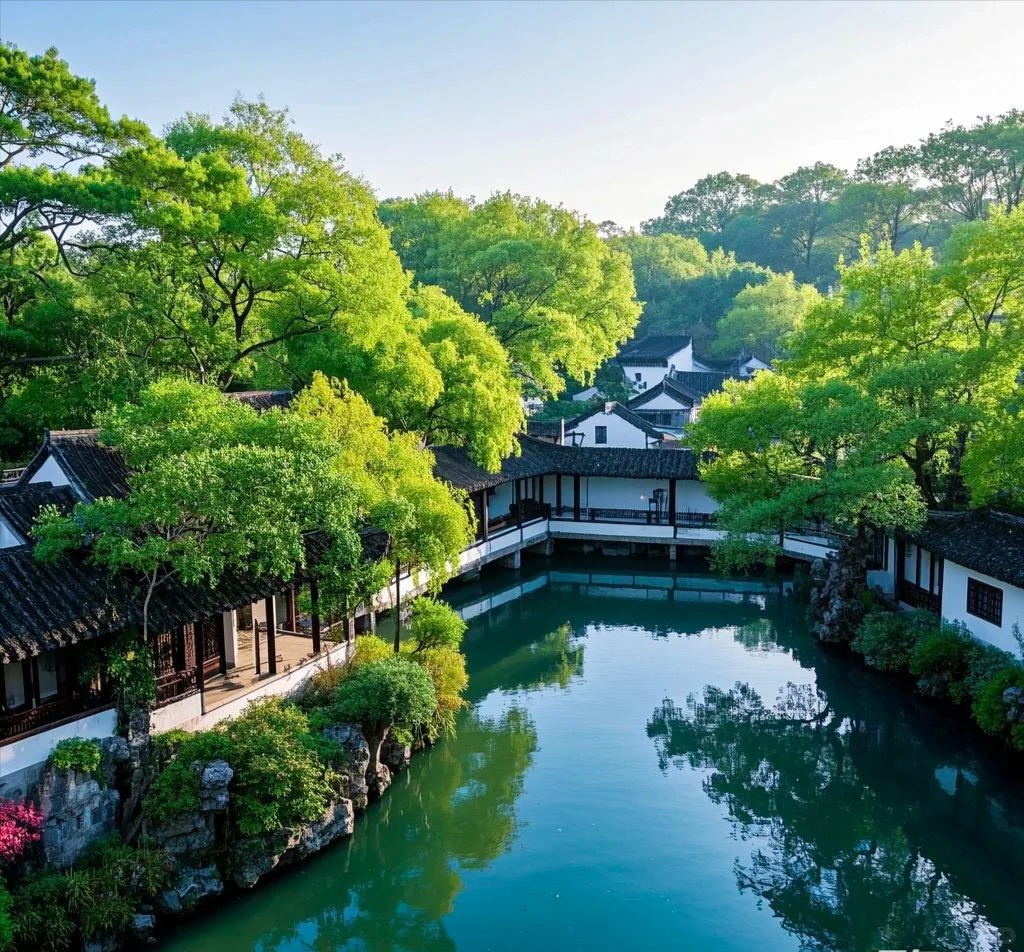
The genius is in the borrowed scenery (jiejing). The garden’s designers used the low skyline of old Suzhou. The slender North Temple Pagoda, miles away, appears as an integral part of the composition, “borrowed” to extend the garden’s sense of depth infinitely. I sat in the “Small Flying Rainbow” loggia, a covered bridge with rare colored windows, and watched rain begin to fall. Each droplet created a tiny, perfect circle on the pond’s surface, and the sound on the lotus leaves was a gentle, percussionist’s patter. The air smelled of wet earth and sweet osmanthus.
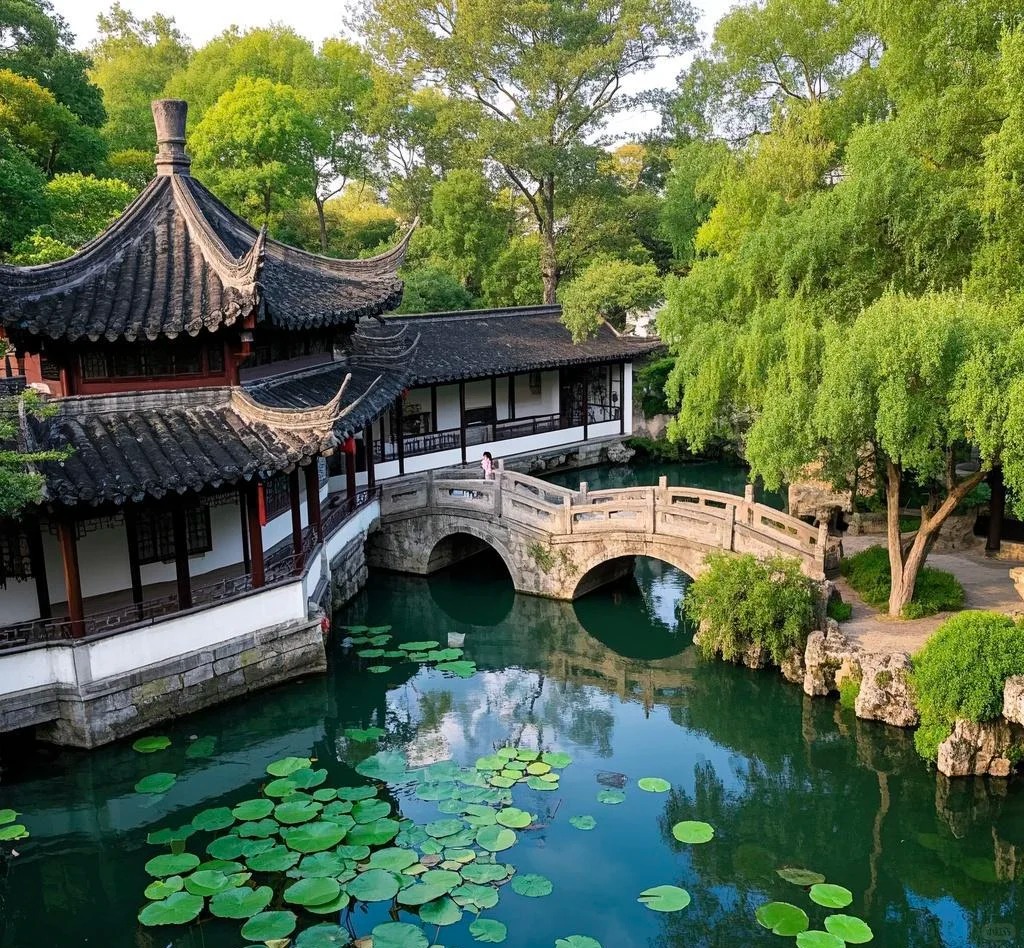
This garden was built by a retired imperial censor, Wang Xianchen, in the 16th century. “Humble Administrator” was an ironic nod to a line in an ancient essay about the simple life of gardening. There’s nothing humble about the artistry here. It is a profound, philosophical statement about man’s place within nature—not to dominate, but to collaborate, to frame, to subtly guide. Leaving as the light turned golden, I felt I hadn’t just visited a garden. I had been a guest inside a beautifully composed, living poem.