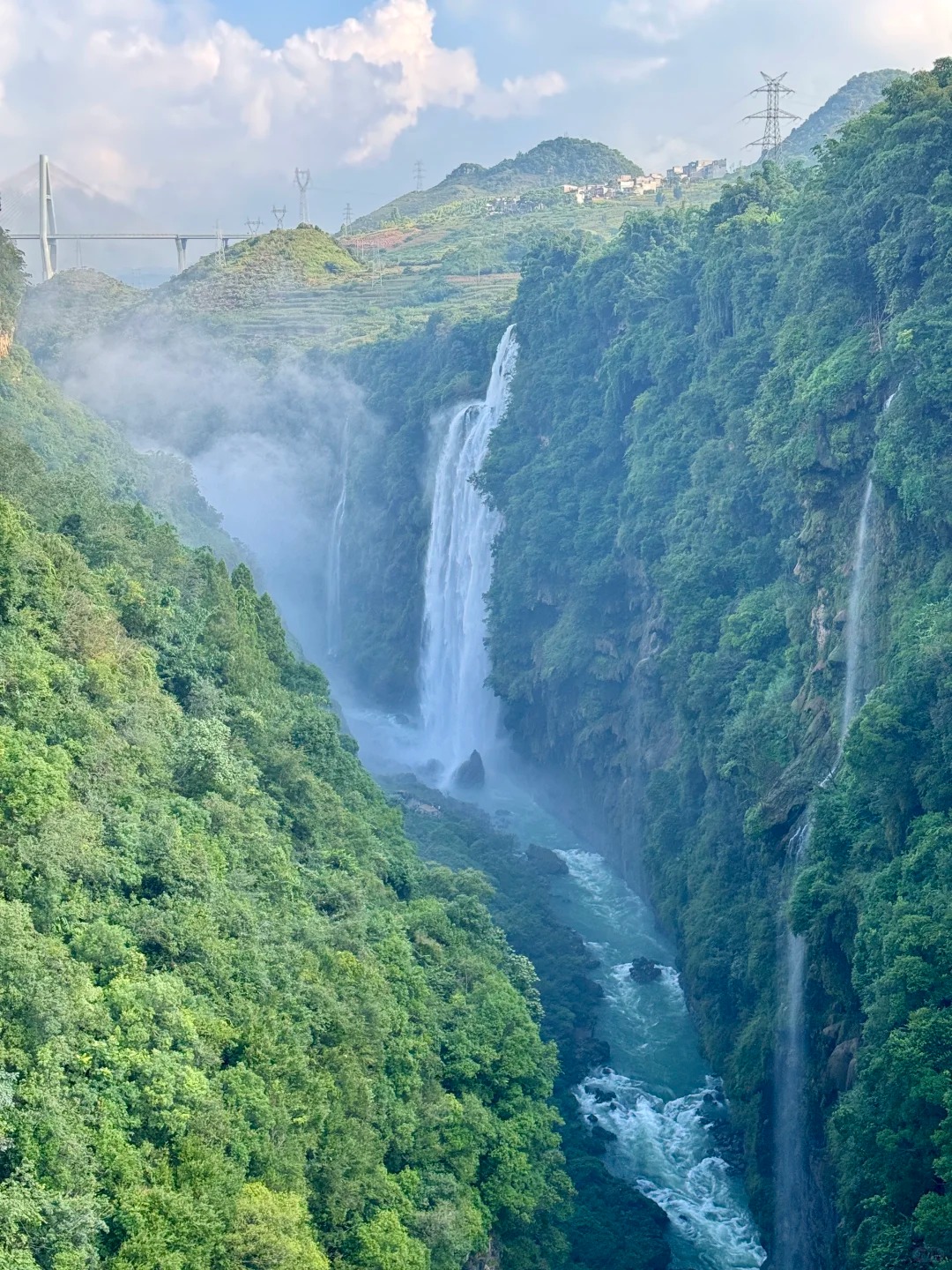
If Wanfenglin is where the earth reaches up to the sky, Malinghe Canyon is where the earth cracked open and invited the sky down into the deep. They call it the "Earth's Beautiful Scar." Standing at the rim, looking down into the fissure that slices through the Xingyi plateau, "scar" feels like the right word—a violent, jagged wound that has healed over with lush greenery and rushing water.
I took the elevator down. Yes, another outdoor elevator. China loves making nature accessible, even if it feels a bit like cheating. But as the glass doors opened at the bottom, the modern world vanished. I stepped out into a prehistoric gorge.
The first thing you notice is the walls. They rise up vertically on both sides, over a hundred meters high, closing you in. But they aren't bare rock. They are draped in "tufa"—calcium carbonate deposits that look like hanging tapestries of stone, covered in moss and ferns. It looks like the walls are melting. It’s alien and beautiful.
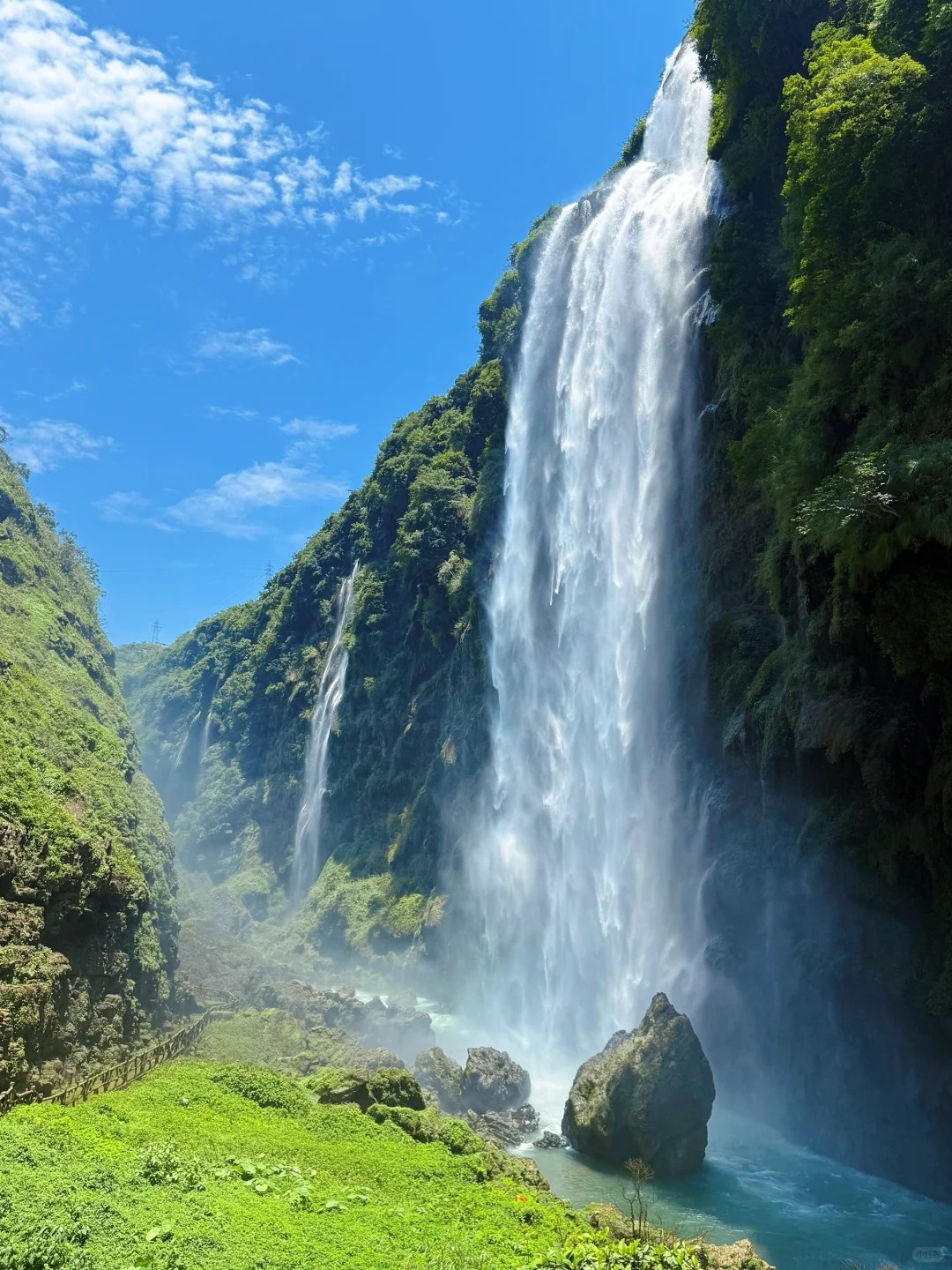
It had rained the night before, which meant the waterfalls were awake. Malinghe is famous for having over a hundred waterfalls cascading down its cliffs. I wasn't counting, but everywhere I looked, water was falling. Some were thin, delicate ribbons that turned into mist before hitting the river; others were powerful torrents crashing onto the rocks.
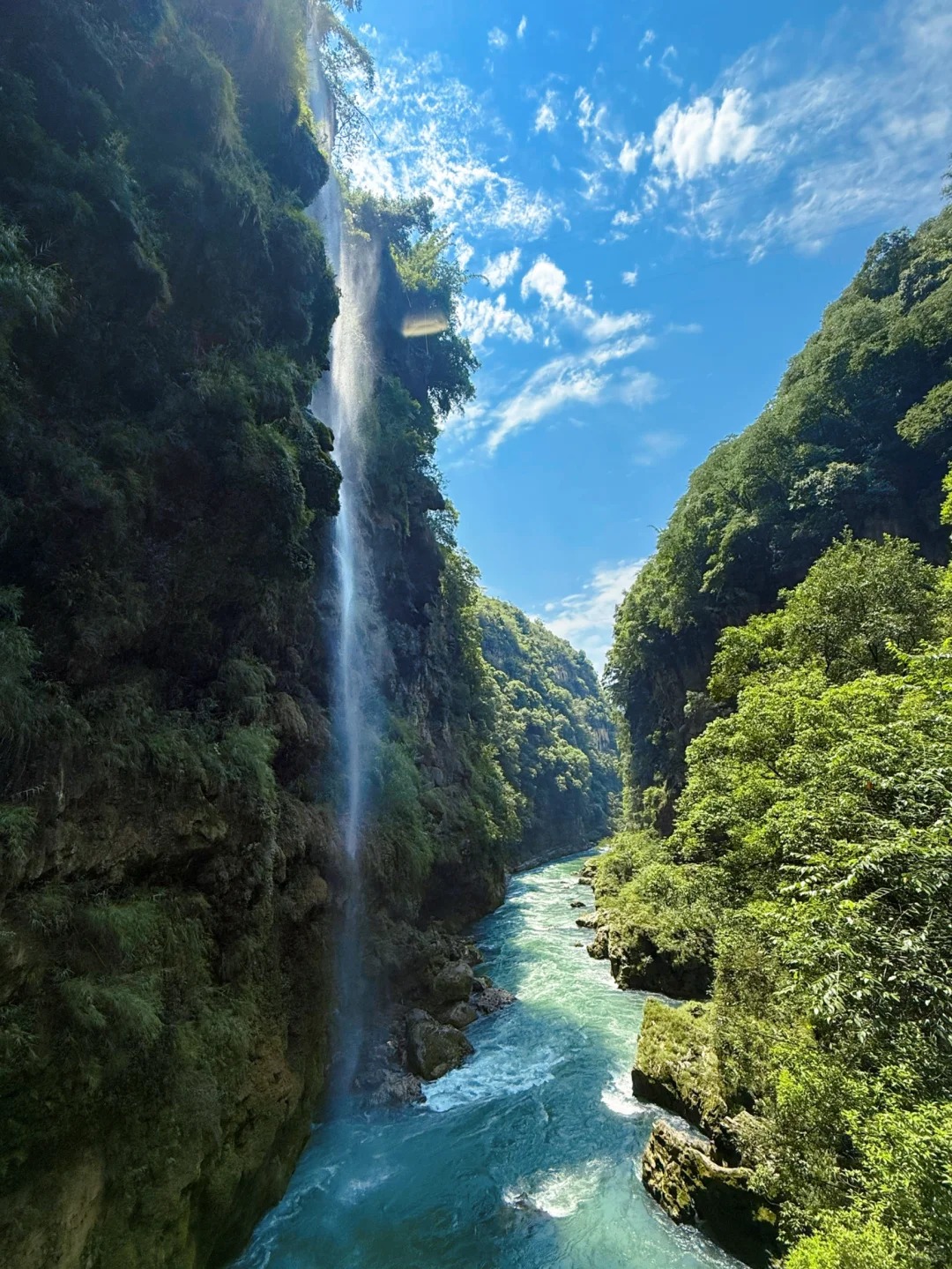
I walked along the plank path that clings to the cliff face. The path is narrow, damp, and often passes directly behind the waterfalls. I found myself ducking under curtains of water, the spray cooling my face. The river below, the Maling River, was churning—a muddy, powerful force carving its way through the canyon floor.
There is a suspension bridge that spans the canyon. Walking onto it, I felt suspended in a void of green and grey. Looking up, I could see a thin strip of blue sky, like a ceiling window. Looking down, the turbulent river. It felt claustrophobic in the best possible way—like being hugged by the earth.
But the most memorable moment wasn't visual; it was auditory. I reached a section where multiple waterfalls converged. The sound was overwhelming, a cacophony of crashing water that echoed off the canyon walls. I stopped and closed my eyes. It sounded like a thousand people applauding. I shouted—a primal "Hello!"—and my voice was instantly swallowed by the roar. In that canyon, you are anonymous. You are small.
I saw a group of rafters drifting down the river below. They looked like tiny toys in a washing machine, screaming with delight as they hit a rapid. I decided to stick to the walkway. I enjoyed the intimacy of the walls too much to rush past them.
Climbing back up (this time I took the stairs, trying to redeem my laziness with the elevator), I emerged back onto the plateau. The transition was jarring. One minute you are in a deep, wet, enclosed world of rock and water; the next, you are back in the open, flat sunshine. Malinghe Canyon is a hidden world, a secret garden growing in the cracks of the earth. It’s a reminder that sometimes, the most beautiful things are found not by looking up, but by looking down.