The journey to Wulong is a lesson in revelation. My van climbed the endless switchbacks into the Wuling Mountains of Chongqing, swallowed whole by a dense, white fog. The world shrank to the taillights ahead. Then, in an instant, we broke through. Below us, a boundless, rolling sea of clouds filled every valley, a silent, cottony ocean. Above, the sun blazed in a sharp blue sky, and all around, the jagged, forested peaks of the karst mountains rose like islands from the white abyss. We weren't just in the mountains; we were above the world. This dramatic entrance set the stage for what felt less like tourism and more like a geological pilgrimage.
The heart of this pilgrimage beats deep underground. Furong Cave is not merely a cavern; it is a sublime, hidden cathedral sculpted by water over millennia. The immensity hits you the moment you step inside. The main chamber is so vast it creates its own weather, a cool, damp breath on your face. A paved path leads you through a fantasyland of stone. Colossal calcite pillars, some over 30 meters high, connect floor to ceiling like the columns of a titan's palace. Delicate "stone curtains" hang in translucent, rippling folds. In the "Crystal Palace" chamber, myriad formations sparkle under the lights: "coral" gardens, "jade" pagodas, and the stunning "Rocket Shooting into Space," a pure white stalagmite of impossible elegance. The silence is profound, broken only by the steady, melodic drip… drip… of water, each drop slowly adding a molecule to these monumental sculptures. It’s a place that forces reverence, a humbling reminder of nature's patient, magnificent artistry.
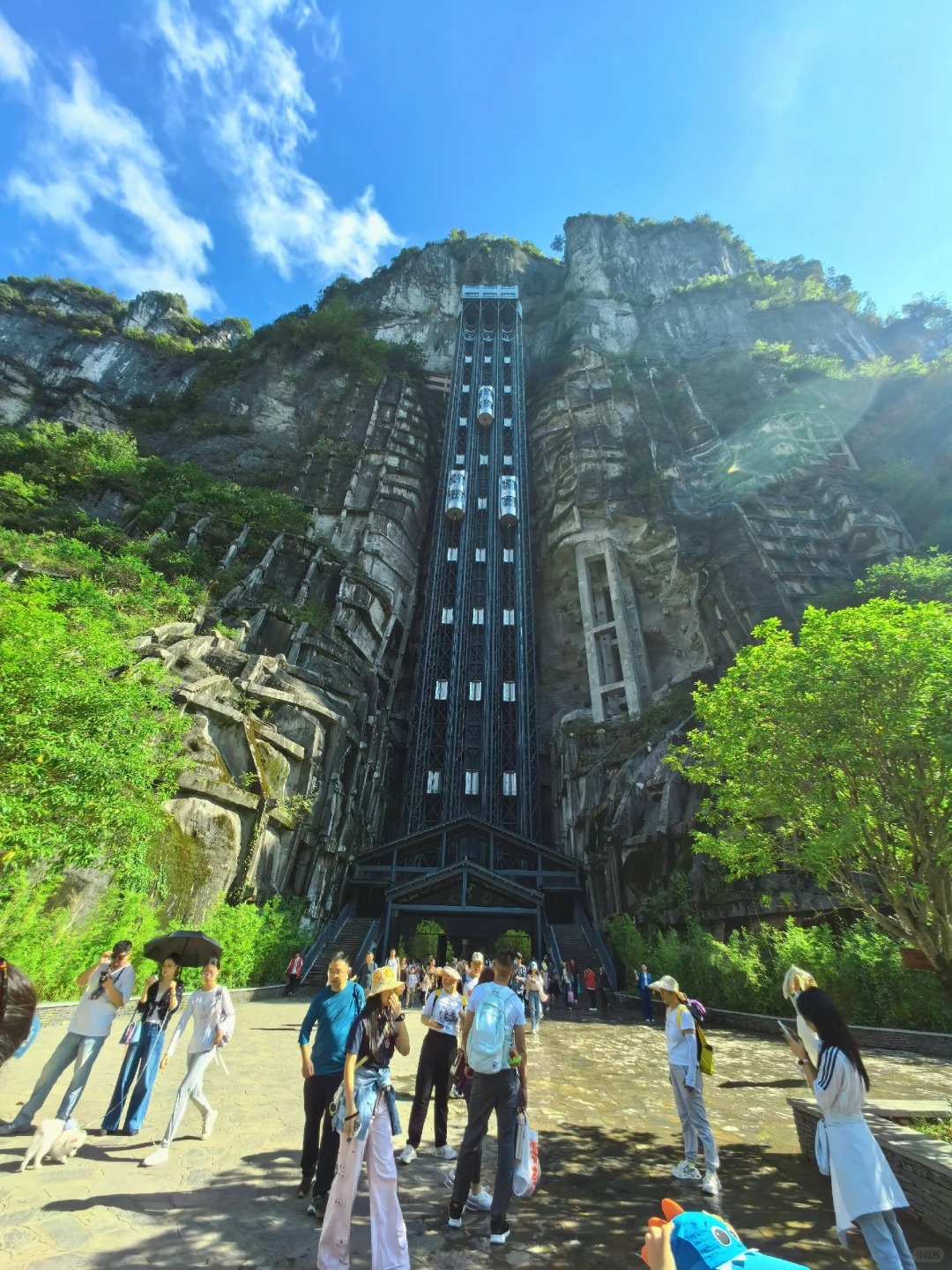
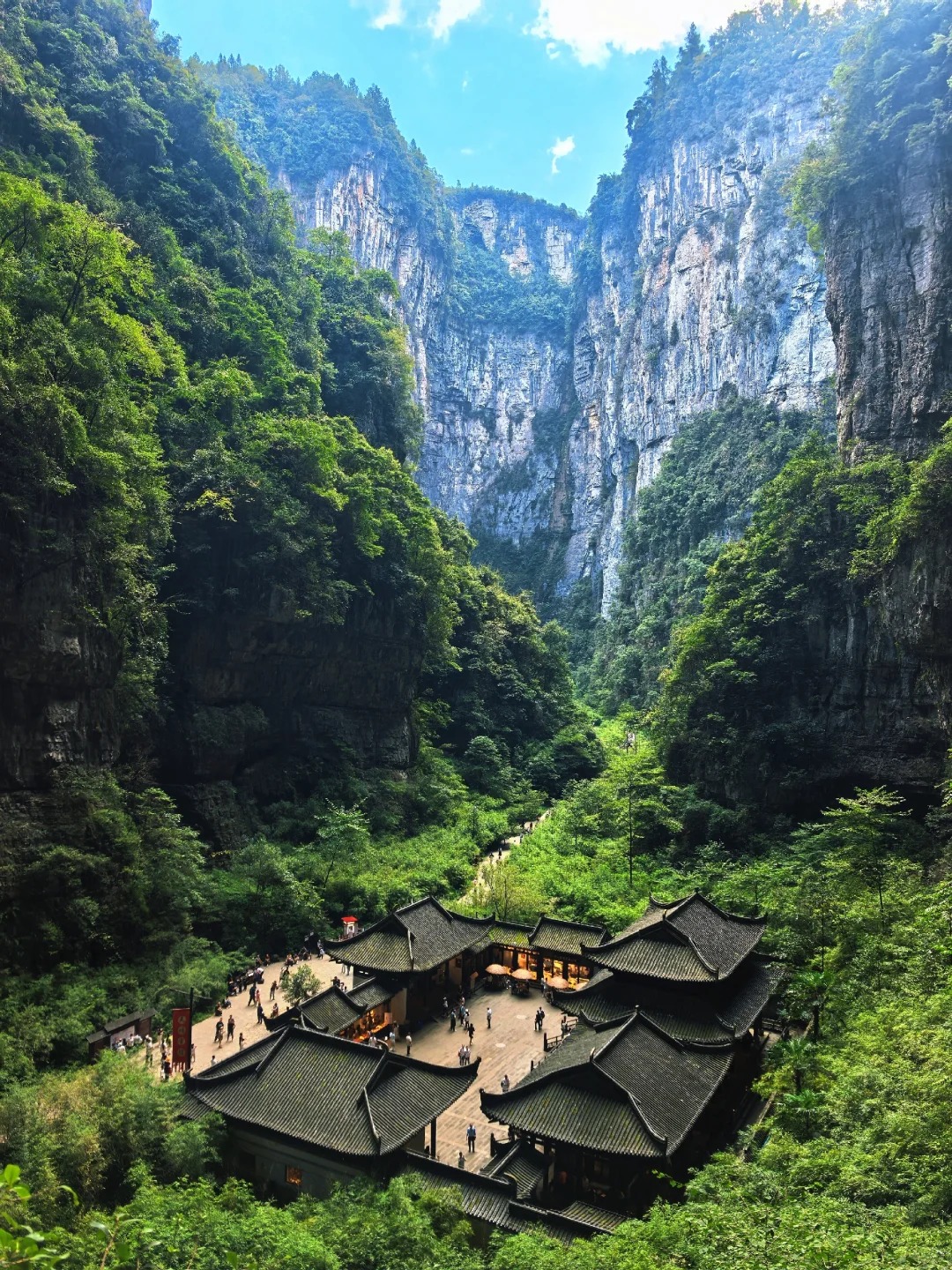
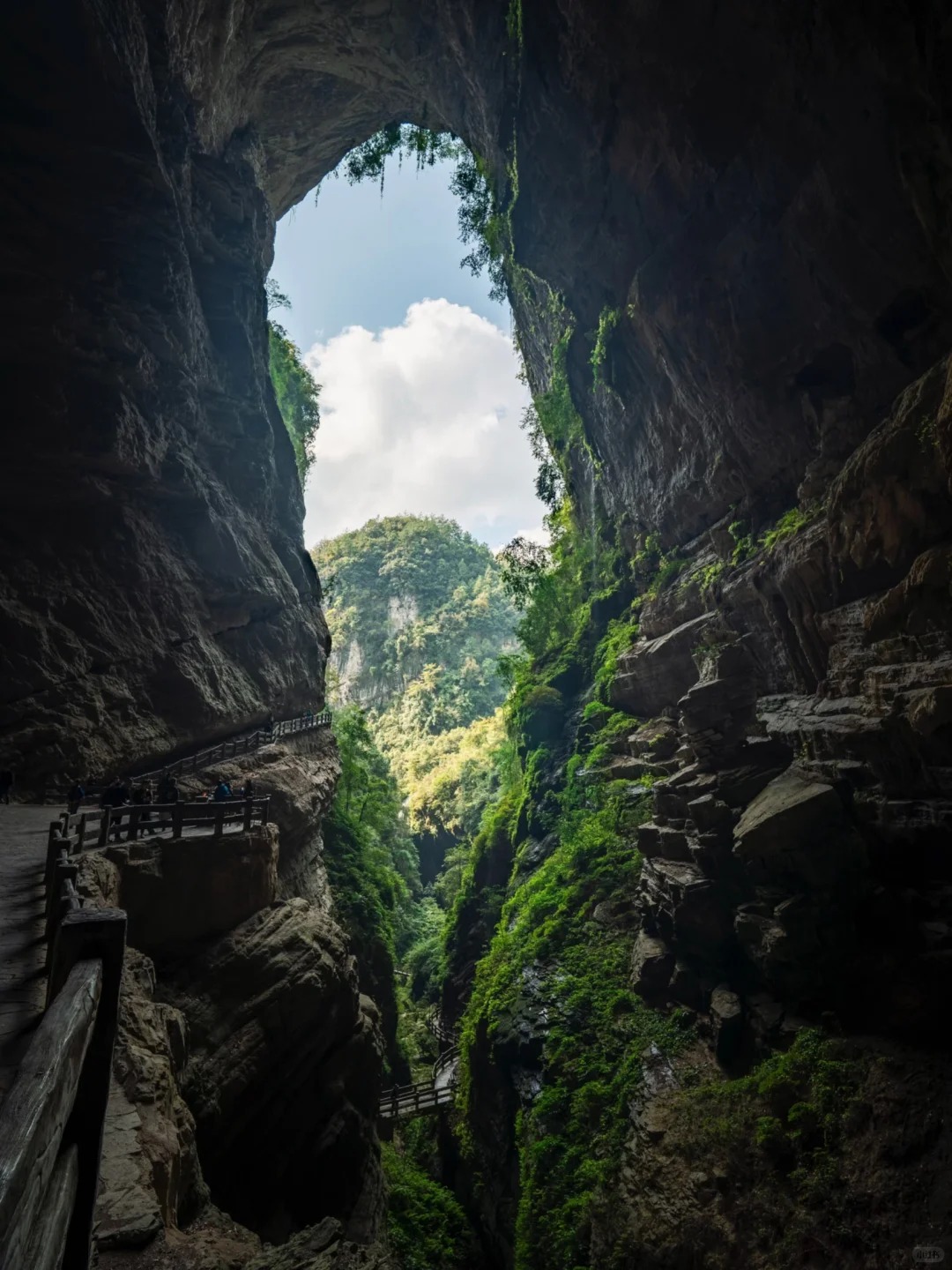
If Furong Cave showcases creation in the dark, the Three Natural Bridges display its epic, open-air drama. I took an elevator 80 meters down into the lush, misty gorge of the Tiankeng (Heavenly Pit). The air was cool and smelled of wet fern and earth. A paved trail wound past towering cliffs draped in moss and vines. Then I saw it: Sky Dragon Bridge, the first of the three. It was a perfect, soaring arch of limestone, spanning nearly 200 meters across the gorge. A waterfall cascaded from its side, catching the diffused light in a permanent silver spray. Walking under its colossal span, feeling the fine mist on my skin, I felt a sense of awe I'd only previously associated with great human cathedrals. But this was built by no hand. The second bridge, Green Dragon Bridge, was even more dramatic, its vault so high that clouds often drift through it. Standing in that gorge, surrounded by these monumental stone bridges, with sunlight piercing the canopy in heavenly rays, I felt I was walking through a landscape designed by gods for giants. It was the setting of every fantasy epic, made real.
After the subterranean and the sublime, Wulong offered pastoral peace. I drove up to Xianüshan Town (Fairy Mountain). At nearly 2,000 meters, the landscape transformed again. Karst peaks gave way to rolling alpine meadows, dotted with grazing horses and slow-moving cattle. The air was crisp and sweet with the scent of grass and wildflowers. I took a ski-lift even higher, gliding over carpets of green. At the summit, a vast, flat grassland stretched to the horizon, with solitary, wind-sculpted pine trees standing as sentinels. I walked for an hour, meeting no one, the only sound the wind and the distant bell on a cow. I bought a roasted sweet potato from a local vendor, its skin charred, the inside orange and steaming.
Sitting on a hillside, eating this simple, perfect food with my fingers, looking out over a scene that felt more like the Alps than China, I smiled. Wulong is a masterclass in contrasts. It holds the Earth's most secret, ornate chambers below and offers its most open, serene pastures above. It doesn't just show you scenery; it takes you on a journey through the very layers of the planet's beauty, leaving you with a permanent sense of wonder etched in your memory.